
A case of alleged judicial document forgery has come to light after 129 betting websites were blocked on the basis of purported High Court orders that the courts have since declared fake. Police are investigating who created and circulated the documents, with the possible use of artificial intelligence also under scrutiny.
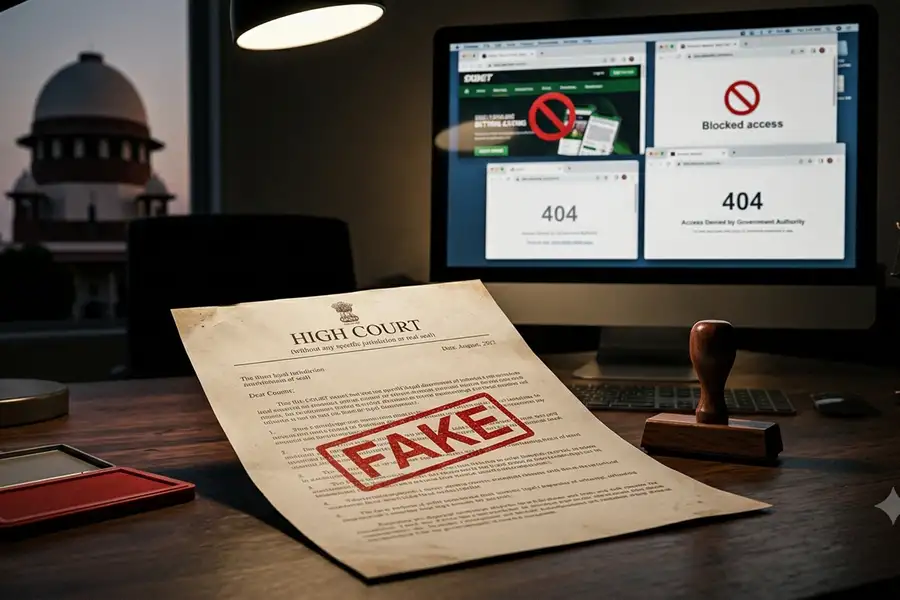
New Delhi: Authorities blocked 129 betting websites after receiving what appeared to be court orders from the Rajasthan and Allahabad High Courts. However, both courts have subsequently confirmed that the documents were not genuine, prompting a police investigation into the alleged forgery.
The case has raised concerns about how purported judicial orders are verified before government agencies act on them. Investigators are examining who created and submitted the documents, while the possible use of artificial intelligence (AI) to generate the fake orders is also being suspected.
According to a Reuters report, the Department of Telecommunications (DoT) issued two website-blocking directions on July 21 and September 2. Both directives were accompanied by emailed copies of purported High Court orders seeking the removal of dozens of betting websites.
The websites were subsequently included in the blocking action. However, checks by Reuters found that neither of the purported orders appeared in the respective courts' online registration records.
What did the two High Courts say?
The Rajasthan High Court's registrar reportedly informed Reuters by email that the order carrying the court's name "appears to be fraudulent" and did not exist on its server.
The Allahabad High Court also found that the document attributed to it was fake. It subsequently filed a police complaint on November 6, leading to an investigation against unidentified persons.
Ghanshyam Yadav, a senior Uttar Pradesh cybercrime official, confirmed that the order was not genuine.
"It is fake. It is not a genuine order from the High Court of Allahabad," he said, adding that no arrests had been made at the time of the report.
The investigation is examining the alleged forgery and cheating involved in creating and using the documents. It remains unclear who prepared the orders and how they were submitted to the authorities.
Was artificial intelligence used to create the fake orders?
One of the key questions in the investigation is whether AI tools were used to produce the fraudulent court documents.
Generative AI can create convincing-looking text and documents, potentially making fabricated material appear authentic. However, there is currently no confirmed evidence establishing that AI was used in this particular case.
Investigators will need to establish how the documents were prepared, who circulated them and whether any technology was used to imitate official judicial formats or signatures.
The distinction is important: suspicion of AI involvement does not establish that the documents were AI-generated.
How did the fake orders lead to 129 websites being blocked?
The DoT issued two separate blocking directions on July 21 and September 2. The directives, available on the department's website, included emailed copies of purported orders from the Rajasthan and Allahabad High Courts.
These documents appeared to provide judicial authorisation for action against betting websites. Internet service providers were consequently directed to block the listed websites.
The Reuters investigation found that the purported orders could not be traced in the courts' online registration records. Following queries from the news agency, the courts confirmed that the documents were not genuine.
The DoT did not respond to Reuters' questions about the matter, according to the report.
Why does the case matter?
The incident goes beyond the blocking of online betting platforms. It raises questions about the safeguards used to authenticate judicial documents before administrative authorities act on them.
Court orders can have significant consequences for businesses, individuals and access to online services. If fabricated documents can be passed off as genuine judicial directions, the resulting action could affect entities without a valid court order.
The case also highlights the challenges government departments face in verifying digital documents received through official-looking communication channels.
A wider concern over AI and fabricated legal material
The incident comes amid growing concerns about the use of artificial intelligence in legal proceedings and the reliability of digitally generated information.
In July, the Supreme Court set aside orders passed by a tribunal that had relied on non-existent judicial precedents. That case raised concerns about the use of fabricated legal citations and AI-generated material in judicial decision-making.
Although the tribunal case and the fake High Court orders involving betting websites are separate incidents, both underline the importance of verifying legal documents and references before relying on them.
The investigation into the 129 blocked websites is now expected to establish how the purported orders were created, how they reached the telecommunications department and whether anyone deliberately used them to trigger government action.
Published: 12 Nov 2026, 02:40 pm IST


ABOUT THE AUTHOR

Related Topics
Disclaimer: Kindly avoid objectionable, derogatory, unlawful and lewd comments, while responding to reports. Such comments are punishable under cyber laws. Please keep away from personal attacks. The opinions expressed here are the personal opinions of readers and not that of Mathrubhumi.