
Mercedes-Benz India has clarified that all its BS VI petrol vehicles are fully compatible with E20 fuel after a viral video by YouTuber Sourav Joshi sparked fresh concerns over mileage and ethanol-blended petrol.
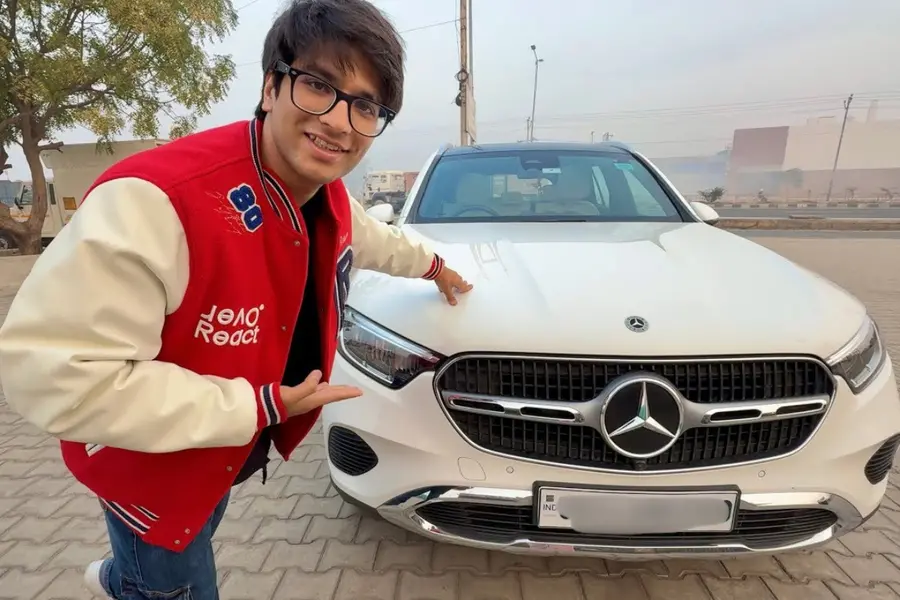
New Delhi: Mercedes-Benz India has issued an official clarification stating that all of its Bharat Stage VI (BS VI) petrol vehicles are fully compatible with E20 fuel, following widespread discussions on social media over the impact of ethanol-blended petrol on vehicle performance and fuel efficiency.
The clarification comes after a video by popular YouTuber Sourav Joshi, who has more than 41 million subscribers, went viral. In the vlog, Joshi claimed the fuel efficiency of his Mercedes-Benz luxury SUV had dropped sharply after using petrol containing higher ethanol content. He said the vehicle's displayed mileage had fallen from around 17 kmpl to 9 kmpl and later to nearly 5 kmpl, raising concerns about possible engine damage.
Also Read

However, it remains unclear whether the figures shown in the video referred to real-time fuel consumption, which can fluctuate significantly depending on traffic, driving style, road conditions and idling, or the vehicle's long-term average fuel economy.
Responding to the growing debate, Mercedes-Benz India said its entire BS VI petrol range has been engineered, tested and certified to run safely on E20 fuel, which contains 20% ethanol and 80% petrol. The company stressed that these vehicles are designed to meet India's latest emission norms while maintaining engine reliability and performance.
Mercedes-Benz also explained that ethanol naturally contains less energy than conventional petrol. As a result, vehicles running on higher ethanol blends may experience a slight reduction in fuel economy. This is an expected characteristic of the fuel itself and does not indicate a mechanical fault.
The company noted that all BS VI petrol models sold in India are calibrated to manage the combustion characteristics of E20 fuel. It added that its engineering standards ensure compatibility with the government's transition towards cleaner fuels.
Why E20 fuel is being introduced
India has been steadily increasing ethanol blending in petrol as part of its strategy to reduce crude oil imports, improve energy security and lower carbon emissions. The government has set ambitious ethanol blending targets, making E20 the standard petrol grade across the country.
According to the Ministry of Petroleum and Natural Gas (MoPNG), maintaining multiple nationwide petrol grades such as pure petrol, E10 and E20 simultaneously would create major logistical and operational challenges across India's network of more than one lakh fuel stations, pipelines, depots and refineries.
The ministry has said the shift to E20 followed extensive consultations with automobile manufacturers, testing agencies and industry stakeholders, covering vehicle compatibility, emissions, engine durability and fuel efficiency.
Mercedes CEO points to fuel adulteration concerns
Mercedes-Benz India Managing Director and CEO Santosh Iyer recently acknowledged that many customers have expressed concerns over E20 fuel. However, he said vehicles sold by the company since 2020 have been designed to operate on ethanol-blended fuel.
Iyer suggested that cases of poor performance could sometimes be linked to fuel adulteration rather than ethanol itself. He also proposed that multiple fuel grades could be made available during the transition period so owners of older vehicles have more choice.
Government rejects engine damage claims
The central government has repeatedly defended the nationwide rollout of E20 fuel.
Union Road Transport and Highways Minister Nitin Gadkari has dismissed claims that E20 damages engines, describing such allegations as part of a "false narrative." He has said there is no verified evidence showing that E20 petrol has caused engine failures in compliant vehicles.
Gadkari acknowledged that ethanol's lower calorific value may result in a small reduction in fuel economy under certain conditions. However, he maintained that E20 is safe for compatible vehicles and added that manufacturers are prepared to replace certain rubber components, such as washers, in older vehicles during servicing if required.
Union Petroleum Minister Hardeep Singh Puri has also rejected claims that E20 harms engines. The ministry has stated that older vehicles may experience only a modest 3–5% reduction in fuel efficiency because ethanol contains less energy than conventional petrol, while emphasising that the fuel has undergone extensive scientific testing.
Why the debate matters
The controversy has reignited discussion among Indian motorists as E20 becomes the country's standard petrol grade. Owners of older vehicles remain concerned about compatibility and mileage, while manufacturers and the government continue to insist that modern BS VI-compliant vehicles are fully capable of running on the higher ethanol blend.
Mercedes-Benz's clarification aims to reassure existing customers that its latest petrol models are engineered for E20 fuel and that the transition to cleaner fuels should not compromise engine reliability when the correct fuel is used.
Published: 13 Jul 2026, 03:05 pm IST
Related Topics
Disclaimer: Kindly avoid objectionable, derogatory, unlawful and lewd comments, while responding to reports. Such comments are punishable under cyber laws. Please keep away from personal attacks. The opinions expressed here are the personal opinions of readers and not that of Mathrubhumi.