
From covering elections to contesting them, four journalists step into Bengal’s political battlefield, testing credibility, connect, and voter trust in a high-stakes role reversal.
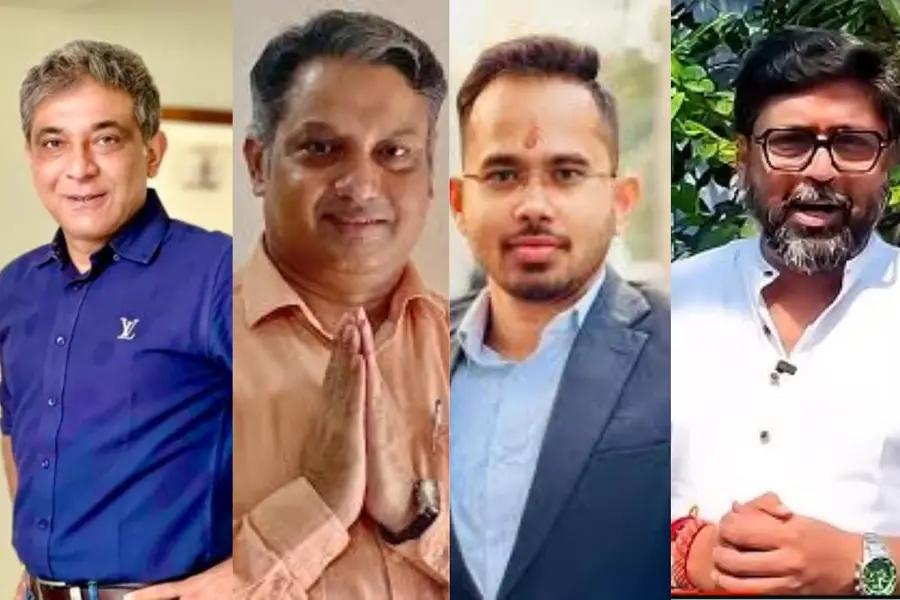
Kolkata: They once reported on poll battles, now they are fighting them. In a fascinating twist to the West Bengal Assembly Election 2026, four journalists have stepped out of the newsroom and into the political arena, emerging as candidates across key constituencies.
The transition from reporting to campaigning is visible across districts. In Khardaha, journalist Devadeep Purohit has been fielded by the Trinamool Congress, banking on his local roots.
Also Read

But the contest is anything but easy, with BJP’s Kalyan Chakraborty, Congress candidate Joydeb Ghosh, and CPI(M)’s Debjyoti Das also in the race.
Over in Siuri, BJP’s Jagannath Chattopadhyay is experiencing elections from the other side this time.
Once covering rallies and speeches, he is now leading them, moving through neighbourhoods, meeting voters, and soaking in what he calls an “overwhelming response.”
The story repeats in Memari, where BJP candidate Manab Guhak, a seasoned journalist of 25 years, is up against TMC’s Rasabihari Halder, CPI(M)’s Krishanu Bhadra, and Congress’s Prabir Gangopadhyay.
Reflecting on his shift, Guhak says political journalists are never truly detached from politics, given their long engagement with the system.
In Tarakeswar, another journalist-turned-candidate, Santu Pan, is contesting on a BJP ticket.
He faces a tough contest against TMC’s Ramendu Singha Roy, CPI(M)’s Abesh Khamrui, and Congress candidate Bhabaniprasad Mondal.
Across these constituencies, the shift is striking, microphones replaced by megaphones, and field reporting swapped for door-to-door campaigning.
For years, they told the stories of democracy. This time, they are part of it. Whether their gamble pays off will be clear when the votes are counted on May 4.
Beyond individual contests, this shift reflects a larger blurring of lines between media and politics in Bengal’s high-decibel electoral culture.
Journalists, often deeply embedded in political ecosystems, bring with them ground-level insights, access to networks, and a sharp understanding of voter sentiment.
However, that transition also raises questions about perception, neutrality, and how easily public trust in journalism can be carried into the political arena.
For voters, however, the lens is far more practical: Credibility, connection, and delivery on local issues.
Whether these journalist-turned-candidates can convert their familiarity into votes will depend on how effectively they move from asking tough questions to answering them.
In a state where politics is as performative as it is personal, their biggest test may not just be visibility, but whether they can convince people they belong on the other side of the story.
Published: 13 Apr 2026, 12:52 pm IST
Disclaimer: Kindly avoid objectionable, derogatory, unlawful and lewd comments, while responding to reports. Such comments are punishable under cyber laws. Please keep away from personal attacks. The opinions expressed here are the personal opinions of readers and not that of Mathrubhumi.