
The Bombay High Court has convicted Tehelka founder Tarun Tejpal in the 2013 Goa rape case, overturning his acquittal. Here's who he is, what the case is about, why the verdict changed, and what happens next.
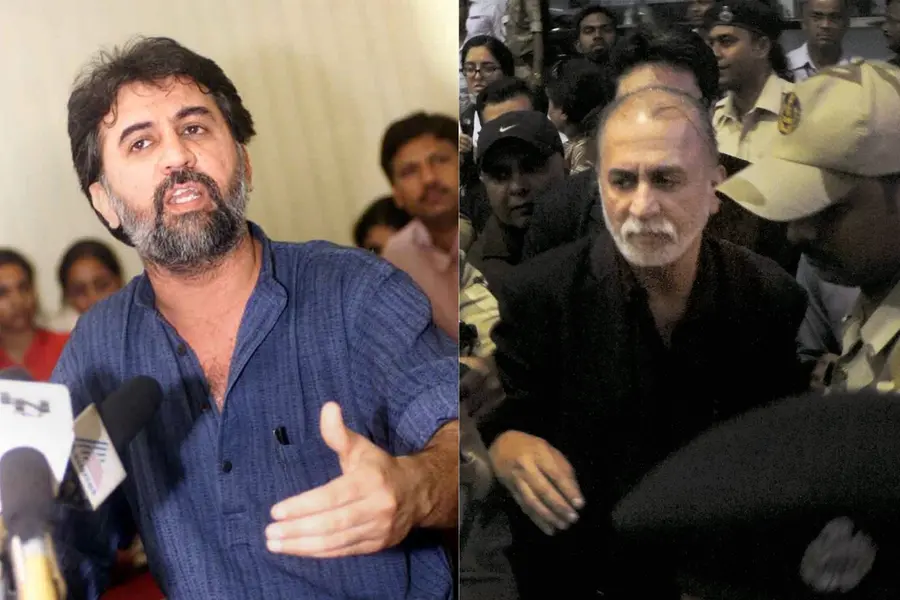
Mumbai: The Goa Bench of the Bombay High Court on August 6, 2026, convicted former Tehelka editor-in-chief Tarun Tejpal in the 2013 rape case, setting aside a Goa Sessions Court judgment that had acquitted him in 2021. The High Court found him guilty under provisions of the Indian Penal Code relating to rape by a person in a position of trust or authority, sexual harassment and assault against a woman.
The court is expected to pronounce the quantum of punishment separately, while Tejpal has said he will challenge the conviction before the Supreme Court.
Also Read

Who is Tarun Tejpal?
Tarun Tejpal, 62, is an Indian journalist, author and media entrepreneur who founded the investigative news magazine Tehelka in 2000. Before launching the publication, he worked with India Today and The Indian Express.
Tehelka became one of India's most influential investigative publications in the early 2000s after publishing high-profile undercover investigations. Its best-known sting operation, Operation West End, exposed alleged corruption in defence procurement and triggered major political controversy, leading to the resignation of then BJP president Bangaru Laxman. The magazine later became known for its investigative reporting on politics, corruption, security and human rights.
Apart from journalism, Tejpal has written novels, including The Alchemy of Desire. He is married to Geetan Batra and has two daughters. His elder daughter, Tiya Tejpal, is a production designer known for films including The White Tiger, Karwaan and Raman Raghav 2.0, while Cara Tejpal is a writer and wildlife conservationist.
What is the case about?
The case dates back to November 2013 during Tehelka's ThinkFest, an annual ideas festival held at the Grand Hyatt hotel in Goa.
A junior woman employee accused Tejpal of sexually assaulting and raping her inside a hotel elevator on two occasions during the event. According to the prosecution, Tejpal used his position as editor and employer to force himself on the complainant despite her repeated objections. After the alleged incidents, the woman reported the matter internally to senior colleagues, and email exchanges between her, Tejpal and Tehelka's then managing editor later became public.
The Goa Police subsequently registered a criminal case and filed a chargesheet running to nearly 2,800 pages after investigating the allegations. The trial eventually began in 2017 and was conducted in-camera, with the prosecution examining dozens of witnesses over several years.
Why was Tejpal acquitted in 2021?
In May 2021, a Goa Sessions Court acquitted Tejpal of all charges. The trial court questioned the prosecution's case and observed that the complainant had not displayed what it described as "normative behaviour" expected from a survivor of sexual assault. It also relied on aspects of her conduct after the alleged incidents while assessing the evidence.
The judgment drew criticism from legal experts and women's rights groups, who argued that it relied on stereotypes about how survivors of sexual assault are expected to behave.
The Goa government challenged the acquittal before the Bombay High Court, arguing that the trial court had ignored crucial evidence and had incorrectly assessed the complainant's conduct instead of focusing on the evidence presented during the trial.
Why did the Bombay High Court overturn the acquittal?
After hearing the appeal, the Bombay High Court concluded that the trial court's judgment could not be sustained and set aside the acquittal.
Although the detailed judgment is awaited, during the hearings the Goa government argued that the trial court committed serious legal errors by focusing on preconceived notions of how a survivor should behave after an assault. The prosecution also argued that important evidence, including Tejpal's apology email and other material on record, had not been properly appreciated.
The High Court ultimately accepted the state's appeal and convicted Tejpal under Sections 376(2)(f), 376(2)(k), 354A and 354B of the Indian Penal Code.
ALSO READ | Gangster-politician Atiq Ahmad's son Abaan Ahmad dies in road accident en route to Jhansi jail
What happened in court after the conviction?
Following the verdict, Tejpal requested leniency, telling the judges that he was 62 years old and considered himself a victim. His lawyer sought a stay on the conviction to allow time to appeal before the Supreme Court.
The Goa government opposed the plea. Appearing for the state, Solicitor General Tushar Mehta argued that Tejpal occupied a position of trust and authority over the complainant, who was much younger than him, and urged the court to award the maximum punishment. He argued that the case should send a clear message that "no means no".
The High Court is expected to pronounce the sentence after hearing both sides on the issue of punishment.
Since the case first emerged in 2013, Tejpal has repeatedly claimed that he was targeted because of Tehelka's investigative journalism, particularly its reports exposing alleged corruption involving political figures. He has described himself as a "political victim" and has alleged that the prosecution was influenced by political motives.
However, there is no judicial finding or publicly established evidence that the any political party fabricated the allegations or falsely prosecuted him. The criminal case originated after a complaint made by his former junior colleague, following which the Goa Police conducted an investigation and filed charges.
The matter has since been examined by multiple courts over more than a decade, including the Goa Sessions Court, the Bombay High Court and the Supreme Court during bail proceedings. While Tejpal is entitled to raise political vendetta as part of his defence, no court has accepted or upheld that claim.
What happens next?
The Bombay High Court will pronounce the sentence separately. Tejpal has announced that he will appeal the conviction before the Supreme Court, where he is expected to challenge both the conviction and any sentence imposed. Until any higher court grants relief, the Bombay High Court's conviction remains the operative legal position.
Published: 06 Aug 2026, 01:41 pm IST
ABOUT THE AUTHOR
Related Topics
Disclaimer: Kindly avoid objectionable, derogatory, unlawful and lewd comments, while responding to reports. Such comments are punishable under cyber laws. Please keep away from personal attacks. The opinions expressed here are the personal opinions of readers and not that of Mathrubhumi.