
The latest price hike arrives just two days after central authorities intervened to stop sales rationing at private filling stations.
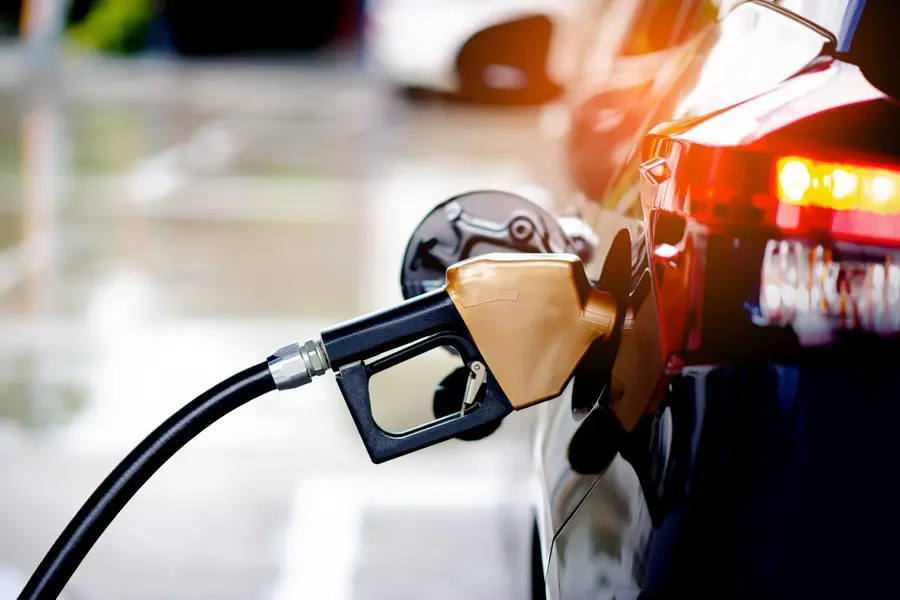
India’s largest private fuel retailer, Nayara Energy, has increased petrol prices by Rs 5 per litre and diesel by Rs 3 per litre across its national network. The new rates took effect in the early hours of Saturday, October 3, as the refiner seeks to align its pump prices with rising international crude and refined-product costs.
The price adjustment comes amidst renewed global energy market volatility driven by geopolitical disruptions. It also follows a stern warning from the central government directing private fuel stations to cease rationing sales to motorists.
Private retailer adjusts rates after global market shifts
Nayara Energy operates a major 20 million-tonne-a-year refinery at Vadinar in Gujarat alongside 7,108 fuel stations across India. An email sent to a spokesperson for the company seeking comments on the latest increase remained unanswered.
This move reflects a turbulent year for domestic fuel pricing. Nayara was the first retailer to pass on escalating international oil costs to consumers when the Iran conflict disrupted energy supplies earlier this year. On March 26, the company increased petrol rates by Rs 5 a litre and diesel by Rs 3, raising prices at its outlets to Rs 100.71 and Rs 91.31 per litre, respectively.
State-owned oil marketing companies subsequently raised pump prices in May through a series of staggered moves. The cumulative rise reached about Rs 7.50 a litre for both fuels by late May, concluding with an increase of Rs 2.61 a litre for petrol and Rs 2.71 for diesel on May 25.
When global crude prices eased as West Asia tensions subsided, Nayara reversed its stance. On July 1, the firm slashed petrol by Rs 5 a litre and diesel by Rs 3 per litre. That reduction was the first price cut by any domestic fuel retailer in over two years, bringing Nayara's rates back in line with state-run outlets. Saturday’s price hike represents a fresh effort to pass through higher crude costs after months of steady retail rates.
Ministry warns against restricting fuel purchases at pumps
The latest price hike arrives just two days after central authorities intervened to stop sales rationing at private filling stations. On Thursday, October 1, Oil Secretary Neeraj Mittal stated that the government would ask private fuel retailers not to restrict sales of petrol or diesel.
"Nobody is allowed to cap fuel sales. It is not acceptable; it is not done," Mittal told reporters. Clarifying official policy, he added, "In the past, letters had been issued; instructions had been issued to them. There is no change in the government view on this". Oil Minister Hardeep Singh Puri separately confirmed that his ministry remains "in touch" with private fuel retailers.
Price gap drives bulk buyers to retail petrol stations
Government intervention was triggered after private operators Nayara Energy and Jio-bp introduced purchase limits at several pumps. The caps were imposed as a massive price gap—reaching up to Rs 50 a litre between retail diesel and bulk diesel—encouraged commercial consumers to flood retail stations.
Factories, telecom firms, hotels, and hospitals began diverting purchases from bulk suppliers to ordinary petrol pumps meant for motorists. Industry sources noted that some industrial users were purchasing between 400 and 600 litres at a single time. This unusual surge placed severe pressure on retail storage tanks, which have finite capacity and require at least two days to replenish.
To manage inventory, Jio-bp capped diesel purchases at 50 litres per customer per day at affected outlets, while Nayara set daily limits ranging between 70 litres and 200 litres.
Addressing the situation, a spokesperson for Jio-bp—a joint venture operating 2,304 pumps between Reliance Industries and Britain's BP—stated that all its stations were operational and adequately stocked. "Given the prevailing demand dynamics, we are taking appropriate measures to ensure equitable availability of fuel for mobility and transportation needs, particularly in view of demand from industrial and other non-transport use," the spokesperson explained.
Jio-bp has not revised its retail petrol or diesel prices. Meanwhile, Nayara Energy stated that it continued to maintain fuel supplies across its nationwide dealer network, focusing on optimum delivery to its stations and bulk customers. Neither firm directly addressed the purchase caps in their public statements.
State oil firms face steep daily losses on static prices
India’s state-owned fuel retailers—Indian Oil Corporation, Bharat Petroleum Corporation, and Hindustan Petroleum Corporation—control over 90 per cent of the country's 104,137 petrol pumps. Historically, state firms keep pump rates stable during global market swings, keeping retail petrol and diesel prices unchanged since May despite rising crude costs.
This price freeze has created severe financial strain. Rating agency Icra estimated that state fuel retailers incurred negative marketing margins of roughly Rs 8 per litre on petrol and Rs 9 per litre on diesel during September. Overall, state oil companies lost an estimated Rs 530 crore per day across petrol, diesel, and cooking gas (LPG).
According to Icra, combined refining and marketing operations break even when global crude trades between USD 85 and USD 90 a barrel. Beyond those levels, marketing losses mount unless domestic retail prices rise.
If private price hikes persist, the rate difference between private and state-owned pumps will widen significantly. If sustained across the market, higher fuel prices could drive up freight rates and operational expenses, pushing up household inflation and dampening fuel demand. Conversely, keeping pump prices below actual costs leaves refiners bearing heavy losses, building further pressure for broader market price adjustments
Published: 03 Oct 2026, 04:42 pm IST
Related Topics
Disclaimer: Kindly avoid objectionable, derogatory, unlawful and lewd comments, while responding to reports. Such comments are punishable under cyber laws. Please keep away from personal attacks. The opinions expressed here are the personal opinions of readers and not that of Mathrubhumi.
