
India closely monitors Venezuela`s evolving crisis, urging peace & dialogue. Embassy assists Indian community. Advisory for citizens. Learn more about India`s stance & the US operation.
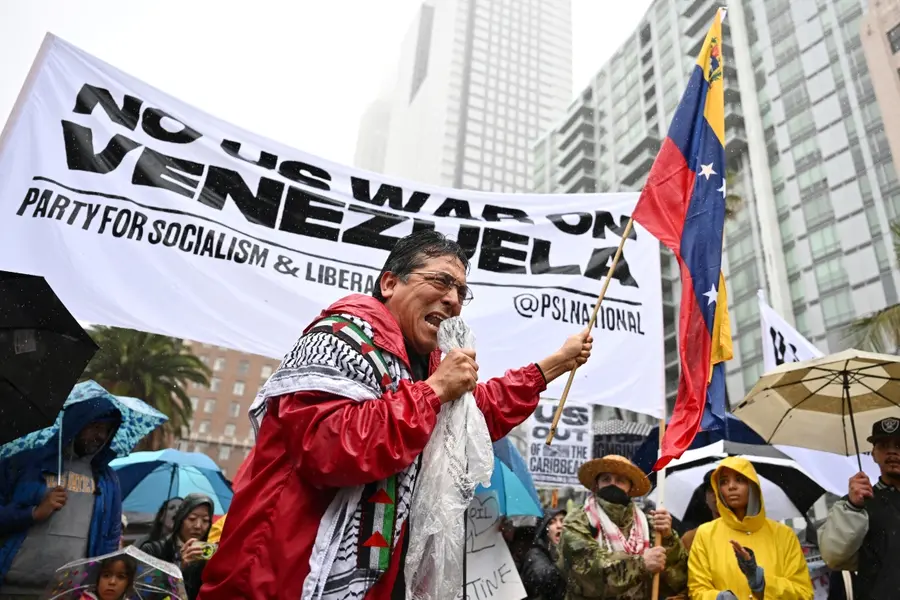
India on Sunday said it is closely monitoring the rapidly evolving situation in Venezuela, expressing deep concern over recent developments following the capture of Venezuelan President Nicolas Maduro during a US-led operation.
In an official statement, the Ministry of External Affairs (MEA) reaffirmed India’s support for the well-being and safety of the people of Venezuela, urging all stakeholders to resolve issues peacefully through dialogue to ensure regional peace and stability.
Also Read

“The Embassy of India in Caracas is in contact with members of the Indian community and will continue to provide all possible assistance,” the MEA said.
India advises nationals to avoid non-essential travel
Earlier, the MEA issued a travel advisory, urging Indian nationals to avoid all non-essential travel to Venezuela amid rising tensions. Indians currently in the country were advised to exercise extreme caution, restrict movement, and stay in close contact with the Indian Embassy in Caracas.
The advisory asked Indian citizens to reach out via email at cons.caracas@mea.gov.in or through the emergency helpline +58-412-9584288, which is also available on WhatsApp.
Why did the US attack Venezuela?
The advisory comes after Nicolas Maduro and his wife, Cilia Flores, were reportedly captured in Caracas and flown out of the country during a joint operation involving US intelligence agencies and law enforcement.
US President Donald Trump, speaking at a press conference in Florida, said that American forces successfully carried out a night-time operation, claiming that all Venezuelan military capabilities were neutralised.
“It was dark, and it was deadly, but he was captured along with his wife, Cilia Flores, both of whom now face American justice. Maduro and Flores have been indicted in the Southern District of New York,” Trump said.
According to an unsealed indictment shared by US Attorney General Pamela Bondi, the charges include multiple counts linked to alleged coordination with international drug networks.
The incident has further escalated the long-standing America–Venezuela conflict, raising questions such as why the US attacked Venezuela and how the situation may impact global crude oil prices, given Venezuela’s vast oil reserves.
Venezuela, located in northern South America, has remained geopolitically sensitive since the era of Hugo Chavez, with ongoing tensions involving the US, Russia, and regional allies.
As uncertainty grows, the situation remains fluid, with governments worldwide, including India, urging restraint, dialogue, and protection of civilians amid the unfolding US–Venezuela crisis.
Published: 04 Jan 2026, 02:06 pm IST
Related Topics
Disclaimer: Kindly avoid objectionable, derogatory, unlawful and lewd comments, while responding to reports. Such comments are punishable under cyber laws. Please keep away from personal attacks. The opinions expressed here are the personal opinions of readers and not that of Mathrubhumi.