
India on Wednesday rejected Pakistan’s remarks marking the seventh anniversary of the abrogation of Article 370, with the Ministry of External Affairs calling Islamabad’s campaign a “political absurdity” and accusing it of attempting to divert attention from its own issues.
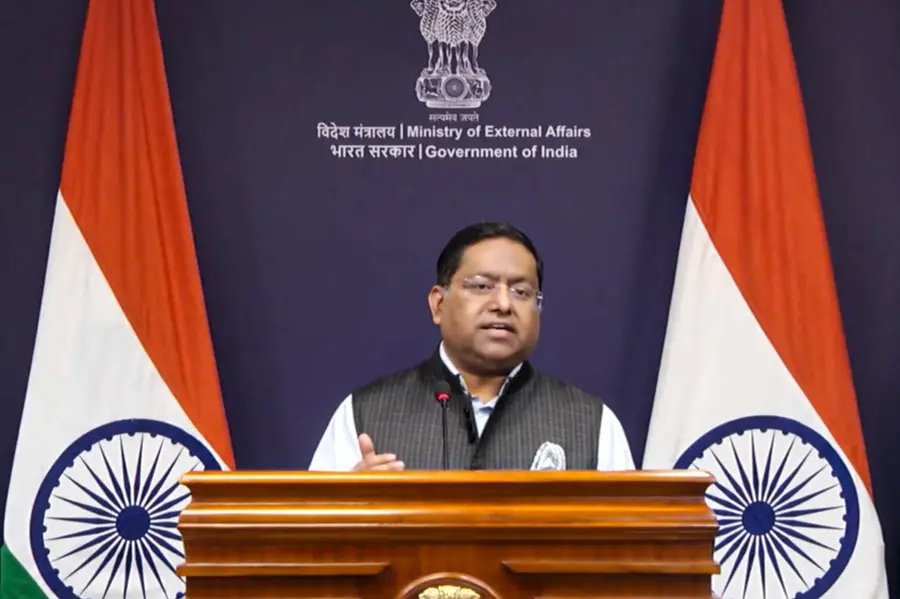
New Delhi: The Ministry of External Affairs (MEA) on August 5 rejected Pakistan’s observance of “Youm-e-Istehsal” (Day of Exploitation), marking the anniversary of India’s decision to revoke Jammu and Kashmir’s special status under Article 370 in 2019.
MEA spokesperson Randhir Jaiswal said India “categorically rejects the political absurdity and futile attempts by Pakistan” to observe the day, alleging that Islamabad was using the occasion to spread “malicious propaganda” against India.
The statement came after Pakistan’s Deputy Prime Minister and Foreign Minister Ishaq Dar criticised India’s 2019 constitutional changes and said they had affected efforts towards peace and stability in South Asia.
MEA reiterates Jammu and Kashmir and Ladakh are integral parts of India
Jaiswal said the constitutional changes made on August 5, 2019, were an internal matter of India.
“The Union Territories of Jammu & Kashmir and Ladakh are, have always been, and shall forever remain an integral and inalienable part of India,” he said.
The MEA spokesperson said the changes had resulted in what he described as socio-economic development, improved governance and democratic empowerment in the region.
He added that Pakistan had “no locus standi” to comment on issues that India considers internal matters.
India accuses Pakistan of diverting attention
The MEA accused Pakistan of attempting to shift international attention away from its own record on human rights and terrorism.
Jaiswal said Pakistan’s “desperate attempts to peddle falsehoods” were aimed at deflecting focus from what India described as Pakistan’s human rights concerns and alleged support for terror networks.
He also referred to recent protests in Pakistan-occupied Jammu and Kashmir (PoJK), alleging that Pakistani security forces had used force against demonstrators.
India raises PoJK protests in response
The MEA said the international community was witnessing the suppression of fundamental rights in PoJK.
“Recent weeks have seen Pakistani security forces resort to lethal violence, targeted killings, and draconian bans to silence peaceful civil rights protests,” Jaiswal said.
He urged Pakistan to address the situation in PoJK, take action against terror networks operating from its territory and withdraw from territories India claims are under illegal occupation.
“The world is not fooled by these orchestrated spectacles,” Jaiswal said.
Pakistan’s position on Article 370
Pakistan has continued to oppose India’s August 2019 decision to remove Jammu and Kashmir’s special status and reorganise the former state into the Union Territories of Jammu and Kashmir and Ladakh.
On the anniversary, Ishaq Dar said India’s decision had complicated efforts for peace and stability in South Asia and called for steps to resolve the Kashmir issue.
On August 5, 2019, the Indian government revoked the special status granted to Jammu and Kashmir under Article 370 of the Constitution.
The move ended provisions that gave the region separate constitutional privileges and led to the creation of two Union Territories — Jammu and Kashmir and Ladakh.
The decision has remained a major point of disagreement between India and Pakistan, with both countries continuing to hold opposing positions on Kashmir.
What is ‘Youm-e-Istehsal’?
‘Youm-e-Istehsal’ (also spelled Youm-e-Istehsal-e-Kashmir) means “Day of Exploitation” in Urdu. It is a day observed by Pakistan on August 5 every year to protest India’s decision to abrogate Article 370 of the Indian Constitution in 2019, which removed Jammu and Kashmir’s special status.
On August 5, 2019, the Indian government revoked the special constitutional provisions under Article 370 and reorganised the former state of Jammu and Kashmir into two Union Territories — Jammu and Kashmir and Ladakh.
Pakistan describes the move as an “exploitation” of Kashmiris and has used Youm-e-Istehsal to criticise India’s decision and call for the resolution of the Kashmir issue. India rejects this characterisation, calling the 2019 changes an internal matter and maintaining that Jammu and Kashmir and Ladakh are integral parts of India.
The observance remains a point of diplomatic disagreement between the two countries, with Pakistan continuing to oppose the 2019 decision and India rejecting Pakistan’s comments on the issue.
Published: 05 Aug 2026, 06:25 pm IST
ABOUT THE AUTHOR

Disclaimer: Kindly avoid objectionable, derogatory, unlawful and lewd comments, while responding to reports. Such comments are punishable under cyber laws. Please keep away from personal attacks. The opinions expressed here are the personal opinions of readers and not that of Mathrubhumi.