
India strongly rejected reported remarks by Dutch Prime Minister Rob Jetten on press freedom and minority rights during Prime Minister Narendra Modi’s visit to the Netherlands, with the Ministry of External Affairs calling the criticism a “lack of understanding” about India’s democracy and diversity.
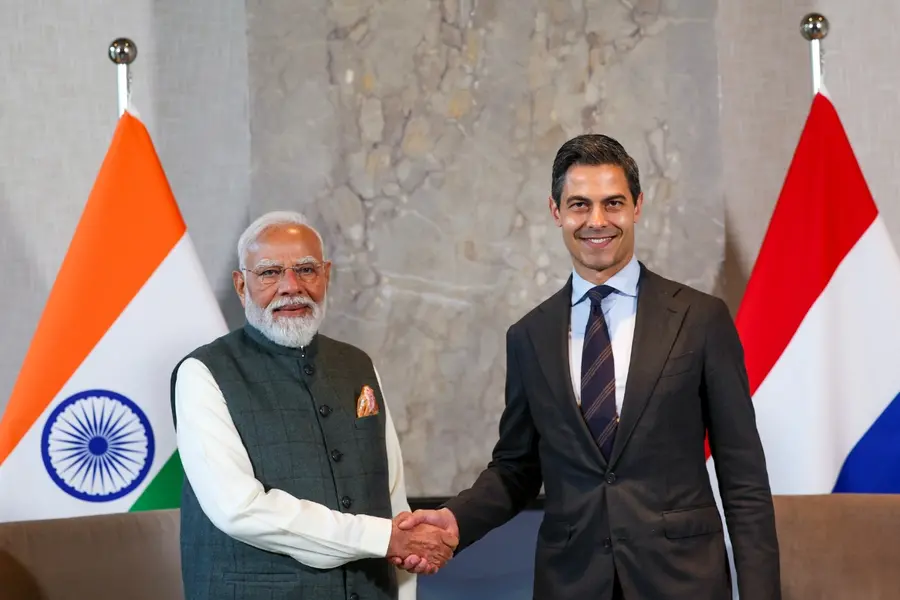
Amsterdam: Prime Minister Narendra Modi’s visit to the Netherlands turned diplomatically tense after reported remarks by Dutch Prime Minister Rob Jetten on press freedom and minority rights in India triggered a sharp response from New Delhi.
The exchange unfolded during Modi’s two-day visit to The Hague, which was primarily aimed at strengthening cooperation between India and the Netherlands in trade, technology, clean energy, semiconductors, maritime security and global strategic affairs.
Also Read

The controversy began after a Dutch journalist questioned the absence of a joint press conference between Modi and Jetten and referred to concerns surrounding media freedom and minority rights in India. According to reports in Dutch media, Jetten had allegedly said before meeting Modi that the Dutch government had concerns about “developments in India”, including issues linked to press freedom and the condition of minorities. However, it remains unclear whether those remarks were officially made in a formal diplomatic setting.
India strongly pushed back against the criticism. Responding during the media interaction, MEA Secretary (West) Sibi George said such questions often arise due to a “lack of understanding” about India’s history, democracy and social structure. “We face these kinds of questions basically because of the lack of understanding of the person who asks the question,” George said.
He defended India’s democratic credentials by highlighting the country’s civilisational history, religious diversity and electoral system. George described India as a 5,000-year-old civilisation and said the country remains one of the most diverse societies in the world in terms of religion, language, food and culture.
George also pointed out that Hinduism, Buddhism, Jainism and Sikhism all originated in India and continue to coexist there. He added that Jewish communities had lived in India for over 2,500 years without facing persecution, while Christianity and Islam also flourished in the country for centuries.
The Indian diplomat further cited elections and voter participation as evidence of India’s democratic strength. “Recently, we had elections. You know, you need to know what the level of participation was. More than 90% of the electorate voted. This is the beauty of India,” he said.
India remains the world’s largest democracy, with hundreds of millions of voters participating in regular state and national elections. The government has consistently argued that peaceful transfers of power, independent constitutional institutions and high voter turnout demonstrate the resilience of India’s democratic framework.
At the same time, debates around press freedom and minority rights in India have intensified internationally in recent years. Organisations such as Reporters Without Borders and Freedom House have expressed concerns over issues including:
- Legal action against journalists
- Internet shutdowns
- Media ownership concentration
- Religious polarisation
- Hate speech incidents
India, however, has repeatedly rejected several international rankings and reports, calling them selective, biased or disconnected from India’s realities. Government representatives argue that India has one of the world’s largest and most aggressive media landscapes, with thousands of newspapers, television channels and digital platforms operating in multiple languages.
George also rejected suggestions that minorities are under systematic threat in India and cited demographic growth among minority communities since independence. “When we became independent, the minority population in India was 11 per cent. Now it is more than 20 per cent,” he said.
While the Indian government often uses demographic data to argue that minorities continue to thrive in India, critics say population growth alone does not fully answer concerns about discrimination, communal tensions or civil liberties.
The question over the absence of a joint press conference also drew attention because Modi’s foreign visits have often featured limited unscripted media interactions compared to several Western leaders. The Indian side did not directly explain why a joint press conference was not held during this visit.
Despite the diplomatic friction, both countries publicly continued to emphasise the importance of bilateral ties. Jetten later said India and the Netherlands both value democracy, governance and a rules-based international order.
The visit itself focused heavily on expanding cooperation in:
- Trade and investment
- Green energy and climate initiatives
- Semiconductor manufacturing
- Maritime logistics
- Technology partnerships
- Global geopolitical coordination
The Netherlands is among India’s major European economic partners and plays an important role in sectors such as shipping, water management, agriculture technology and high-tech manufacturing.
The exchange highlighted the broader international debate over how India’s democracy is viewed globally. Supporters of the Modi government argue that India continues to function as a robust democracy with regular elections and active public participation, while critics believe concerns over media freedom, dissent and minority rights deserve continued scrutiny as India’s global influence grows.
Published: 18 May 2026, 11:35 am IST
Disclaimer: Kindly avoid objectionable, derogatory, unlawful and lewd comments, while responding to reports. Such comments are punishable under cyber laws. Please keep away from personal attacks. The opinions expressed here are the personal opinions of readers and not that of Mathrubhumi.