
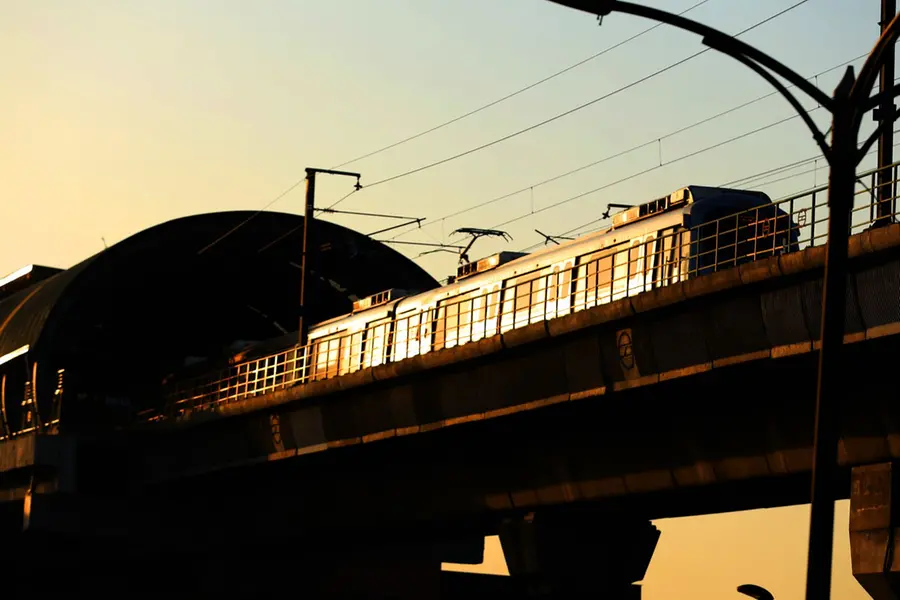
New Delhi: India has reached a significant milestone, making its metro network the third-largest globally, with a total length of 1,000 kilometres. This achievement follows the launch of new metro projects and the Namo Bharat initiative for Delhi, under the leadership of Prime Minister Narendra Modi.
India’s metro system began its journey in 2002 with the launch of the modern metro service in Delhi by former Prime Minister Atal Bihari Vajpayee. Since then, the network has grown exponentially, particularly after 2014, with significant developments under PM Modi's leadership.
Over the past decade, the metro network has seen impressive growth, expanding by an additional 1,000 kilometres. The number of states offering metro services has increased from five to eleven, and the number of cities with metro connectivity has surged from five to 23.
Exponential growth in ridership and travel distance
Daily ridership has grown substantially, rising from 28 lakh in 2014 to over one crore. This reflects a 2.5 times increase in passenger numbers. Additionally, the total distance covered by metro trains has tripled, reaching an impressive 2.75 lakh kilometres.
Under Prime Minister Modi’s vision, the government continues to focus on enhancing urban transport systems to provide seamless, affordable, and modern travel options. These efforts aim to improve the quality of life for millions of citizens across the country.
On Sunday morning, PM Modi will embark on a ride on the Namo Bharat Train from Sahibabad RRTS Station to New Ashok Nagar RRTS Station. This ride marks the inauguration of the 13-kilometre stretch of the Delhi-Ghaziabad-Meerut Namo Bharat Corridor, built at an estimated cost of ₹4,600 crore. This corridor is set to improve regional connectivity between Delhi and Meerut, offering high-speed, comfortable travel options for millions.
New developments in Delhi Metro
PM Modi will also inaugurate a 2.8-kilometre stretch of Delhi Metro Phase-IV between Janakpuri and Krishna Park, which marks the first operational segment of this phase. With an investment of Rs 1,200 crore, this extension will greatly benefit residents of West Delhi, including areas like Krishna Park, Vikaspuri, and Janakpuri.
Additionally, PM Modi will lay the foundation stone for the 26.5-kilometre Rithala-Kundli section of Delhi Metro Phase-IV, costing an estimated Rs 6,230 crore. This new corridor will connect Rithala in Delhi to Nathupur (Kundli) in Haryana, boosting connectivity across North-West Delhi and Haryana, impacting areas such as Rohini, Bawana, Narela, and Kundli.
These ongoing projects represent a major leap forward in India's urban infrastructure development. They demonstrate the government's commitment to creating world-class transport systems that cater to the growing needs of urban populations.
Agency
Published: 05 Jan 2025, 11:25 am IST
Related Topics
Disclaimer: Kindly avoid objectionable, derogatory, unlawful and lewd comments, while responding to reports. Such comments are punishable under cyber laws. Please keep away from personal attacks. The opinions expressed here are the personal opinions of readers and not that of Mathrubhumi.
