
Delhi Environment Minister blames previous AAP govt for AQI crisis, vows BJP is working to fix it with concrete measures
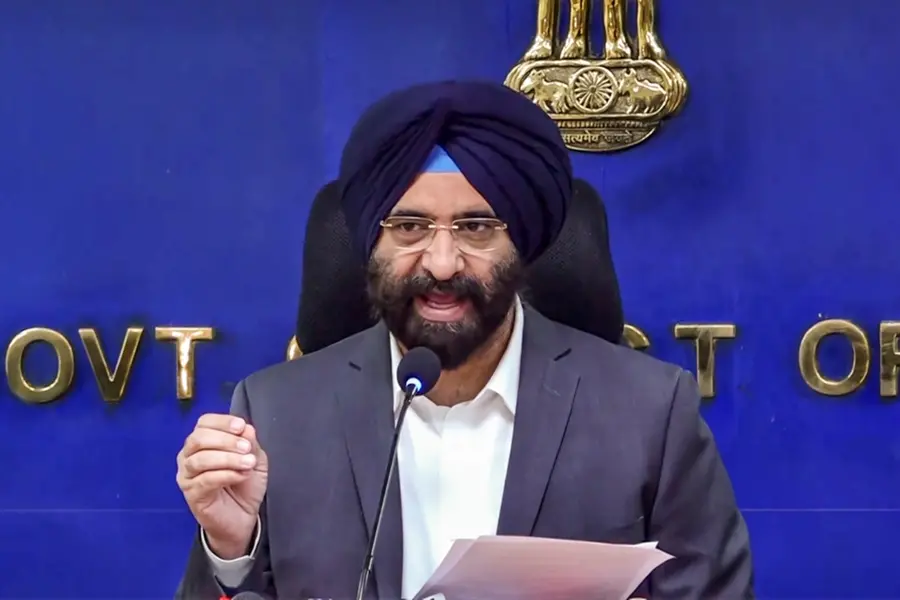
New Delhi: Delhi Environment Minister Manjinder Singh Sirsa on Tuesday apologised to residents for the toxic air in the national capital, stating that it is “impossible” for any elected government to bring down the Air Quality Index in just nine to ten months.
Delhi-NCR continues to struggle with worsening air quality, with thick smog and AQI levels fluctuating between poor and severe, triggering serious health concerns for people across the region.
Addressing a press conference, Sirsa blamed the previous Aam Aadmi Party government for the pollution crisis and said the current BJP-led government is taking steps to address the problem.
“It is impossible for any elected government to reduce AQI in 9-10 months. I apologise for the pollution in Delhi. We are doing better work than the dishonest AAP government, and we have reduced AQI each day. This disease of pollution is given to us by the Aam Aadmi Party, and we are working to fix it,” Sirsa said during the press conference.
What do the latest air quality readings show?
As per data from the Central Pollution Control Board, the Air Quality Index in Delhi stood at 354 at 4 pm on Tuesday, placing it in the ‘very poor’ category.
Earlier in the day, at around 8 am, the overall AQI was recorded at 378, which also fell under the ‘very poor’ classification.
There was a slight improvement compared to Monday, when the AQI had reached 427 at around 4 pm, categorised as ‘severe’.
How are residents being affected?
Despite the marginal improvement, pollution levels remained dangerously high in many parts of the city. A dense layer of toxic smog covered Delhi on Tuesday morning, sharply reducing visibility and causing discomfort to residents.
What steps are authorities taking to tackle the issue?
The first meeting of the Expert Committee set up by the Commission for Air Quality Management for NCR and adjoining areas to address air pollution from vehicular emissions was held on Monday. The meeting was chaired by Ashok Jhunjhunwala and co-chaired by Professor Randeep Guleria.
According to the CAQM, the discussion focused on major issues linked to vehicular emission sources in Delhi-NCR. The committee is expected to submit concrete and actionable recommendations to reduce vehicular emissions in its upcoming meetings.
Meanwhile, the Commission for Air Quality Management has already enforced all measures under Stage IV of the Graded Response Action Plan across Delhi-NCR in response to the rising pollution levels.
ANI inputs
Published: 16 Dec 2025, 06:20 pm IST
Related Topics
Disclaimer: Kindly avoid objectionable, derogatory, unlawful and lewd comments, while responding to reports. Such comments are punishable under cyber laws. Please keep away from personal attacks. The opinions expressed here are the personal opinions of readers and not that of Mathrubhumi.
