
The ECI has rejected allegations of unilateral decision-making by CEC Gyanesh Kumar, telling the Supreme Court that all three SIR orders were unanimous. It has also clarified Form 6 procedures, ECINet safeguards and discrepancies involving voters in Goa.
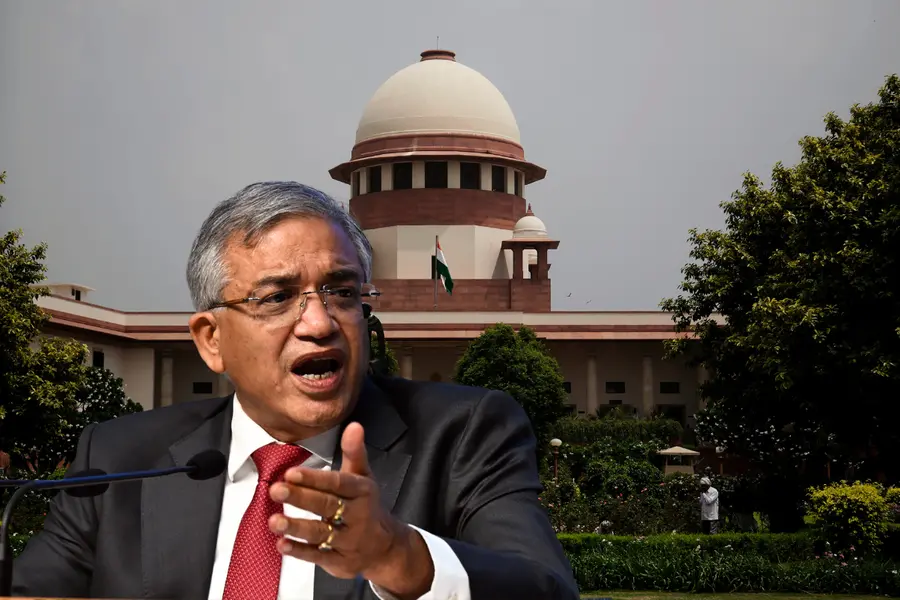
New Delhi: The Election Commission of India has denied allegations of unilateral decision-making by Chief Election Commissioner Gyanesh Kumar, maintaining that all three orders related to the Special Intensive Revision (SIR) of electoral rolls were unanimous decisions of the Commission.
In an affidavit filed before the Supreme Court in response to petitions challenging the CEC's functioning and changes associated with SIR-related forms, the ECI said the allegations relied entirely on a single news report. It also stated that the affidavit itself had been approved unanimously by the CEC and the two Election Commissioners.
Also Read

The Commission clarified that suggestions, observations and queries raised by its members during internal discussions do not constitute formal decisions.
ECI says all three SIR orders were unanimous
According to the affidavit, the three SIR orders issued in June 2025, October 2025 and May 2026 were unanimously approved by the Commission.
The ECI explained that files are generally examined first by one Election Commissioner, then by the other, before being placed before the CEC. In urgent cases, approvals may be obtained electronically, with the necessary records added to the file subsequently.
The poll body said observations or queries raised during this process cannot be treated as formal decisions under Section 18 of the Chief Election Commissioner and Other Election Commissioners Act, 2023.
It also denied releasing or authorising the release of any internal note or file to the media.
ECI clarifies controversy over Form 6
The Commission told the Supreme Court that Form 6, which is used for voter registration, had not been amended. According to the ECI, only the Centre had the authority to amend the prescribed form, while the declaration required for the SIR exercise was a separate document.
However, the Commission acknowledged that the way the application was presented online could be interpreted as an amendment.
It said that from October 21, the online application would be separated into Form 6 and the accompanying declaration to bring the digital process in line with the physical application format.
The ECI also addressed concerns about voters whose details could not be mapped during the revision. It said booth-level officers (BLOs) would generally collect the necessary documents from their homes, with hearings reserved for exceptional cases and preferably conducted online.
Addressing concerns about the ECINet electoral system, the ECI said no voter's name could be added to or deleted from the electoral roll without an order from the Electoral Registration Officer (ERO).
It also said a committee comprising experts from the Indian Institutes of Technology (IIT) and the Indian Institute of Science (IISc) had been established to examine compliance with the prescribed safeguards.
The Commission addressed the controversy involving 97 voters in Goa who were initially reported as having been left out of the electoral rolls. According to the ECI, 88 had already been enrolled, six were abroad and three held Portuguese passports.
ECI explains administrative dispute over work allocation
The affidavit also addressed a work allocation order dated July 28, issued by an Additional Secretary on deputation to the Commission.
The ECI said both Election Commissioners wrote to the Cabinet Secretary on July 29. It added that the order was never implemented after the two commissioners issued a joint direction on July 30.
On appeals concerning the inclusion of voters in West Bengal, the Commission said officers from the state Chief Electoral Officer's office had filed them in compliance with Supreme Court directions. It maintained that these matters had not been brought before the Commission.
The ECI further stated that action would be taken against any officer found issuing orders beyond their delegated authority.
The Commission opposed the petition seeking to restrain Gyanesh Kumar from discharging his functions, arguing that the plea was not maintainable.
It maintained that the CEC could be removed only through the procedure applicable to a Supreme Court judge. The ECI also referred to previous Supreme Court decisions rejecting repeated challenges to electronic voting machines (EVMs).
The Commission said it had submitted a brief response because of the Dussehra vacation and sought permission to file a detailed, point-by-point reply to the petitions.
Published: 26 Oct 2026, 08:57 pm IST
ABOUT THE AUTHOR
Related Topics
Disclaimer: Kindly avoid objectionable, derogatory, unlawful and lewd comments, while responding to reports. Such comments are punishable under cyber laws. Please keep away from personal attacks. The opinions expressed here are the personal opinions of readers and not that of Mathrubhumi.