
In an extensive resignation letter addressed directly to the country's youth, Pradhan framed his exit as a necessary step to protect the future of medical aspirants, preserve national unity, and prevent anti-national forces from exploiting the high-voltage protests centered at Delhi’s Jantar Mantar.
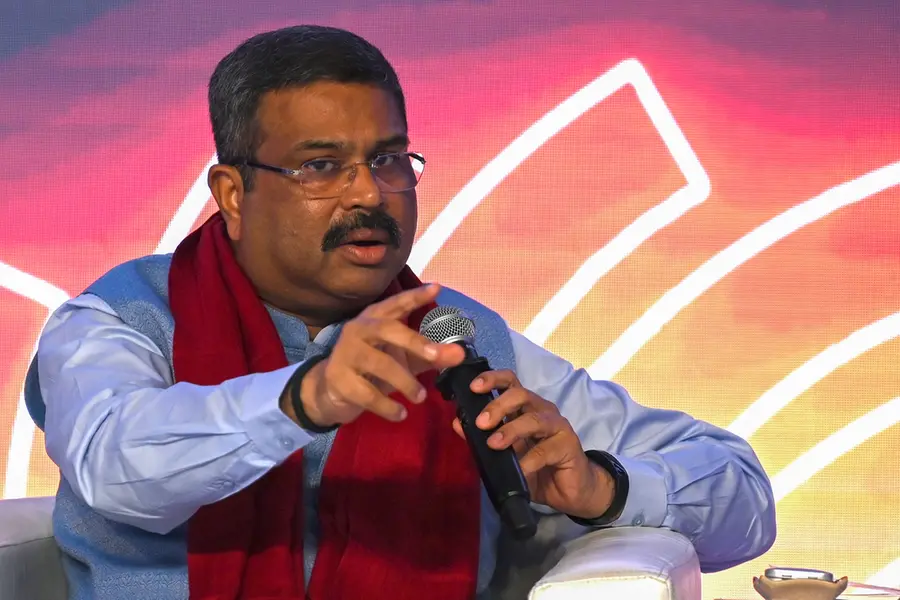
New Delhi: In a dramatic development following weeks of nationwide turmoil, student demonstrations, and political standoffs, Union Minister of Education Dharmendra Pradhan tendered his resignation on Saturday.
The decision comes as the political climax to the monthslong NEET-UG paper leak controversy, which ignited intense public fury over exam integrity, systemic failure, student mental health, and institutional accountability. Protests at Delhi’s Jantar Mantar and across multiple states—led by youth movements like the Cockroach Janta Party (CJP), student unions, and opposition factions—had made Pradhan’s step-down a non-negotiable demand.
Also Read

The letter: Key statements and quotes
Addressing his statement directly to his "young colleagues" on X (formerly Twitter), Pradhan framed his exit not as a personal defeat, but as a sacrifice to preserve student stability and prevent political exploitation of the ongoing agitation.
Pradhan opened his letter by reflecting on his lifelong involvement in academic policy and youth welfare: "For over four decades, I have been dedicated to students, teachers, and educational reform. I have always believed that a strong, inclusive, and visionary education system is the cornerstone of a powerful nation... Fulfilling the dreams of India's young generation has been a moral commitment in all our political and social lives."
Defending the Union Government’s swift administrative interventions following the compromised May 3 examination, Pradhan highlighted the steps taken to protect honest candidates:
"Irregularities were found in the NEET-UG examination held on May 3, 2026. The Government of India immediately took cognizance of this, handed over the investigation to the CBI, canceled the examination, and announced a re-examination date. Along with this, it was decided to conduct this examination in the CBT (Computer-based test) mode from next year."
"From day one, I took responsibility for this and never shied away from this situation. It was my resolve that we would not let the potential of any meritorious student be ruined by the examination mafia, and no student would be subjected to injustice."
Expressing grief over how the situation unfolded after results were declared on July 16, Pradhan targeted individuals who he alleged manipulated student angst:
"However, during this period, individuals in responsible positions tried to create obstacles and mislead several students, which deeply distressed me... I am saddened by the events of the past 10 days. This is not a matter of personal prestige for me."
The core reason for resignation
Explaining why he ultimately submitted his resignation to Prime Minister Narendra Modi, Pradhan emphasized national unity and protecting students from legal complications:
"Considering the situation that has arisen at Jantar Mantar and across the country, so that anti-national forces do not take advantage of it, so that the unity of the country remains intact, so that the future of even one student of India does not get entangled in legal complexities, so that our children can focus their time on studies and building their careers, I have sent my resignation to the Honorable Prime Minister."
The surrounding context: Paper leaks, protests, and systemic failure
1. The May 3 examination and paper leak accusations
The crisis began on May 3, when over 20 lakh (2 million) candidates attempted the NEET-UG medical entrance examination. Allegations of paper leaks, organized test-racket syndicates, and compromised examination centers immediately made headlines. The intense pressure, coupled with uncertainty over candidate futures, brought renewed national attention to the severe psychological toll on medical aspirants and the broader conversation around exam-related suicides and mental health support.
2. CBI investigation and structural overhauls
Following initial inquiries, the government handed the investigation to the Central Bureau of Investigation (CBI). The original exam was scrapped, and a re-examination was successfully organized on June 21. Simultaneously, administrative overhauls inside the National Testing Agency (NTA) were initiated, alongside a policy mandate to convert the NEET-UG entrance exam into a Computer-Based Test (CBT) starting next year to eradicate paper-handling vulnerabilities.
3. Escalating agitation at Jantar Mantar
Despite the declaration of revised results on July 16, student agitation flared up into a major political crisis. Groups such as the Cockroach Janta Party (CJP), along with student movements and opposition figures, sustained protests at Jantar Mantar in the capital. Protesters faced police barricades, tear gas, and internet suspensions during marches toward Parliament, keeping the demand for Pradhan's immediate exit as the central rallying cry.
What lies ahead?
Pradhan’s resignation represents one of the biggest political casualties of examination fraud controversies in recent Indian history.
As Prime Minister Modi considers an interim appointment or portfolio reassignment for the Ministry of Education, the government faces the dual task of restoring trust among millions of young aspirants and executing the planned transition to digital testing platforms (CBT) to prevent future leaks.
Published: 25 Jul 2026, 03:00 pm IST
ABOUT THE AUTHOR
Disclaimer: Kindly avoid objectionable, derogatory, unlawful and lewd comments, while responding to reports. Such comments are punishable under cyber laws. Please keep away from personal attacks. The opinions expressed here are the personal opinions of readers and not that of Mathrubhumi.