
The Centre has clarified that Indian passports are issued under the Passports Act to regulate overseas travel after due verification, while noting that fewer than 8% of Indians currently hold one.
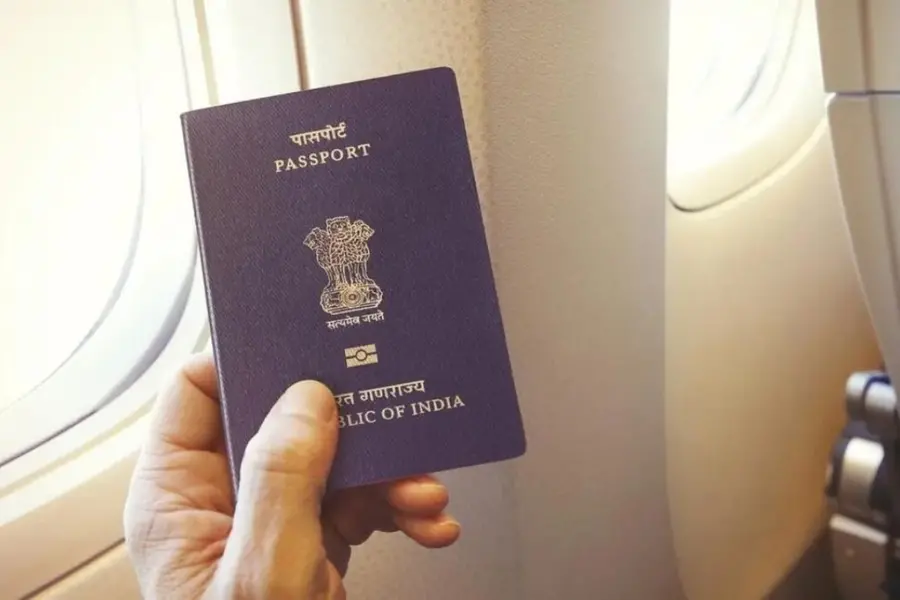
The Centre has clarified that an Indian passport is primarily issued to regulate the overseas travel of Indian citizens under the Passports Act, adding that fewer than 8% of Indians currently possess one.
Amid debate over whether a passport can be used as proof of citizenship during the Election Commission's Special Intensive Revision (SIR) of electoral rolls, the Ministry of External Affairs (MEA) has reiterated that an Indian passport is primarily a travel document issued to regulate the departure of Indian citizens from the country.
Also Read

MEA spokesperson Randhir Jaiswal said passports are issued only after a prescribed verification process under the Passports Act, 1967, and the Passports Rules, 1980.
Less than 8% of Indians hold a passport
The government also highlighted that passport ownership remains relatively low in India.
According to the MEA, less than 8% of Indian citizens currently possess a passport, indicating that the document is not universally held and therefore cannot be treated as the only identity document available to citizens.
What did the MEA say?
Addressing the issue during a media briefing, MEA spokesperson Randhir Jaiswal said: "An Indian passport is a document that, as per the Passports Act, 1967, is issued by the Government of India to regulate the departure from India of citizens of India."
He added that passports are issued only after due verification through an established legal process.
Why the clarification was issued
The clarification comes amid questions over whether passports should be accepted as proof of citizenship during the Election Commission's ongoing Special Intensive Revision (SIR) of electoral rolls in several states.
The issue gained attention after senior MEA officials, while marking Passport Seva Divas on June 24, described the passport primarily as a travel document rather than a standalone proof of citizenship.
Opposition questioned the government's stand
The Centre's earlier remarks drew criticism from the Congress, which questioned how a government-issued passport could be issued to an Indian citizen yet not be considered definitive proof of citizenship in every context.
Opposition leaders argued that such a position could create uncertainty over citizenship rights.
Government reiterates legal position
The MEA has maintained that passports are issued only after due verification in accordance with the law.
However, it reiterated that the document is intended to regulate international travel by Indian citizens under the Passports Act, while the acceptance of documents for purposes such as electoral roll verification is governed by the relevant legal framework and the Election Commission's rules.
Published: 15 Jul 2026, 10:49 am IST
Disclaimer: Kindly avoid objectionable, derogatory, unlawful and lewd comments, while responding to reports. Such comments are punishable under cyber laws. Please keep away from personal attacks. The opinions expressed here are the personal opinions of readers and not that of Mathrubhumi.