
Prashant Kishor’s Jan Suraaj has recorded an impressive early showing in the Bihar Assembly election count, taking leads in four constituencies and signalling a stronger-than-expected debut performance.
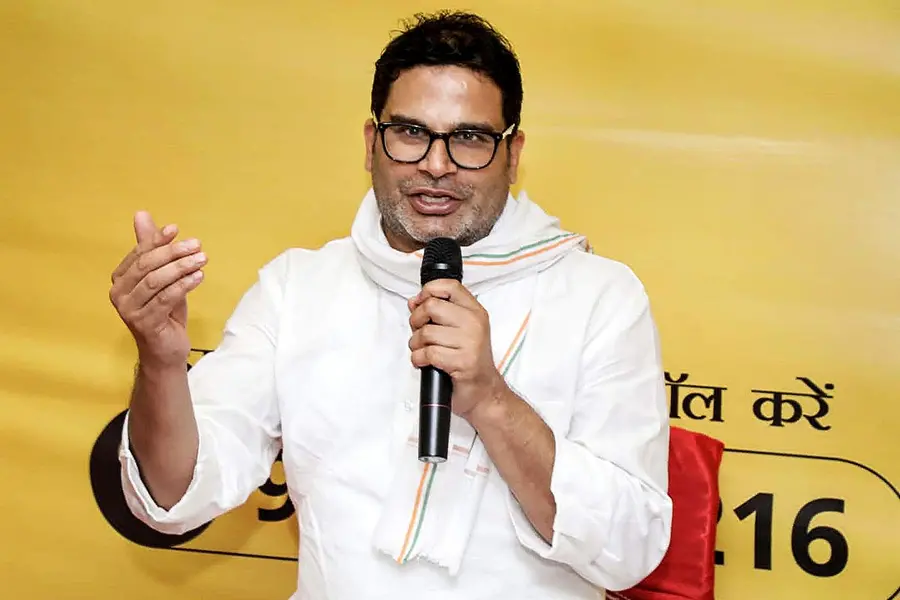
Patna: The Jan Suraaj Party (JSP) — contesting its first Bihar Assembly election — saw its early momentum evaporate within hours of counting on Friday, slipping from three initial leads to zero as per updated NDTV trends at 11.16 am.
The party, founded and led by political strategist-turned-politician Prashant Kishor, had briefly surprised observers when it appeared ahead in a handful of constituencies soon after counting began at 8 am.
But by mid-morning, the party had lost every one of those leads, reverting to what exit polls had overwhelmingly predicted: a tough debut with 0–3 seats at best.
The setback prompted a candid response from JSP’s Bihar President Manoj Bharti, who acknowledged both the party’s communication gap and the electorate’s hesitation in embracing a new political alternative.
Speaking to PTI, Bharti said the election outcome was an indicator of “mutual failure.”
“We have been saying from the start that we are trying to bring new politics to Bihar. It is tough to take this politics to the people of Bihar,” Bharti said. “Prashant Kishor always said that if people understood what we were saying, we would be on top; if they didn’t, we would fail. These trends show that people have failed to understand us, and we also failed to make them understand.”
The remarks underline what has been one of the central challenges for Jan Suraaj: translating Kishor’s long, statewide padyatra and policy-driven pitch into electoral traction. While the party fielded candidates in all 243 seats within a year of its formation — an ambitious move for a new entrant — three candidates eventually withdrew and one nomination was rejected.
Even so, the JSP claimed to have mounted strong contests in around 15 constituencies, particularly in areas Kishor spent significant time during his outreach campaigns.
But Friday’s counting reaffirmed the structural difficulty of breaking into Bihar’s entrenched two-bloc system dominated by the National Democratic Alliance (NDA) and the Mahagathbandhan (MGB). Both alliances commanded broad voter loyalty, leaving limited space for a fledgling third front, despite its organisational push and visibility.
Political observers had noted that while JSP succeeded in creating narrative buzz — especially among youth and first-time voters — converting that into booth-level strength, polling-day mobilisation and caste-aligned voter blocks required deeper roots and more time. The early disappearance of its leads, they say, reflects the gap between campaign perception and election machinery.
For Prashant Kishor, one of India’s most sought-after election strategists, Friday’s trends mark a sobering reality check as he attempts to transition from behind-the-scenes planner to mass politician.
However, party leaders insist the project remains long-term and that the groundwork laid ahead of this election will pay dividends in future cycles.
For now, as JSP shows zero leads across all 243 constituencies, the 2025 Bihar elections underline both the promise and the limits of insurgent political experiments in a state defined by deep-rooted loyalties and caste-driven arithmetic.
Published: 14 Nov 2025, 10:37 am IST
Related Topics
Disclaimer: Kindly avoid objectionable, derogatory, unlawful and lewd comments, while responding to reports. Such comments are punishable under cyber laws. Please keep away from personal attacks. The opinions expressed here are the personal opinions of readers and not that of Mathrubhumi.
