
Offline Aadhaar verification will allow legally registered entities to become Offline Verification Seeking Entities (OVSEs) and conduct identity checks at hotels, offices, schools, and events.
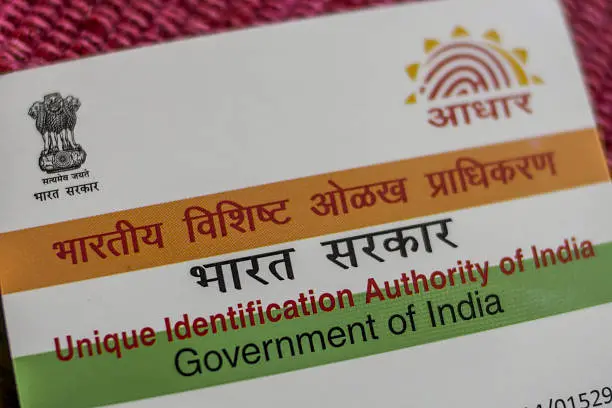
New Delhi: India is preparing to roll out a new offline Aadhaar verification system, a move that could transform how identity checks are conducted across the country. Under the proposed system, individuals may soon be asked to scan their Aadhaar to enter hotels, gated communities, offices, exam centres, and events, according to various reports.
The upcoming system will use QR codes and a “proof of presence” mechanism, in which a user’s face is scanned against Aadhaar data without connecting to UIDAI servers. Unlike current face-authentication tools used by banks, the new system does not require live syncing with a central database.
New Aadhaar app in final testing
The Unique Identification Authority of India (UIDAI) is finalising a new Aadhaar app that will enable offline verification. The app, currently in pre-launch testing, will allow QR-based authentication, let users carry a digital Aadhaar, and include privacy safeguards such as selective hiding of less relevant data fields. While an exact launch date has not been announced, UIDAI says the app is in its “final testing” phase.
Who can verify Aadhaar offline?
Draft rules released by UIDAI propose that any legally registered entity can apply to become an “Offline Verification Seeking Entity” (OVSE). Approved organisations will integrate the QR- and app-based technology needed to verify individuals. A “nominal” fee will be charged for registration.
UIDAI has outlined potential use cases for offline verification, including hotel check-ins, entry to gated communities and offices, access to stadiums and events, student verification for exams, hospital admissions, age checks for restricted items, and identity verification for delivery or domestic staff. The authority also plans a “DigiYatra-style” flow for ticketed travel. Offline verification will be introduced in phases, based on market demand.
Balancing privacy and convenience
UIDAI says offline Aadhaar verification is intended to enhance privacy by eliminating the need to carry physical Aadhaar cards, which can be misused. However, privacy advocates have raised concerns that requiring Aadhaar for routine activities could encroach on personal privacy and create a form of “ID policing” in daily life.
Particular attention is expected on how data is shared and stored, and whether users retain control over their information when using the “proof of presence” system.
UIDAI has already held detailed meetings with more than 250 organisations to brief them on the new system. Officials say offline Aadhaar verification is likely to become increasingly widespread in the coming months.
Published: 21 Nov 2025, 09:00 pm IST
Related Topics
Disclaimer: Kindly avoid objectionable, derogatory, unlawful and lewd comments, while responding to reports. Such comments are punishable under cyber laws. Please keep away from personal attacks. The opinions expressed here are the personal opinions of readers and not that of Mathrubhumi.
