
The Unique Identification Authority of India (UIDAI) has introduced several Aadhaar-related rule changes for 2025, directly affecting fees, e-KYC, PAN linkage, and biometric updates
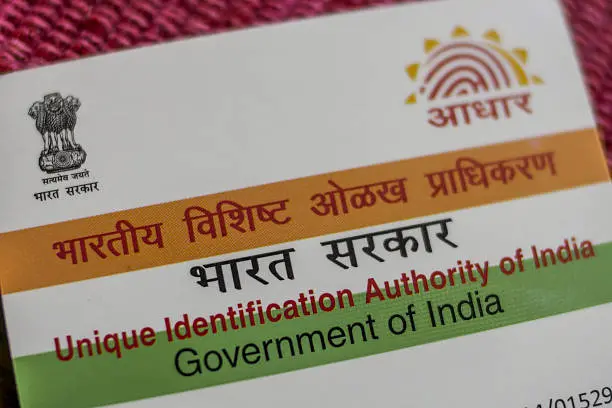
The Aadhaar card remains one of India’s most essential identification documents, serving as both proof of identity and address. It is mandatory for accessing government schemes, subsidies, scholarships, and financial services such as banking, insurance, and investments.
In 2025, the UIDAI has rolled out new Aadhaar rules and updates that users should be aware of, including higher update fees, revised e-KYC norms, and new biometric regulations for children.
Also Read

1. Aadhaar update fees increased
- Effective 1 October 2025, the UIDAI has revised fees for updating Aadhaar details.
- Demographic updates (name, address, date of birth, mobile number, or email) now cost Rs 75, up from Rs 50.
- Biometric updates (fingerprint, iris, or photo) now cost Rs 125, up from Rs 100.
- Document updates are free online till 26 June 2026, but cost Rs 75 at enrolment centres.
- Aadhaar reprint costs Rs 40.
- Home enrolment services are priced at Rs 700 for the first person and Rs 350 for each additional individual at the same address.
2. Free biometric updates for children
To ease the Aadhaar update process for minors, the government has offered free biometric updates:
- For children aged 5–7 years and 15–17 years, biometric updates are free once.
- For children aged 7–15 years, biometric updates are free till 30 September 2026.
- This aims to ensure accuracy and prevent Aadhaar-related service rejections in the future.
3. PAN-Aadhaar linking remains mandatory
The government continues to enforce mandatory PAN-Aadhaar linking.
Users who fail to link their Aadhaar with their PAN risk having their PAN marked inoperative, which can block or delay:
- Mutual fund transactions
- Tax-saving investments
- Demat account operations
- Redemption of financial instruments
Therefore, taxpayers and investors are urged to confirm their PAN-Aadhaar linkage on the Income Tax portal to avoid service disruptions.
4. Aadhaar e-KYC and validation rules strengthened
UIDAI and the National Payments Corporation of India (NPCI) have jointly launched a new Aadhaar e-KYC system, allowing banks and NBFCs to verify customers using masked Aadhaar IDs. This enhances data privacy and simplifies account opening.
Additionally, Aadhaar validation norms have been tightened. Financial institutions can perform Aadhaar-based KYC only if the Aadhaar number is active and non-duplicate. Users are advised to verify their Aadhaar status through the UIDAI website or mAadhaar app.
Upcoming changes from January 2026
- Starting 1 January 2026, Aadhaar-enabled Payment System (AePS) regulations will become stricter.
- The RBI has directed banks and business correspondents to adopt stronger fraud monitoring and risk management mechanisms.
- AePS-based withdrawals and deposits may face tighter checks, especially in rural and semi-urban areas.
- While these changes aim to curb fraud, some users may face limited access or higher transaction costs.
Why these Aadhaar changes matter
These rule updates affect how Indians access key financial and government services. Failure to comply may result in:
- Blocked financial transactions
- KYC rejections
- Delayed mutual fund redemptions
- Inactive PAN or Aadhaar status
The government’s goal is to enhance security, reduce fraud, and simplify digital verification across India’s financial ecosystem.
What users should do now
Check your Aadhaar update date and status via the UIDAI website or mAadhaar app.
- Verify your PAN-Aadhaar linking status on the Income Tax portal.
- Ensure your Aadhaar-linked KYC is current with banks, insurers, and investment platforms.
- Learn about AePS rule changes if you use Aadhaar-enabled banking services in rural areas.
By staying updated on these Aadhaar rule changes, users can avoid disruptions and maintain smooth access to India’s expanding range of digital and financial services.
Published: 22 Oct 2025, 02:14 pm IST
Related Topics
Disclaimer: Kindly avoid objectionable, derogatory, unlawful and lewd comments, while responding to reports. Such comments are punishable under cyber laws. Please keep away from personal attacks. The opinions expressed here are the personal opinions of readers and not that of Mathrubhumi.