
Vietnamese police have arrested two men after discovering the frozen bodies of two adult tigers hidden in a basement freezer
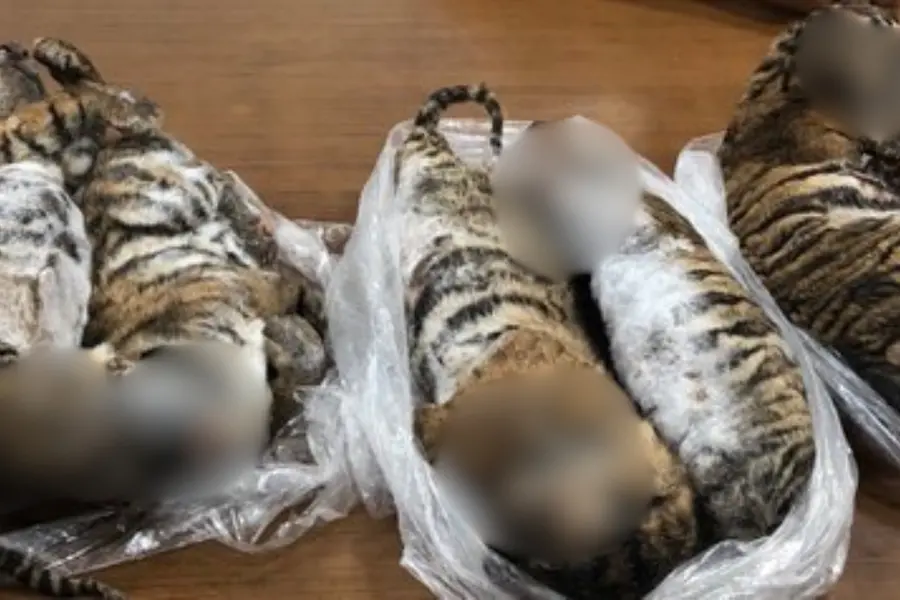
Hanoi: Police in Thanh Hoa province, south of Hanoi, said officers discovered two dead adult tigers stored in a freezer in the basement of a 52-year-old man’s home. According to authorities, the tigers weighed a combined 400 kilograms. Their internal organs had been removed before being frozen.
The suspect, identified as Hoang Cao Dat, allegedly constructed a concealed cellar beneath his house, installed reinforced iron doors and set up surveillance cameras to avoid detection.
Also Read

Arrests and alleged tiger bone glue operation
Thanh Hoa Provincial Police said Dat had purchased the animals for nearly two billion Vietnamese dong (around $77,000) from 31-year-old Nguyen Doan Son.
Son was later arrested and reportedly admitted buying the tigers from a Laotian man near the Ha Tinh border before transporting them to Thanh Hoa for resale.
Authorities said Dat intended to process the carcasses into tiger bone glue, a substance believed by some to have medicinal properties for skeletal ailments. Equipment used to produce the glue was reportedly found at the property.
Both men have been detained and are under investigation for violating regulations on the protection of endangered and rare animals. The offence carries potential prison sentences ranging from one to 15 years, along with fines of up to five billion dong.
Also read: Mumbai metro mishap: One dead, three injured after pillar collapses in Mulund | VIDEO
Tigers nearly extinct in Vietnam
Tigers once roamed Vietnam’s forests but have now almost entirely disappeared from the wild in the country.
The species is listed as endangered on the International Union for Conservation of Nature (IUCN) Red List. Poaching and illegal wildlife trade remain among the primary threats to tiger populations across Asia.
Vietnam is considered a major hub and transit route for illegal wildlife products, including tiger bones, which are used in traditional medicine despite conservation warnings.
The case highlights ongoing enforcement efforts against wildlife trafficking in Southeast Asia, where demand for animal-derived products continues to drive cross-border smuggling networks.
(With AFP inputs)
Published: 14 Feb 2026, 03:06 pm IST
Related Topics
Disclaimer: Kindly avoid objectionable, derogatory, unlawful and lewd comments, while responding to reports. Such comments are punishable under cyber laws. Please keep away from personal attacks. The opinions expressed here are the personal opinions of readers and not that of Mathrubhumi.