

A gentle yet deeply affecting Tamil debut, ‘The Tablet’ follows a single mother and her young son in Sivakasi as they navigate life shaped by medication, silence, and society’s gaze. Without melodrama, the film quietly dismantles myths around HIV, replacing fear with empathy and dignity.
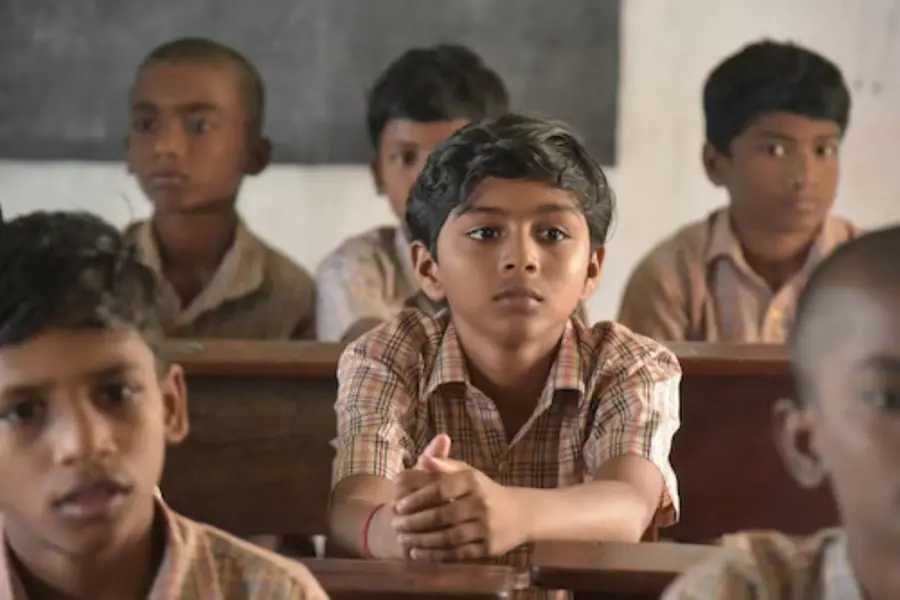
'The Tablet', the debut feature by filmmaker Aravind Siva, has quietly but firmly carved a space for itself in conversations around sensitive storytelling. The Tamil film, which had its World Premiere at the 17th edition of the Bengaluru International Film Festival (BIFFes) 2026, stood out as the only Tamil film selected in the Asian Cinema Competition.
Even after the festival concluded on February 6, the film continues to draw attention for its tender, humanistic portrayal of life with HIV.
Also Read
Set in Sivakasi, Tamil Nadu, The Tablet tells the story of two HIV survivors, a single mother, Kayal (played by Raichal Rabecca), and her young son Prabhu, navigating everyday life shaped by medication, perception, and deeply embedded social constructs.
Rather than approaching the subject with heaviness, the film unfolds with warmth and emotional clarity.
Aravind Siva, who earlier worked as an assistant director on PS Vinothraj’s Rotterdam Tiger Award-winning Pebbles 'Koozhangal' (2021), and later authored a book about his cinematic journey, spoke to Mathrubhumi in a freewheeling chat about the experiences and reflections that shaped The Tablet.
Q: What first changed your perspective while working on this story?
Aravind Siva: “I once saw people living with HIV as a danger, untouchable, like shadows to avoid. But working closely with HIV survivors shattered that myth. Through real conversations, I saw their humanity shine. The taboo around HIV must end. It's no different from diabetes or high blood pressure, a manageable condition with daily meds, allowing full, healthy lives. What matters isn't the virus; it's how we see them, treat them. They deserve empathy, not sympathy. Treat them as fellow humans. More than making this a film, I must change my own view first. I want people to know the truth—not myths, but the science we have now. This applies not only to HIV, but to everyone afraid to share their identity across judgments.”
Q: Why did you choose to tell this story through a child’s world?
Aravind Siva: “The world of children is filled with joy and celebration, whether HIV-positive or not. As adults, we're the ones imprinting the image of HIV onto them. If we portray it as threatening, they'll live in fear. However, if we offer an alternative, truthful explanation, they'll understand. They won't even think twice about it. Of course, the fact is they must take medicine every day, but that doesn't make them abnormal. In the film, Prabhu is a small boy who doesn't know he has HIV. His world is simple and easy. His mother, Kayal, complicates things. As adults, we often don't know how to handle children. We think we know everything, and they know nothing. Yet they understand everything if we explain it as simply as possible. For that, we must know the subject deeply. This realization influenced me deeply. I'm always happy to be with children. It helped me simply find my narrative. Though the subject is sensitive and serious, my intention wasn't to shoot in a heavy, serious style. I want the film to feel like a breeze, not pitying my characters, but understanding their inner world. The world needs empathy.”
Q: How did your journey with 'Pebbles' influence this film?
Aravind Siva: “Working on 'Pebbles' was a great experience for me. I worked with director PS Vinothraj for more than six years and learned a lot from him. During the journey of 'Pebbles', I met many filmmakers, especially director Ram sir. He was an important one who gave me a newer perspective on cinema and everything. 'Pebble's gave me many things I have now—even my production house is the same one that produced 'Pebbles' in its initial stages. Doing a film like 'The Tablet' isn't easy. Without passion for cinema, this wouldn't have happened. I thank my producer, Sai Devanand S sir, and Learn and Teach Production for this. Writing the story of 'The Tablet' was very challenging for me, given its sensitivity and seriousness. Working on Pebbles actually helped me write it. The process was joyful and deeply personal at the same time. 'Pebbles' was the start of everything in my career. It's always close to my heart.”
Q: What did returning to Sivakasi reveal to you as a filmmaker?
Aravind Siva: “I see more discrimination and judgments in rural areas than in urban ones—not just in Sivakasi, but all over India. In cities, judgments are fewer; at least we can go wherever we want. But in rural areas, it feels like we're always under surveillance, questioned about every single act. People judge you directly.I was born and brought up in Sivakasi, well-known for crackers and factories. When I returned as a filmmaker, I felt their judgments and discrimination stemmed from unexplored worlds. In the film's climax, Kayal thinks about moving to Chennai. She's ready to explore the worlds around her. Maybe she shifted quickly, who knows? As a filmmaker, I tried my best to stay with the truth.”
Q: If audiences take away just one feeling from ‘The Tablet’, what should it be?
Aravind Siva: “Hope. Hope to live a full life. Hope to see fellow humans without judgment.”
Published: 12 Feb 2026, 10:38 am IST
ABOUT THE AUTHOR
Related Topics
Disclaimer: Kindly avoid objectionable, derogatory, unlawful and lewd comments, while responding to reports. Such comments are punishable under cyber laws. Please keep away from personal attacks. The opinions expressed here are the personal opinions of readers and not that of Mathrubhumi.