

Bangalore-born filmmaker Anoop Lokkur’s debut feature 'Don’t Tell Mother' will have its world premiere at the 30th Busan International Film Festival. A tender 1990s family drama, the film explores childhood scars, silent wounds, and the resilience of a mother’s love through an intimate lens of memory
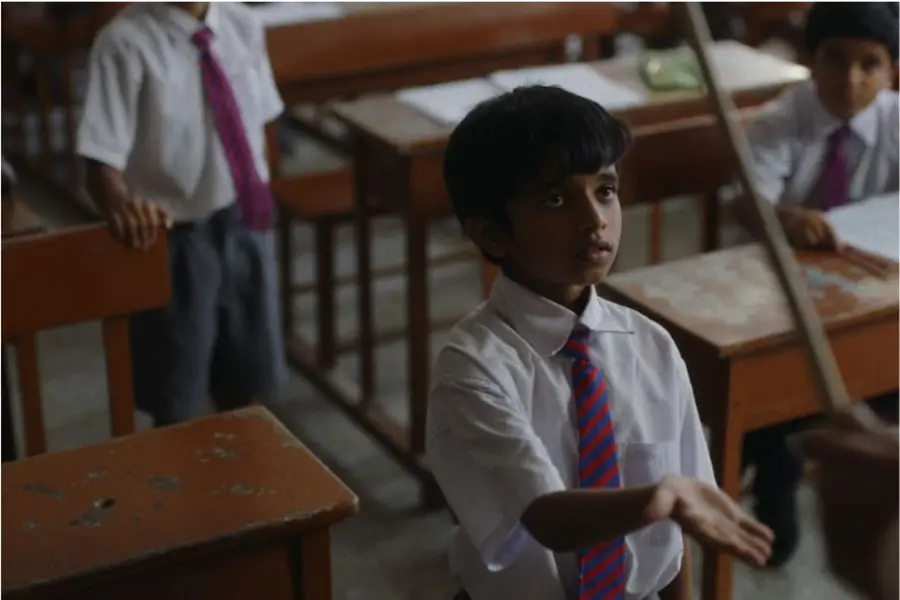
Mumbai: Anoop Lokkur’s debut Kannada feature 'Don’t Tell Mother' is set to make its World Premiere at the 30th Busan International Film Festival in the Windows to Asian Cinema section this September. A tender, deeply personal story set in 1990s Bangalore, the Indo-Australian production follows a young boy enduring corporal punishment at school, a mother weighed down by patriarchy, and the quiet, fragile bonds that tragedy tests.
Movie Synopsis
Set in 1990s Bangalore, 'Don’t Tell Mother' is a delicate coming-of-age drama that follows Aakash, a nine-year-old caught in the quiet turbulence of childhood. At school, he suffers the wrath of an irritable Math teacher, hiding his pain from his mother, Amma. At home, Amma herself struggles under the weight of a patriarchal society that leaves little room for her own identity or desires. In this tense atmosphere, Aakash clings to the innocence of his younger brother, Adi. But when tragedy strikes, their fragile family bonds are pushed to breaking point, forcing Aakash to confront grief, guilt, and a newfound empathy for the mother he once feared.
Director’s Statement
'Don’t Tell Mother' grew from memories of my own childhood in a middle-class Bangalore home. The film looks at the unspoken injuries of childhood — those ordinary yet scarring moments that quietly shape us. Two experiences in particular became the foundation of the story: the day my Math teacher relentlessly caned me for talking in class — a punishment considered routine but deeply traumatic — and a terrifying incident when my younger brother was hospitalized because of me, his life hanging in the balance.
At its core, the film is also about my mother. She was a woman torn between her own aspirations and the demands of a society that silenced her. I watched her dreams shrink under the pressure of expectations — her identity often reduced to her role as a caregiver. Mothers are frequently blamed when children falter, while fathers are praised for their successes. Rarely are women acknowledged for the invisible labor and sacrifices that sustain families.
Through making this film, I began to see my mother differently — her resilience, her quiet battles, and the compromises she endured in the 1990s. With Don’t Tell Mother, I wanted to explore not just the hidden scars of children, but also the emotional cost carried by women who are forced to live within boundaries that deny them recognition or freedom.
Lokkur, a Bangalore-born, Melbourne-based filmmaker, has poured memories of his own childhood into the film, calling it the most personal work he has ever created. Before the big debut at Busan, Mathrubhumi caught up with him for an exclusive conversation.
Q: How did you manage to shoot so beautifully with two kids on set? Wasn’t it difficult?
Anoop Lokkur: Thank you! It was definitely challenging at times, but they were such wonderful kids. Sid was a dream — so emotionally intelligent and committed. And Anirudh, at just five, was incredibly sharp. Everyone was stunned when we realized he already spoke five languages! They brought so much natural energy to the film.
Q: The art direction feels so authentic — how did you recreate the 90s so convincingly?
Anoop: Recreating the 90s was one of the most nostalgic parts of making this film. Paro and Jessica did an amazing job. We also had friends and family who lent us things from that era — many of them in mint condition. It truly felt like stepping back in time.
Q: The family on screen looked picture perfect. How did the casting happen?
Anoop: Anita Mithra helped cast the parents, beautifully portrayed by Karthik and Aishwarya, and also Anirudh as the younger brother. Siddarth, who plays Aakash, was pure serendipity. I was at a café in Ranga Shankara with my editor Pavan when I noticed this boy running around. I told Pavan — that’s the kid I need. I walked up to his mother, asked if he’d like to act, and she turned to him. Sid just said, “Yes!” It felt meant to be.
Q: Is the story semi-autobiographical or completely fictional?
Anoop: Semi-autobiographical. Many moments are drawn from my childhood, though some were reimagined for the screen.
Q: I loved the palette of bluish-greenish tones. Who decided on that?
Anoop: That came from old family photographs. Our DP Matt, along with Jessica, Paro, and I, discussed the visual feel we wanted. Edel, our colorist, then gave it that final nostalgic texture. It adds depth without overwhelming the story.
Q: The film captures Bangalore so beautifully. Is it fair to say you have a love affair with the city?
Anoop: Absolutely! I love Bangalore, especially the Bangalore of the 90s. It was a special time to grow up, and I wanted the film to capture that atmosphere.
Q: With the world premiere at Busan, what’s running through your mind?
Anoop: Honestly, I’m excited and curious. Excited to finally share the film with audiences, and curious to see how they respond. I’m also looking forward to the journey ahead — where the film travels and the people it connects me with.
Published: 06 Sept 2025, 03:34 pm IST
ABOUT THE AUTHOR
Disclaimer: Kindly avoid objectionable, derogatory, unlawful and lewd comments, while responding to reports. Such comments are punishable under cyber laws. Please keep away from personal attacks. The opinions expressed here are the personal opinions of readers and not that of Mathrubhumi.