
If you're planning to leave as soon as ‘The Odyssey’ ends, you may miss one of the film's biggest surprises. Here's what happens after the credits begin.
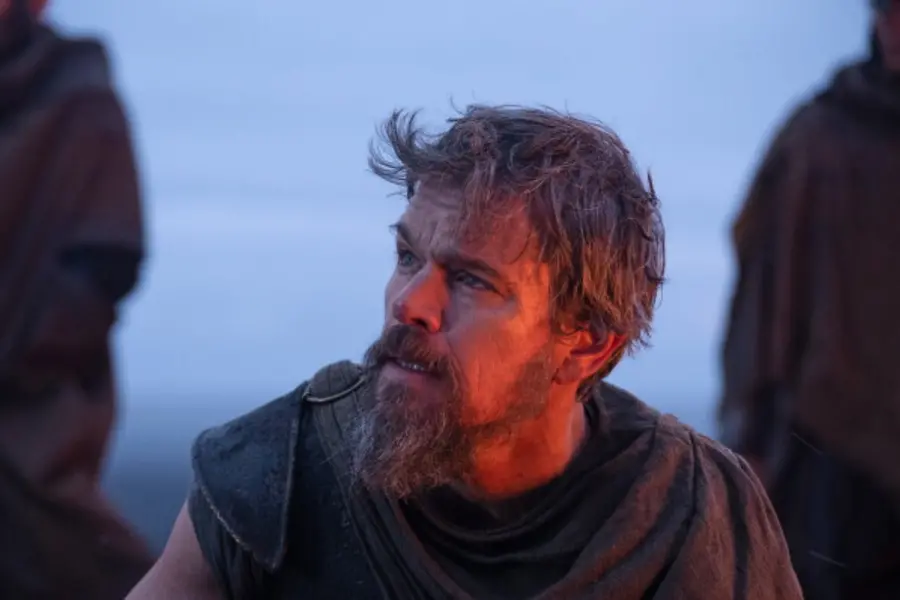
Christopher Nolan's ‘The Odyssey’ has finally arrived in theatres, bringing Homer's legendary epic to life on an unprecedented IMAX scale. As audiences finish the nearly three-hour journey alongside Matt Damon's Odysseus, one question has become just as common as discussions about the ending itself, Is there a mid-credits or post-credits scene?
Here's everything you need to know.
Also Read

Does ‘The Odyssey’ have a mid-credits or post-credits scene?
The answer is no. Like every film in Christopher Nolan's career, ‘The Odyssey’ does not include a mid-credits or post-credits scene. Once the story reaches its conclusion, there are no bonus sequences, sequel teases, or hidden reveals waiting after the credits.
It's a choice that aligns perfectly with Nolan's filmmaking philosophy. Whether it's ‘Inception’, ‘Interstellar’, ‘Dunkirk’, ‘Oppenheimer’, or even ‘The Dark Knight’ trilogy, Nolan has never relied on post-credit scenes to extend his stories. His films are designed to end where the narrative naturally reaches its conclusion.
But there's still a reason to stay until the credits end
Although there's no extra scene, fans may still want to remain seated.
The end credits debut "When I'm Home," an original song performed by James Blake and Travis Scott, with music by Oscar-winning composer Ludwig Göransson. The biggest surprise is that Christopher Nolan is credited as a co-writer, marking the first songwriting credit of his filmmaking career.
The lyrics echo Odysseus' emotional journey home, revisiting themes of memory, war, loss, and redemption that define the film. Several phrases also reference key moments from the story, making the song feel like an emotional epilogue rather than simply background music.
After the song concludes, Göransson's haunting orchestral score continues, allowing the film to end on a quieter, reflective note.
A touching tribute appears during the credits
Viewers who stay through the credits will also notice a dedication to David Keighley, IMAX's longtime Chief Quality Officer.
Keighley spent nearly four decades helping shape IMAX technology and worked closely with Nolan during the development of the new IMAX cameras used to shoot The Odyssey entirely on film. He passed away in 2025, shortly after completing work on the project, making the dedication one of the film's most heartfelt moments.
What does the ending of ‘The Odyssey’ mean?
Rather than treating Odysseus' return as a straightforward heroic victory, Nolan explores what years of violence have cost him.
The film changes its focus from adventure to the lasting psychological effects of war, asking whether anyone truly returns home unchanged.
Even iconic moments such as the Trojan Horse are presented less as clever military triumphs and more as symbols of the devastating consequences of war. It's a thematic approach that echoes Nolan's earlier explorations of conflict in ‘Dunkirk’ and ‘Oppenheimer’, where victory is often accompanied by moral complexity.
Published: 18 Jul 2026, 02:55 pm IST
Related Topics
Disclaimer: Kindly avoid objectionable, derogatory, unlawful and lewd comments, while responding to reports. Such comments are punishable under cyber laws. Please keep away from personal attacks. The opinions expressed here are the personal opinions of readers and not that of Mathrubhumi.