
Devastating visuals from Nepal have sent social media users back to one of Hollywood’s most iconic disaster films.
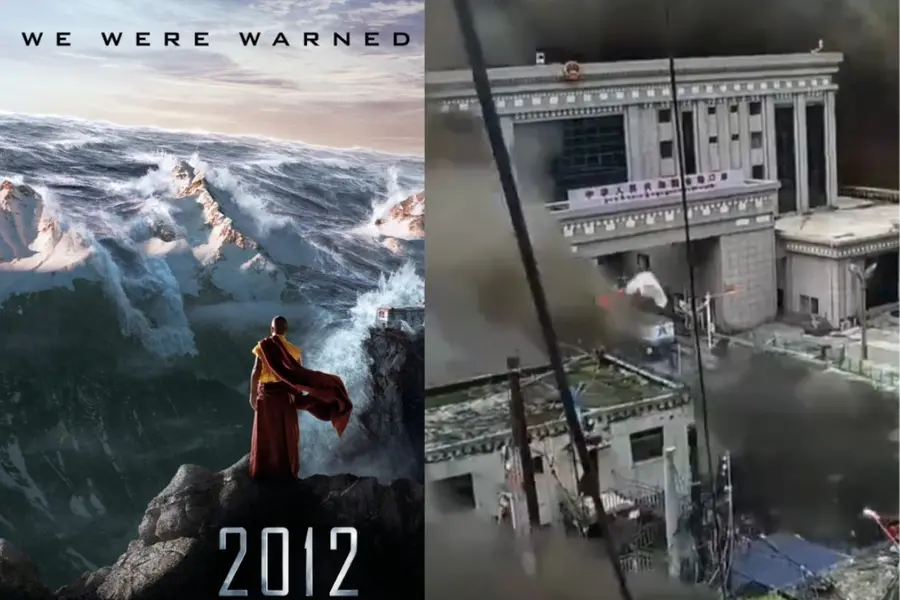
Reality has once again drawn comparisons with Hollywood’s most spectacular visions of catastrophe. As devastating flash floods swept through parts of Nepal, videos of the destruction began circulating online, prompting social media users to revisit a striking sequence from Roland Emmerich’s 2009 disaster film ‘2012’.
The similarities noted by internet users are largely visual: towering mountains, torrents of water and a landscape seemingly overwhelmed by a sudden deluge. A scene featuring a Buddhist monk watching floodwaters approach a mountain-top temple has consequently resurfaced, with viewers comparing it with footage from the disaster in Nepal and neighbouring Tibet.
The online discussion comes as Nepal grapples with a major humanitarian crisis, with the floods killing at least 450 people and leaving more than 1400 others, including foreign tourists, missing.
Why ‘2012’ is trending again
An old clip from ‘2012’ has been widely reposted on X alongside videos showing the recent flooding. In the film, a monk is inside a temple situated high in the Himalayas when he notices an enormous wall of water approaching from behind snow-covered peaks.
He reacts by striking a temple gong twice, but the approaching water soon engulfs the structure.
The fictional sequence has struck a chord with social media users watching footage of the real disaster unfold.
“That’s crazy, they already predicted it in the movie 2012,” wrote one X user while sharing the scene.
Another user posted footage of the destruction alongside the comment: “The scenes fromm Nepal are exactly like the 2012 movie…,”
A third post described CCTV footage from the Tibet-Nepal border as looking “like an apocalyptic scene straight out of The Day After Tomorrow or 2012”.
Other reactions focused on the unsettling parallels between disaster cinema and the increasingly dramatic visuals emerging from the region.
“Remember the giant flood scenes from the movie 2012? Flash floods as tall as mountains have struck parts of Tibet, while Nepal is also facing devastating flood events,” one user wrote.
Another described the footage as a source of environmental anxiety, saying: “The video of the floods in Tibet/Nepal is giving me so so much environmental anxiety like it makes me think of movies like 2012 and Day After Tomorrow, which were supposed to be sci-fi and fictional but it’s become reality for the people there.”
Also Read: New threat after Nepal floods: China warns barrier lake could burst
The scene behind the viral comparison
Released in 2009, ‘2012’ became known for its large-scale depiction of a world facing a series of catastrophic geological events. The film stars John Cusack, Amanda Peet and Chiwetel Ejiofor and imagines a global disaster triggered by dramatic changes beneath the Earth's surface.
Among its most memorable sequences is one set in the Himalayan region. As enormous waves sweep across the landscape, the mountains become engulfed by water, creating one of the film's most recognisable apocalyptic images.
The movie also depicts a secret survival programme involving enormous arks constructed in the Tibet region as humanity attempts to survive the destruction.
Its marketing campaign reinforced the same imagery. One of the film's well-known promotional posters showed a Buddhist monk standing on a mountain while enormous waves approached in the distance, accompanied by the words, “We were warned.”
That imagery has now found its way back into online conversations as users share real footage from Nepal and Tibet.
What happened in Nepal?
While the imagery has prompted comparisons with science fiction, the disaster in Nepal has a very real and devastating cause.
A sudden surge of water in the Bhote Koshi River caused widespread destruction on Wednesday after an avalanche or a collapse involving glacial ice and rock disrupted the flow of the Lhende tributary of the Bhotekoshi.
The flooding first struck the Timure area near Rasuwagadhi, close to Nepal's border with China. The powerful surge swept through communities, damaging or destroying roads, infrastructure and properties.
The disaster has resulted in a significant loss of life, while hundreds remain unaccounted for. Foreign tourists are among those reported missing, adding to the urgency of ongoing rescue and recovery operations.
Also Read: If it wasn't an earthquake, what caused Nepal's deadly floods?
From fiction to real-world anxiety
The renewed interest in ‘2012’ comes against the backdrop of wider concern over extreme weather and disasters in mountainous regions. For many social media users, the resemblance between the film's fictional imagery and the footage emerging from Nepal has been unsettling.
The Nepal disaster has also brought back memories of major tragedies in Uttarakhand, including the Rishiganga disaster of February 2021 and the Dharali disaster of August 2025, both of which caused extensive destruction and loss of life.
However, the online comparisons should not be confused with the science behind the events. ‘2012’ presents an exaggerated fictional scenario involving tectonic upheaval, rising seas and mega-tsunamis, whereas the Nepal flooding has been linked to a sudden natural event involving an avalanche or glacial ice-and-rock collapse.
Still, as images of floodwaters racing through mountainous terrain continue to emerge, the old Hollywood disaster film has once again become a reference point online, this time not because audiences are watching fiction, but because real footage has reminded them of some of cinema's most dramatic visions of catastrophe.
Published: 28 Aug 2026, 12:11 pm IST
ABOUT THE AUTHOR

Related Topics
Disclaimer: Kindly avoid objectionable, derogatory, unlawful and lewd comments, while responding to reports. Such comments are punishable under cyber laws. Please keep away from personal attacks. The opinions expressed here are the personal opinions of readers and not that of Mathrubhumi.