
The story’s sincerity has not only prompted public debate but also encouraged several schools in Kerala, Tamil Nadu and Punjab to rethink how classrooms are designed. Some governments have even issued official circulars in support.
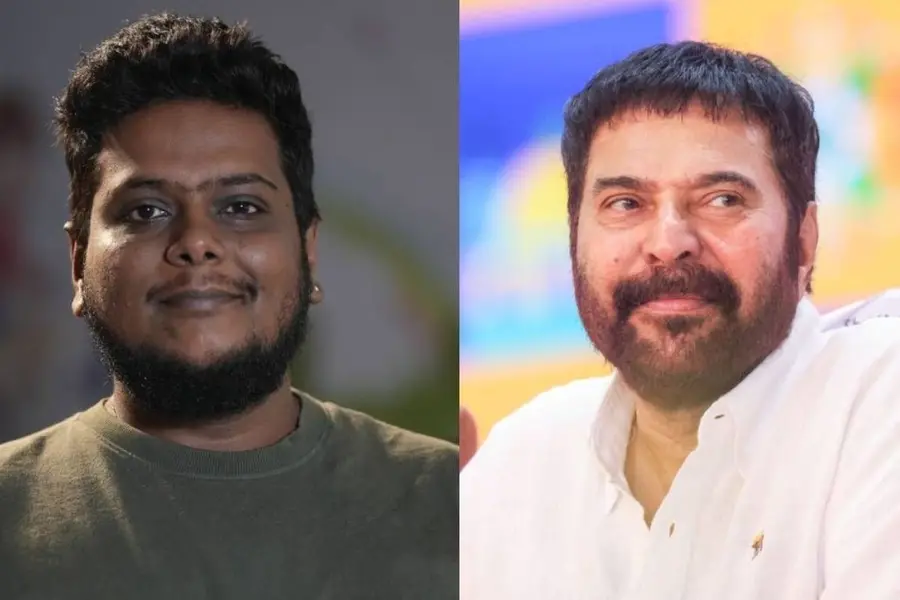
It’s not uncommon for films that fail to make a mark at the box office to find a second life on OTT platforms. But rarely does such a film go on to generate international conversation and inspire real-world social experiments. Malayalam film Sthanarthi Sreekuttan, directed by Vinesh Viswanath, is now doing just that.
The film introduces a refreshingly simple yet radical idea — a semi-circular classroom that moves away from the rigid front-bench/back-bench hierarchy. While some schools have experimented with this model before, the way Sthanarthi Sreekuttan presents it — as a 7th grader’s innocent suggestion — has touched a chord across the country. The story’s sincerity has not only prompted public debate but also encouraged several schools in Kerala, Tamil Nadu and Punjab to rethink how classrooms are designed. Some governments have even issued official circulars in support. “We now get so many calls from schools. Initially, we were being tagged in posts on social media. After national media picked it up, we’ve lost track of how many institutions have actually adopted it,” says Vinesh.
From childhood memories to cinematic vision
Vinesh reveals that the idea came from personal experience. “In fact, I had studied in such a set-up in third standard,” he recalls. Although the film shows it as a young student’s brainchild, the emotional weight and logic behind the model resonated far beyond the classroom.
What started as a light-hearted plan for a short film eventually evolved into a powerful political and emotional narrative. “The original idea came to me in 2018. I didn’t have the courage to make a film then. I thought maybe I’ll try a short film in a fun tone. There was no political depth at first. But slowly, we began to see its potential. That’s when I, along with Anand Manmadhan, Muralikrishnan and Kailas, began developing it into a full-fledged script.”
The team conducted extensive research, even interviewing children with parental consent to develop the script. “Around 80% of the characters in the film are inspired by real-life people.”
Criticism welcomed — even encouraged
The semi-circular classroom model also received its fair share of criticism, particularly over concerns about children’s neck posture. But Vinesh takes that as a good sign. “Such conversations are important. Everyone agrees the existing system is flawed. We’re not claiming this is the only solution. But we need alternatives, and discussion is a great place to start.”
He urges schools to treat the model as a trial-and-error process, not a rigid formula. “Many teachers have contributed valuable feedback. Instead of keeping the blackboard as the centre, the teacher becomes the centre. From that position, all students fall within a direct line of sight. Rotational seating could be another idea. After all, the blackboard is only relevant when writing notes.”
From box office disappointment to international recognition
Despite the overwhelming reception now, the film had a muted theatrical release. “We released around the same time as Pushpa 2. It was impossible for our little film to compete,” says Vinesh. “Our production team did their best. We ran in a few theatres for two weeks.”
The delay in OTT release was also frustrating. “We were a small film, with no big stars. Many OTT platforms rejected us over six months. But the audience who did watch it in theatres gave us wonderful feedback. They believed in us first.”
That belief eventually paid off. Now that the film has reached a wider audience online, it has sparked nationwide conversations and even policy-level changes. “There’s a sense of pride now — and responsibility. Moving forward, expectations are higher.”
Not a message film, but a mirror
“I don’t think this film delivers a message,” Vinesh says thoughtfully. “If you make a film just to give a message, it feels like you’re trying to sell it. That’s not my intent. Whether people see it as a message or a statement — that’s up to them.”
His intention was also to avoid portraying teachers as villains — a common cliché in school-based stories. “I was a backbencher myself, partly because I’m tall — not lazy, not a top scorer either. Somewhere in between. I’ve met many ‘Sreekuttans’ in my life. I’ve also encountered teachers who treated me very differently from others. All four writers had personal experiences with such characters. So we were clear: even the teacher shouldn’t be a villain. We’re talking about equality after all.”
The CP every student remembers
One of the film’s most talked-about characters is CP, played by Aju Varghese — a sharp critique of toxic teaching. Vinesh admits that CP was inspired by real-life figures from all four writers’ school days. “Initially, we thought of a female teacher named Sulekha. But it was difficult to make that character work in the story. Then we imagined a character named Guptan — eventually played by Kannan chettan. When we decided to cast Aju chettan as CP, he was very open to it. It’s a role that challenges the actor — and Aju could relate to it too.”
Aju Varghese, the professional
The team first pitched the story to Aju Varghese, who helped them reach producers. “We narrated it to about 16 producers. During shooting, during promotions — Aju chettan was there throughout. He’s not just a brilliant actor, but also an outstanding professional,” says Vinesh. “It was a joy to work with artists like Aju and Saiju Kurup in our very first film.”
Auditions were held in Thiruvananthapuram and Kochi under acting coach Sam George. “Many children turned up. We held a workshop to train them, including teaching them the local slang — in a way that felt like fun, not formal training. That helped a lot during the actual shoot.”
A message from Mammukka — like winning an award
One of the biggest highs came when Aju showed the team a message from Mammootty. “I had sent him a message before, saying I hoped he’d watch our film. He replied with a ‘Best Wishes’. So when Aju chettan showed us his feedback after he’d seen the film, it felt like we’d won an award. Mammukka watches a lot of content online. He’s very updated and keeps an eye on emerging talents. Knowing he watched and liked our film meant the world.”
From short films to feature direction
Vinesh’s journey began with short films during his Plus One years. “My first one wasn’t anything worth showing,” he laughs. “But during my degree days, I realised cinema was my path. I released a short on YouTube in my second year. Then came more shorts and a documentary — a few even won awards. In 2018, I began as an assistant director in Anveshanam. I thought I’d continue that path — assisting others. But soon, the desire to direct my own film took over.”
As for Sthanarthi Sreekuttan, the film may not have been crafted as a message vehicle — but it’s certainly become one. From school benches to national headlines, this “little film” has sparked a big conversation. Or as Vinesh puts it: “Sthanarthi Sreekuttan is now my address.”
Published: 18 Jul 2025, 04:25 pm IST
Disclaimer: Kindly avoid objectionable, derogatory, unlawful and lewd comments, while responding to reports. Such comments are punishable under cyber laws. Please keep away from personal attacks. The opinions expressed here are the personal opinions of readers and not that of Mathrubhumi.
