
After the 'Ramayana' panel at San Diego Comic-Con 2026, director Nitesh Tiwari has revealed why Ranbir Kapoor and Yash’s epic could not be contained within a single film and hinted at the major turning point awaiting audiences in Part 1.
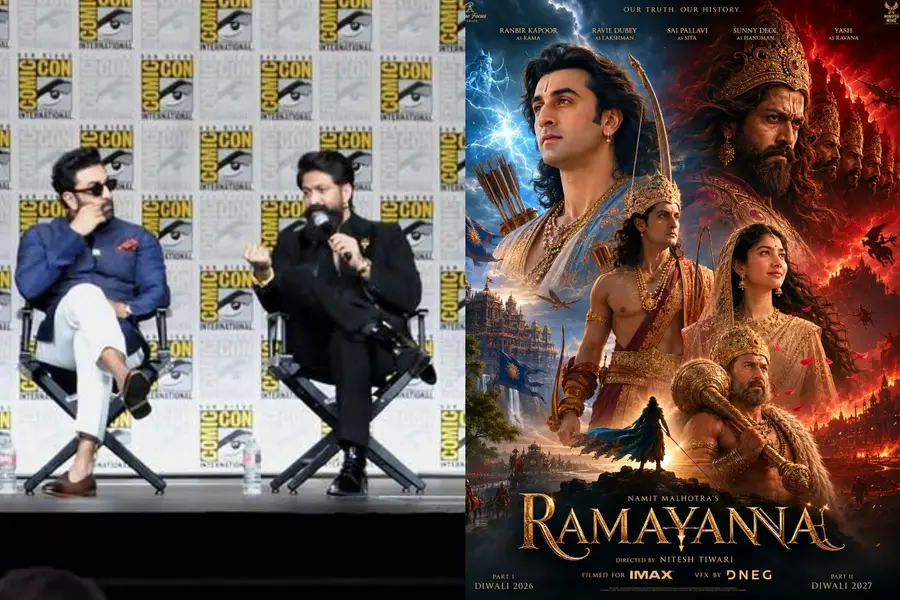
Two days after the much-awaited epic ‘Ramayana’ made its international showcase at San Diego Comic-Con 2026 with Ranbir Kapoor, Yash, Nitesh Tiwari and producer Namit Malhotra, the director has offered a glimpse into how the movie has been structured.
The film, he revealed, is not being treated as a complete story that has merely been divided into two releases. Instead, the makers have chosen a point in the epic that can carry the audience directly into the next chapter.
Speaking about the decision to make ‘Ramayana’ in two parts, Tiwari said the story was too expansive to be told in one film. He added that Part 1 will end at a point that makes viewers want to continue with the second instalment immediately.
“It’s a story which deserves two parts. It cannot be told in one part.”
ALSO READ: Ranbir Kapoor reveals 'Ramayana' will be Raha's first film; recalls fear of playing Lord Rama
The filmmaker also described the ending of the first film as something that will leave audiences waiting for what comes next.
“Part one is something which you can call a cliffhanger, or something which will make people want to watch the part two the moment they leave the theatre.”
That detail gives the two-part structure of ‘Ramayana’ a different shape. The first film is not expected to take audiences through the entire journey of the epic. Instead, it will stop at a crucial point, leaving the next phase of the story for the follow-up film.
The Comic-Con appearance came as the makers continue to build anticipation around the project. The film's footage has already been shown at select events, while fans continue to wait for the official trailer release. Ranbir Kapoor plays Lord Ram, with Sai Pallavi as Sita and Yash as Ravana.
ALSO READ: ‘Ramayana’ trailer leaked again: Fans stitch clips into 2-minute trailer; goes viral
With ‘Ramayana’ planned as a two-part cinematic event, the first film will have to do more than introduce its world. It will also have to decide where the story pauses.
And according to Nitesh Tiwari, that pause is meant to leave audiences wanting the next chapter immediately.
Published: 27 Jul 2026, 01:32 pm IST
ABOUT THE AUTHOR

Disclaimer: Kindly avoid objectionable, derogatory, unlawful and lewd comments, while responding to reports. Such comments are punishable under cyber laws. Please keep away from personal attacks. The opinions expressed here are the personal opinions of readers and not that of Mathrubhumi.