
Explore how K Shekhar’s rotating set created viral anti-gravity scenes in My Dear Kuttichathan decades before CG.
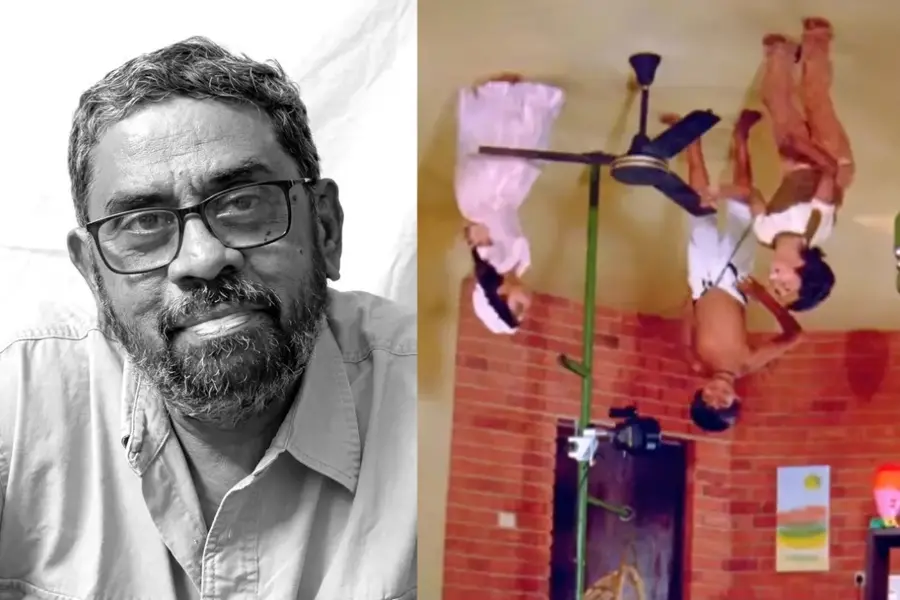
The iconic anti-gravity scenes from My Dear Kuttichathan have recently gone viral, as cinema vloggers praised the clever, native technique. Their admiration sparked curiosity about how these sequences were executed. Behind the illusion was the late art director K Shekhar, whose inventive mind transformed a simple living room into a rotating stage where children seemed to walk on walls and ceilings. The method, inspired by Stanley Kubrick’s 2001: A Space Odyssey, predated similar Hollywood techniques by decades, long before Christopher Nolan’s Inception.
The origin of the anti-gravity illusion
Also Read

The concept took shape during 1981 brainstorming sessions with Shekhar, director Jijo Punnoose, and the Navodaya Films team. When assistant director Mathew Paul suggested showing footprints on walls and ceilings, Shekhar took it further, imagining the kids themselves moving along every surface. Using early Hollywood visual tricks as reference, he designed a room built on a slowly rotating steel rig. As the room turned, a camera fixed inside rotated along with it, creating the illusion that the children were defying gravity.
The 12-foot radius, 35-foot-long octagonal set weighed 24 metric tons and was constructed by SILK Steel Industries Kerala Ltd. Lightweight props, mostly styrofoam, made rotation manageable. No computers or visual effects were involved—every shot relied on mechanical precision. Filming the song sequence took two weeks, while the full 95-minute movie was completed in just 77 days.
Inspiration, innovation, and influence
Shekhar’s genius lay in blending art, physics, and cinematic history. His earlier college drama exploring gravity and his study of cinematic illusions—from Fred Astaire to Kubrick—fed into this sequence. Over the years, similar anti-gravity sequences appeared worldwide, but Shekhar achieved it in India over 26 years earlier, entirely without CG.
Guided by the principle “form follows function,” he shaped the set, props, costumes, and publicity. Today, the rotating room of My Dear Kuttichathan continues to inspire filmmakers and stands as a benchmark for practical, imaginative cinema.
Published: 12 Feb 2026, 02:40 pm IST
Disclaimer: Kindly avoid objectionable, derogatory, unlawful and lewd comments, while responding to reports. Such comments are punishable under cyber laws. Please keep away from personal attacks. The opinions expressed here are the personal opinions of readers and not that of Mathrubhumi.