
In a country where emotions drive both cinema and sales, Indian brands have found a surprising new marketing weapon — a heartfelt “sorry.”
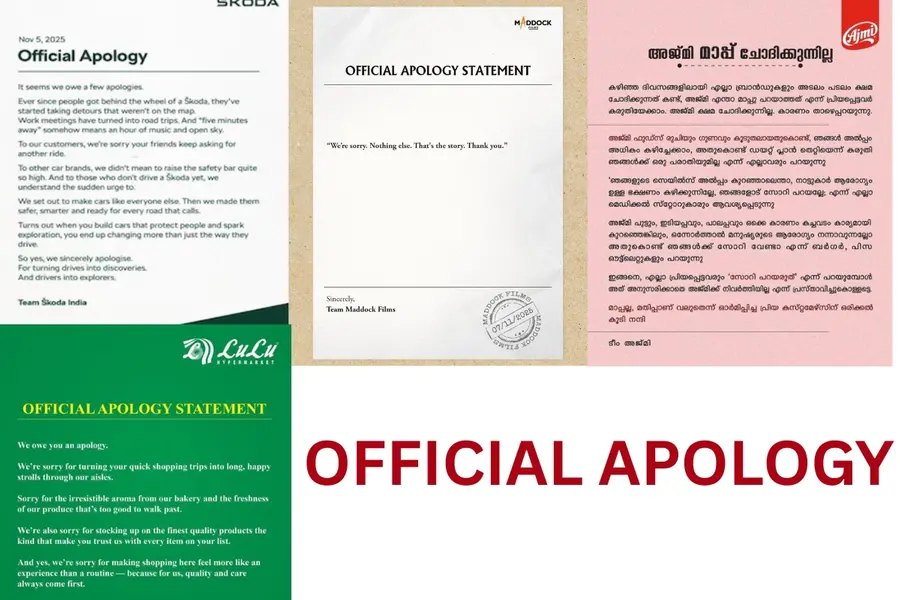
Move over celebrity endorsements and emotional tearjerkers — India’s latest advertising trend is built on a single, unexpected word: sorry. From Volkswagen and PVR to Haldiram’s and Myntra, brands across industries are embracing the “apology ad,” a creative twist that turns mock regret into marketing gold.
The concept isn’t homegrown. It first took off in the Philippines last year, when brands began posting formal-looking apology letters on social media — not for scandals or slip-ups, but for being “too good.” The formula was simple yet effective: an eye-catching “We’re sorry” headline followed by a witty confession like “for making our snacks too addictive” or “for making you fall in love with our cars.” The irony worked — and soon, Indian brands picked up on the idea.
Also Read

Volkswagen sparks India’s ‘sorry’ wave
Volkswagen India was the first to ride the trend, posting an “official apology” for making cars that customers found “too hard to part with.” The ad went viral almost instantly, striking the perfect balance between humour and pride. The creative team later revealed that the campaign boosted social media engagement by over 60% in just a few days.
Škoda, Reliance Digital and Ambuja Cement follow suit
Competitor Škoda India joined in with its own tongue-in-cheek post, “regretting” that its cars had set standards too high for rivals. Reliance Digital jumped in soon after, apologising for “helping shoppers find the best gadgets too easily.” Meanwhile, Adani Ambuja Cement made headlines for “saying sorry” because its walls had become “too strong to drill through” — a clever play on its long-standing slogan of strength.
Lifestyle and FMCG brands add flair
The apology trend soon spilled into lifestyle and consumer goods. Myntra apologised for making its fashion “too irresistible,” while PVR Cinemas issued a cheeky statement “sorry for spoiling movie nights elsewhere.” Haldiram’s chimed in with an apology for snacks being “too addictive to share,” and Keventers joined the fun by “regretting” its milkshakes were “too hard to stop sipping.”
These light-hearted campaigns have found massive traction online. Social media users often mistake them for genuine apologies at first, which only heightens curiosity and shareability once the twist is revealed. Many of these posts have crossed over a million views within hours of release.
Even media houses join the game
Interestingly, the trend isn’t limited to products. Deccan Herald ran a print ad “apologising” for maintaining “truth and integrity for over a century.” The tongue-in-cheek message, aimed at building trust in journalism, earned praise for bringing the apology format into serious spaces.
Why saying ‘sorry’ works so well
Marketing strategists say the success of this trend lies in psychology. The word “sorry” instantly grabs attention — audiences are conditioned to associate it with mistakes or controversy. When brands flip that expectation with humour, it creates surprise, delight and memorability — three of the most valuable emotions in advertising.
The “apology ad” trend also plays perfectly into India’s culture of emotional storytelling, where humility often resonates more than hard selling. It makes brands feel relatable and self-aware in an era where audiences value authenticity.
Experts warn of overuse
However, not everyone is completely sold. Brand strategist Harish Bijoor cautions that when every company starts saying sorry, the concept risks losing its charm. “When everyone apologises for being good, it stops feeling clever. The power of a trend lies in its freshness,” he told Samachara.com.
For now, though, India’s brands are milking the magic of “sorry.” Whether it’s a car company confessing it’s too reliable or a snack brand “regretting” being too tasty, the apology ad proves that even guilt — when done right — can go viral.
The hashtag #SorryNotSorry has been used in over 1.5 million Indian posts in 2025 alone, showing how deeply this playful form of apology has merged with everyday humour — both online and off.
Published: 09 Nov 2025, 05:33 pm IST
Disclaimer: Kindly avoid objectionable, derogatory, unlawful and lewd comments, while responding to reports. Such comments are punishable under cyber laws. Please keep away from personal attacks. The opinions expressed here are the personal opinions of readers and not that of Mathrubhumi.