
As India celebrates 150 years of Vande Mataram, many are revisiting the enduring question — how is the National Song different from the National Anthem, and why does India have both?
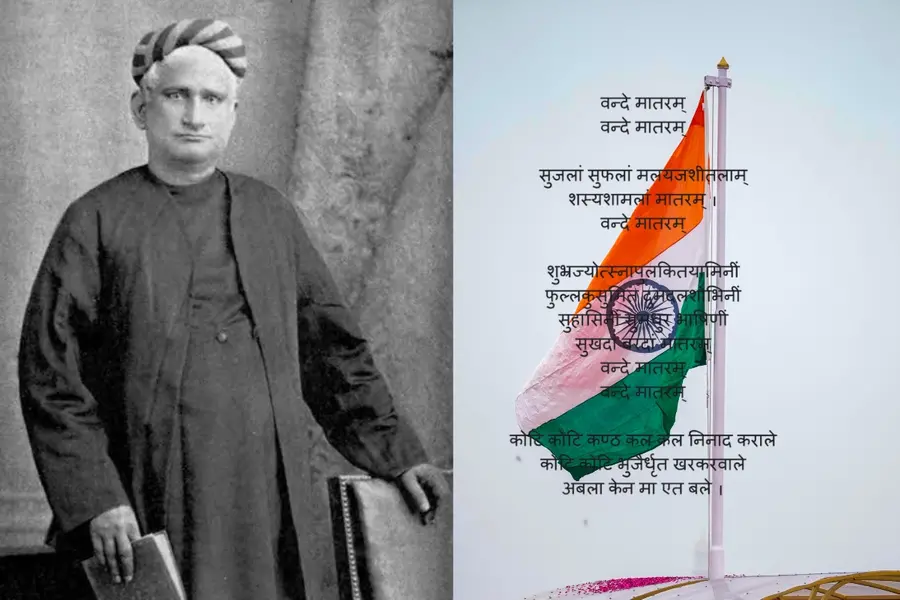
India marks 150 years of its National Song, Vande Mataram, a timeless hymn of patriotism composed by Bankim Chandra Chatterjee that continues to inspire generations even today.
Vande Mataram at 150: Key facts and celebrations
November 7, 2025, marks the 150th anniversary of Vande Mataram, India’s National Song that became a rallying cry during the freedom movement. Written in Sanskrit by Bankim Chandra Chatterjee and first published in the literary journal Bangadarshan on 7 November 1875, the song translates to “Mother, I Bow to Thee”. It was later included in his novel Anandamath (1882) and set to music by Rabindranath Tagore, who performed it at the 1896 Indian National Congress session in Calcutta.
To commemorate the milestone, the Government of India is holding nationwide celebrations, beginning with an inaugural event at Indira Gandhi Stadium in New Delhi. The ceremony includes the release of a commemorative coin and stamp, alongside exhibitions, cultural performances, patriotic murals, and tree plantation drives. Indian Missions abroad are also hosting special programmes and concerts to mark the occasion.
From literature to revolution
Originally a literary creation, Vande Mataram transformed into a symbol of India’s national identity and anti-colonial resistance. When Anandamath was serialised in Bangadarshan in 1881, the song gained prominence, and by 1905, it had become a unifying slogan during the Swadeshi and anti-partition movements. It resonated across Bengal, Punjab, and Maharashtra, binding Indians through a shared cry for freedom.
Suppression and resistance under British rule
Alarmed by its influence, the British government attempted to suppress the chant. Colonial circulars banned the song in educational institutions, and students in Rangpur, Bengal, were fined for singing it. Despite restrictions, it echoed at mass gatherings in Barisal, Dhulia, Belgaum, and Bombay, becoming an emblem of defiance. In 1908, protests in Tuticorin and Pune reverberated with “Vande Mataram”, as the slogan came to symbolise rebellion and sacrifice.
A call beyond borders
The song’s impact extended far beyond India. In 1907, Madam Bhikaji Cama unfurled an early version of the Indian tricolour in Stuttgart with “Vande Mataram” inscribed on it. Revolutionaries such as Madan Lal Dhingra invoked the slogan before execution in England, while Indian nationalists in Europe and South Africa used it to rally international solidarity for India’s freedom.
Equal status with Jana Gana Mana
After Independence, Vande Mataram was formally acknowledged for its historic role in the freedom struggle. On 24 January 1950, President Dr Rajendra Prasad announced that while Jana Gana Mana would serve as the National Anthem, Vande Mataram would hold “equal status of honour” as the National Song. The Constituent Assembly adopted this resolution without debate, reflecting unanimous respect for its legacy.
Legacy of Bankim Chandra Chatterjee
Bankim Chandra Chatterjee (1838–1894), one of Bengal’s foremost literary figures, helped shape modern Indian nationalism through his novels Durgeshnandini, Kapalkundala, and Devi Chaudhurani. Yet, it was Vande Mataram that defined his enduring legacy, capturing the spiritual and patriotic ideals that inspired countless Indians to rise against colonial rule.
Enduring spirit of Vande Mataram
A century and a half later, Vande Mataram remains embedded in India’s national consciousness. Once a revolutionary cry, it is now sung in schools, cultural gatherings, and national ceremonies. Its verses — invoking the divine and the motherland — continue to evoke pride and unity.
As India celebrates 150 years of Vande Mataram, the song’s message of devotion, courage, and love for the motherland remains as powerful as ever — a living testament to the soul of a nation.
Published: 07 Nov 2025, 09:59 am IST
Related Topics
Disclaimer: Kindly avoid objectionable, derogatory, unlawful and lewd comments, while responding to reports. Such comments are punishable under cyber laws. Please keep away from personal attacks. The opinions expressed here are the personal opinions of readers and not that of Mathrubhumi.
