
India’s Census 2027 is introducing digital self-enumeration, allowing households to submit their information online during the designated window before it is verified by census officials.
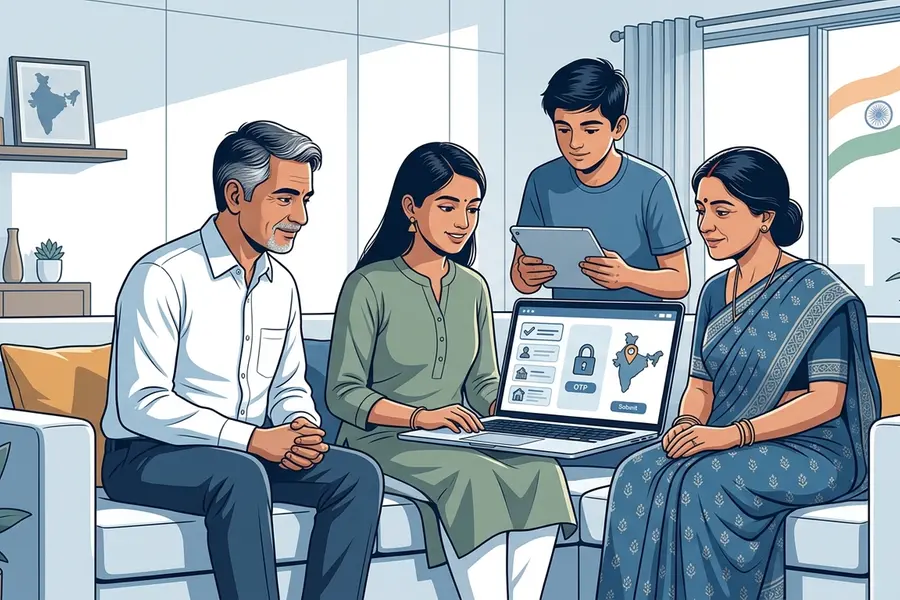
Census 2027 is going digital for the first time, allowing households to submit their details online through the self-enumeration facility. The move is aimed at making the census process more convenient and improving the accuracy of household data.
Prime Minister Narendra Modi has urged young people to help their families complete the online process and carefully check details such as names, addresses and other household information before submission.
Also Read

How to complete Census 2027 self-enumeration online
1. Visit the official portal
Go to the official Census Self-Enumeration Portal: Census Self-Enumeration Portal
Self-enumeration will be available during the designated 15-day window for the relevant region.
2. Log in using OTP
Select your State or Union Territory and enter the mobile number of the head of the household.
An OTP will be sent to the registered mobile number for authentication.
3. Choose your language
Select the language in which you want to complete the questionnaire from the languages available on the portal.
4. Enter your address and location
Provide details such as the district, PIN code and residential address. The portal also provides a map-based facility to identify the location of the household.
5. Fill in household details
The first phase of Census 2027 covers Houselisting and Housing Census.
You may need information about:
- Type and condition of the house
- Materials used for the roof, walls and floor
- Drinking water source
- Electricity
- Kitchen and cooking fuel
- Toilet facilities
- Household assets and amenities
6. Review and submit
Check the information carefully before submitting the form. Pay particular attention to names, spellings, addresses and other household details.
7. Save your Self-Enumeration ID
After successful submission, the system generates an 11-digit Self-Enumeration ID (SE ID).
Save this number safely. It will be needed when the census official visits the household for verification.
8. Provide the ID to the enumerator
During the field visit, give the 11-digit SE ID to the census enumerator.
The official can use the ID to access and verify the information submitted through self-enumeration.
What information should you keep ready?
Before starting the online process, keep the following information available:
- Active mobile number of the head of the household
- Complete residential address
- District and PIN code
- Details of the house's roof, walls and flooring
- Drinking water source
- Electricity availability
- Cooking fuel
- Toilet facilities
- Household assets and amenities
Why is Census 2027 different?
Census 2027 is being conducted digitally, with enumerators using mobile applications for data collection. Citizens also have the option of providing household information through self-enumeration.
However, self-enumeration does not replace the verification process. Enumerators will continue to visit households as part of the Census exercise.
The first phase focuses on housing and household information. The second phase, Population Enumeration, will collect individual-level demographic information such as age, marital status, education, economic activity and migration.
PM Modi urges young people to help families
In his Independence Day address on August 15, Prime Minister Narendra Modi urged young Indians to help family members complete their Census information digitally.
He asked young people to spend an hour or two helping their families enter the information and check details carefully.
The appeal comes as India prepares for its first digitally conducted Census, with the government emphasising accurate data collection for planning and development.
Is Census information confidential?
Information collected under the Census Act, 1948 is subject to confidentiality provisions. Census data is used for statistical purposes and government planning rather than being publicly disclosed at the individual household level.
Citizens should therefore provide accurate information and use only the official Census portal for self-enumeration.
Why accurate self-enumeration matters
The Census provides a statistical foundation for government planning, including resource allocation, infrastructure development and public programmes.
Digital self-enumeration could make household data collection more convenient, but accuracy remains important. Incorrect addresses, missing information or spelling errors can affect the quality of the final dataset.
The SE ID also creates a link between information submitted online and the subsequent verification by the enumerator, making it important for households to save the number after submission.
Published: 16 Aug 2026, 01:11 pm IST
ABOUT THE AUTHOR
Related Topics
Disclaimer: Kindly avoid objectionable, derogatory, unlawful and lewd comments, while responding to reports. Such comments are punishable under cyber laws. Please keep away from personal attacks. The opinions expressed here are the personal opinions of readers and not that of Mathrubhumi.