
Tai Chi walking combines slow, controlled steps with balance, posture, breathing and mindful movement. Here is how it works and why it is gaining attention among older adults.
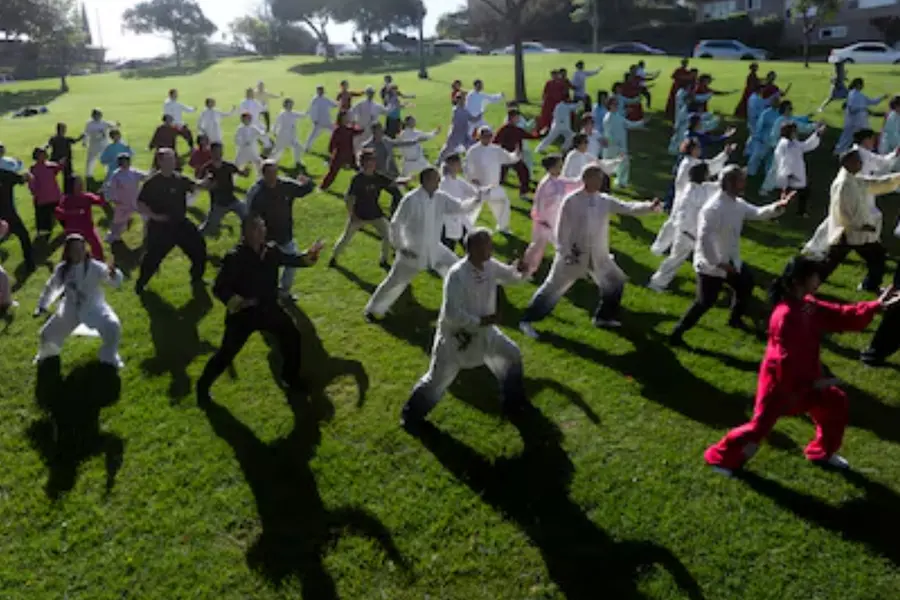
What if your next workout did not require you to walk faster, lift heavier or break into a sweat?
That is the idea behind Tai Chi walking, a slow and controlled form of movement that is drawing attention among people looking for a gentler way to stay active. It may look like an ordinary walk from a distance, but there is much more happening in each step.
The focus is on balance, posture, breathing and the way body weight shifts from one leg to another. Unlike a brisk walk, the aim is not to cover more ground in less time. It is to move with control and awareness.
Tai Chi has been practised for centuries as a Chinese martial art and is now widely used as a mind-body exercise. Tai Chi walking is one way of applying those principles to walking, making it particularly interesting for older adults and anyone looking for a low-impact activity.
But what exactly happens during a Tai Chi walk, and why has this slow form of movement attracted so much attention?
Tai Chi walking comes from the broader practice of Tai Chi, an ancient Chinese martial art that is now widely practised as a gentle mind-body exercise.
How is Tai Chi walking different from regular walking?
The biggest difference is the pace and purpose.
A regular walk may focus on distance, speed or getting your daily steps in. Tai Chi walking is more about balance, coordination and controlled movement.
ALSO READ: Chia seed lemon water is trending: Does it really benefit your health?
There is no need to walk quickly or push yourself to exhaustion. The movements are deliberately slow, giving you time to pay attention to how your body moves and where your weight is placed.
5 possible health benefits of Tai Chi walking
Tai Chi has been studied for several aspects of physical and mental health, particularly among older adults. Here are some of the better-supported benefits associated with the practice.
1. May improve balance
Tai Chi involves repeated weight shifting and controlled movements, which can help train balance and postural stability. Research has found improvements in balance among older adults who practise Tai Chi.
2. May help prevent falls
Better balance can be particularly useful for older adults, for whom falls can become a serious concern. Research suggests Tai Chi can reduce the risk and rate of falls in older people.
3. Gentle on the body
Tai Chi does not involve running, jumping or high-impact movements. Its slow and controlled nature makes it an option for people looking for a gentler form of physical activity.
Some research has also found Tai Chi may help reduce pain and stiffness associated with knee osteoarthritis.
4. Can support mental wellbeing
Tai Chi combines physical movement with breathing and concentration. Studies suggest it may help with mood, stress and overall quality of life, although the strength of evidence varies depending on the condition being studied.
5. May support better sleep
Research has found that Tai Chi may improve sleep quality in some people. However, it should not be considered a treatment for chronic sleep disorders without medical advice.
Who can try Tai Chi walking?
Tai Chi can be suitable for people of different ages and fitness levels. It can be particularly appealing to older adults who want to work on balance and movement without taking up high-impact exercise.
It is also an option for people who simply want to add a slower, more mindful form of movement to their routine.
ALSO READ: Muay Thai explained: The ancient 'art of eight limbs' Vismaya Mohanlal trained in
However, having a health condition, significant balance problems or a history of falls is a reason to speak to a doctor or qualified professional before starting a new exercise routine.
How to start Tai Chi walking
- If you are trying it for the first time, start slowly and keep the session short.
- Choose a flat, even surface and wear comfortable footwear.
- Stand upright without stiffening your body, shift your weight gently from one leg to the other and take controlled steps.
- Avoid forcing your movements or trying to make them deeper than they feel comfortable.
- Learning from a qualified Tai Chi instructor can also help, particularly for older adults who are new to the practice.
Tai Chi walking is not about counting how many steps you can finish or how quickly you can complete them. The focus is on moving with control, maintaining balance and staying aware of the body.
In a fitness culture that often equates exercise with speed and intensity, Tai Chi offers a slower approach. And for people looking for gentle movement that also works on balance and coordination, that simplicity may be exactly what makes it appealing.
Published: 12 Aug 2026, 08:21 am IST
ABOUT THE AUTHOR

Disclaimer: Kindly avoid objectionable, derogatory, unlawful and lewd comments, while responding to reports. Such comments are punishable under cyber laws. Please keep away from personal attacks. The opinions expressed here are the personal opinions of readers and not that of Mathrubhumi.