

A Bengaluru student-led study has found toxic hormone-disrupting chemicals on everyday thermal receipts, raising concerns for public health and frequent handlers like cashiers and transport staff.
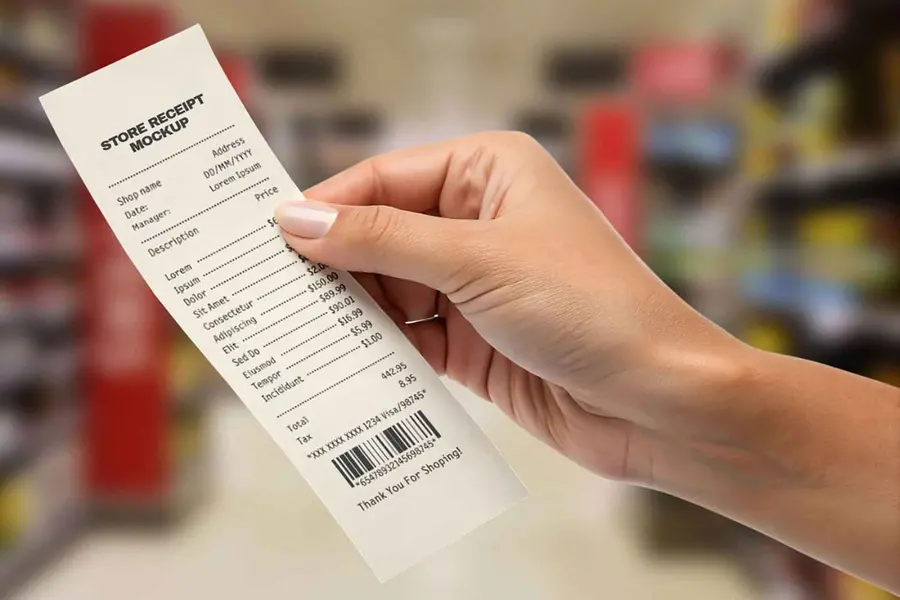
Bengaluru: The next time you take a supermarket or ATM bill, you might also be picking up chemicals that could quietly harm your health.
A recent student-led study in Bengaluru has found that thermal paper receipts — a daily-use item handled by millions — contain toxic compounds capable of disrupting hormones and potentially contributing to heart issues and cancer.
The research, conducted by three high school students — R Usha (Grade 10, Sai Krushna Vidya Mandir School, Hosadoddi Village), Aniketh V Bhat (Grade 10, Rashtrotthana Vidya Kendra, Banashankari), and R Nalini (Grade 9, Sai Krushna Vidya Mandir School) — was carried out under the Anveshana Student Research Program at the Prayoga Institute of Education Research.
Guided by Principal Investigator Dr Athavan Anand and Co-PI Asha CH, the project revealed the presence of harmful chemicals such as Bisphenol S (BPS) and Diphenyl Sulfone (DPS) in everyday receipt paper.
Toxic Traces on Thermal Paper
Thermal paper is the glossy material used in receipts from stores, toll booths, bus stations, and ATMs. To print text, heat from the printer activates a dye that reacts with chemicals like BPS — a substitute for the now-banned Bisphenol A (BPA).
Although BPS was initially introduced as a safer alternative, global studies have shown that it may cause similar endocrine disruption, interfering with hormonal balance and affecting the heart and nervous system.
The problem? These chemicals are not permanently bound to the paper. They can transfer easily to skin upon touch, linger for hours, and potentially enter the bloodstream — a concerning reality for those who handle receipts daily, such as cashiers, transport staff, and toll booth workers.
How the Students Proved It
The young researchers tested both printed and unprinted thermal papers, using a range of solvents — including ethanol, chloroform, and methanol — to extract chemical residues. They then applied thin-layer chromatography (TLC) to analyse the extracts.
Their findings confirmed the presence of BPS and DPS, both known for their potential to disrupt biological processes.
Using SwissADME, a computational software tool, the students predicted how these compounds could penetrate human tissues and even cross the blood-brain barrier.
Further toxicity testing using Daphnia pulex (water fleas) — a common bioindicator in environmental studies — revealed alarming effects: sharp declines in heart rate and death within 24 hours at higher concentrations.
The results suggest potential health risks from prolonged or repeated exposure, particularly for people who touch receipts multiple times a day.
Safer Alternatives and Next Steps
“Before this project, I never thought that the small receipts we get in shops could be harmful. When we tested the thermal bill papers, I was surprised to know that chemicals like BPA are present in them.” said R Usha, one of the student researchers.
“This project made me think more critically about the things I use daily, and I feel proud that our work can create awareness among people.”
According to Dr Athavan, “The significance of our findings lies in uncovering how everyday items, such as shopping receipts, can expose people to harmful chemicals like bisphenol derivatives.
The students demonstrated genuine curiosity and commitment... Beyond laboratory skills, the project gave them a sense of responsibility to create awareness in their families and communities.”
Prayoga Institute now plans to extend the research to study other products with similar risks and explore safer alternatives — such as vitamin C–based ink technology, already being adopted by Yale University Library (USA).
Dr Athavan emphasises that even simple steps like opting for e-bills or digital receipts can minimize exposure while helping the environment.
The study, now published as a pre-print on bioRxiv, not only sheds light on a hidden public health concern but also underscores how school-level research can lead to impactful discoveries — especially when curiosity meets scientific purpose.
Published: 13 Nov 2025, 10:28 am IST
ABOUT THE AUTHOR
Related Topics
Disclaimer: Kindly avoid objectionable, derogatory, unlawful and lewd comments, while responding to reports. Such comments are punishable under cyber laws. Please keep away from personal attacks. The opinions expressed here are the personal opinions of readers and not that of Mathrubhumi.