
Mattel has introduced its first autistic Barbie, developed over 18 months in partnership with the Autistic Self Advocacy Network.
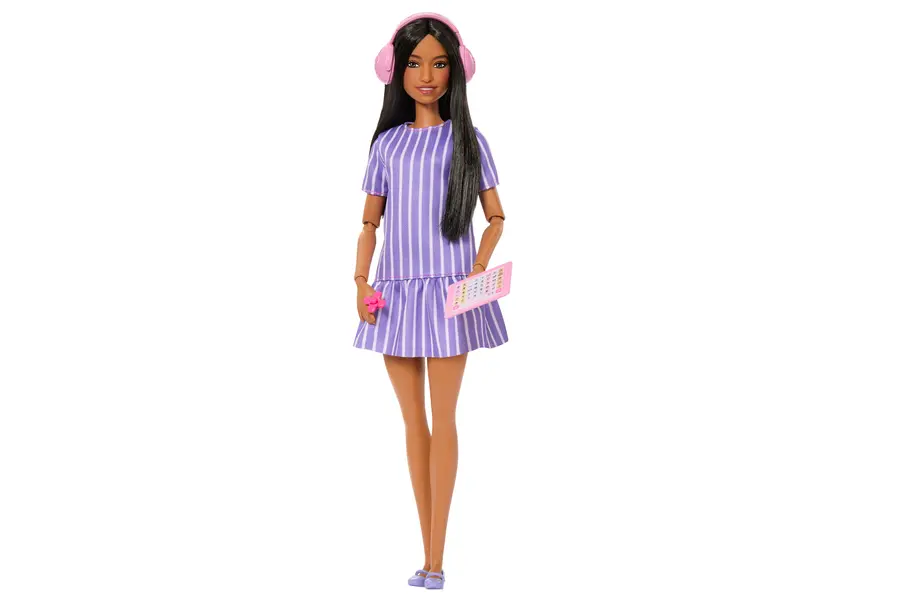
Mattel Inc. is generating widespread attention with the launch of its first autistic Barbie, unveiled on Monday as the newest addition to its long-running push for greater inclusivity in the Barbie Fashionistas line. The latest release joins dolls representing people with Down syndrome, those who are blind, characters with vitiligo, and others designed to reflect a broader spectrum of real-world identities.
The toy company collaborated with the Autistic Self Advocacy Network (ASAN) for more than 18 months to bring the doll to life, aiming to avoid stereotypes and instead create a figure that genuinely resonates with autistic individuals.
“Barbie has always strived to reflect the world kids see and the possibilities they imagine, and we’re proud to introduce our first autistic Barbie as part of that ongoing work,” said Jamie Cygielman, Mattel’s global head of dolls.
Designed with input from the autistic community
Mattel said the project was developed in close consultation with ASAN, a disability-rights organisation led by autistic people. The company noted that the intention was to design a doll that reflects some of the ways autistic people may experience their surroundings.
“Autism doesn’t look any one way,” ASAN’s community engagement manager Noor Pervez explained. “But we can try and show some of the ways that autism expresses itself.”
Because autism presents differently in each person, the development team focused on subtle behavioural and sensory cues rather than visible traits. The doll’s eyes, for instance, are slightly averted to the side, a detail meant to represent how some autistic individuals avoid direct eye contact.
Features aimed at representation
To acknowledge stimming–movements many autistic people use to process sensory information or express emotion–the doll includes articulated elbows and wrists designed for flexible hand motions.
The team also debated how the doll should be dressed. While some autistic individuals prefer loose clothing due to fabric sensitivity, others favour tighter garments that provide a sense of body awareness. Ultimately, Mattel opted for an A-line dress with short sleeves and a flowy skirt to reduce fabric-to-skin contact. The doll also wears flat shoes for stability and comfortable movement.
Mattel has included accessories often used by autistic people, such as noise-cancelling headphones, a tablet with Augmentative and Alternative Communication (AAC) applications and a pink clip-on fidget spinner. Each doll comes equipped with all three items.
Representation of underrepresented groups
In developing the autistic Barbie, Mattel also drew inspiration from employees in India and a broader set of mood boards reflecting diverse Indian identities. The company said it wanted this release to highlight members of the autistic community who are often underrepresented in mainstream storytelling.
The autistic Barbie joins a lineup that has steadily expanded over the years. The Fashionistas range now includes dolls with prosthetic legs, a Barbie with hearing aids, and a doll representing Type 1 diabetes–introduced in 2025–alongside an array of body types, skin tones and hair textures.
Availability and price
The doll is now available through Mattel’s online store and at Target outlets across the US, priced at a suggested retail cost of $11.87. Walmart plans to stock the autistic Barbie starting in March, the company said.
Autism prevalence in the US
According to the US Centers for Disease Control and Prevention, around 1 in 31 eight-year-old children in the country are estimated to be autistic. The CDC reported that diagnoses are more common among Black, Hispanic, Asian and Pacific Islander children than among white children, and that boys are more than three times as likely as girls to be identified with autism.
(With inputs from AP)
Published: 13 Jan 2026, 08:09 am IST
Related Topics
Disclaimer: Kindly avoid objectionable, derogatory, unlawful and lewd comments, while responding to reports. Such comments are punishable under cyber laws. Please keep away from personal attacks. The opinions expressed here are the personal opinions of readers and not that of Mathrubhumi.
