
Parents play a key role in how children benefit from toys. Simply giving toys is not enough
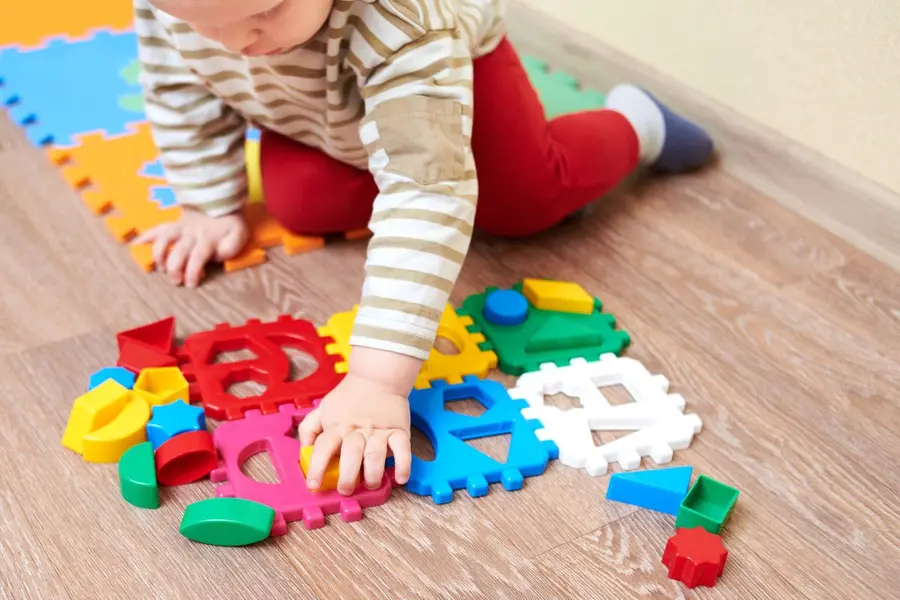
“Ah she piles the toys, sometimes parks the cars in her own way near the study, and sometimes whines. That's what children do.” Most of us have heard these kinds of replies from caregivers when asked about their children.
But we shouldn't overlook it, is what we understand talking to Josili Mathew, a practicing, Counseling Psychologist. Let's dig a little deeper about “child's play”. Because this is a time we have to deal with Gen Alpha and Beta who are born to a tech savvy world.
How helpful are educational toys, are they healthy alternatives for screen time, or how to choose toys for children are the questions young parents often have. And here is your map for choosing toys.
To begin with, we need to realise children are curious and they primarily learn through observation. They deserve a pat on shoulder for parking their toy cars in good order. We need to observe them, to see what makes them feel frustrated and cry. And be by their side to help them calm down naturally. They need our attention.
They are children, they may not be able to assess every situation and emotion, but we are not. So we can as adults do a lot to make them grow healthier and fly high.
Erik Erikson, a developmental psychologist, explains life as a series of eight pivotal chapters.
In his theory on psychosocial development Erikson says that human development unfolds across eight distinct stages, from infancy through late adulthood. At each stage, individuals encounter a core social and emotional challenge that shapes their sense of self and relationships with others.
So just like every interaction and activity a child engages in has a profound influence on their development, the games they play and the toys they use are equally important.
But many of us have to consider the budget. We do not need to feel guilty about considering the cost before choosing something, even if it is for our children. Let's see some affordable educational toys, DIY educational toys at home ideas and value-for-money buying tips.
Some smart buying tips
The budget should not come in between our desire to provide our children good conditions to learn and grow. So here are some tips that may help you.
Choose ‘open-ended’ toys
Blocks, puzzles, and DIY kits can be used in multiple ways. It can be a cost effective method.
Avoid ‘single-use’ toys
Toys that do only one thing (press-button sounds) get boring quickly.
Look for combo kits and affordability platforms
Many platforms offer bundles under ₹500–₹1000 with multiple activities. Check affordability platforms where you can buy toys under ₹ 200.
Rotate toys instead of buying more
Keep 4–5 toys out at a time. This feels ‘new and fresh’ without spending extra.
DIY toys for your child
You don’t always need to buy toys. Today we are in a DIY society, we all do that.
Many effective learning tools can be made from household items. Now let me introduce you to some ideas. And you can build it further on your imagination. We are all creative people, so why hesitate?
Bottle cap sorting game
Use colored caps to teach colors, counting, patterns etc.
Homemade puzzle boards
Cut cardboard shapes and ask the child to pick one, or identify one. It improves problem-solving skills.
Rice sensory bin
Add cups/spoons of rice or things that can be touched to feel the texture. Ask them to transport the material from one container to the other. Or you can ask them to fill an empty cup with the particular material. This builds fine motor skills.
Flashcards from old magazines
Cut pictures and tell them a story with it. This helps you to teach them vocabulary and memory.
DIY counting sticks
Use ice cream sticks, or you can even use cardboard cut and coloured, Irkil (vein of coconut leaves) in a measurable length. This may help in basic math practice.
Right toys for respective age
Choosing toys based on a child’s age is very important as children grow and learn in different ways at each stage. Their thinking ability, motor skills, and emotional understanding keep changing as they grow.
For example, babies do not fully understand that objects still exist when they cannot see them, so they need simple, sensory-based toys. In psychology it is what we call “object permanence". A child attains object permanence only by a certain age.
As children grow, they start learning through trial and error, and later they develop logical thinking and problem-solving skills. So only by giving age-appropriate toys you can help them learn comfortably. Otherwise they may get exhausted easily. They feel confused or frustrated. Learning and building confidence is a step by step process as we all know.
Why Educational Toys?
For children below the age of two, toys mainly support sensory development. At this stage, children learn through touch, sound, sight, and movement. Toys like stacking rings help improve their motor skills, soft toys help them with comfort and emotional bonding, rattles and textured objects (both for sensory development) help curiosity.
It is important to choose toys that are large and safe so they do not accidentally swallow them.
Between 2 and 6 years, children learn best through exploration and imagination. Trial and error becomes an important way of learning. Open-ended toys, i.e. those that can be used in many ways, are especially useful. Toys like building blocks, simple puzzles, shape sorters, and role-play sets (such as kitchen or teacher–student games) help children think creatively and come up with different solutions. These toys also keep them engaged for longer and prevent boredom.
For children aged 6 to 12 years, also known as the industrious stage, toys should encourage thinking, planning, and persistence. At this stage, children enjoy challenges and problem-solving activities.
Building kits, complex puzzles, strategy games, and science kits help develop logical thinking, patience, and a sense of achievement.
Can it be an Alternative to Screen Time?
Educational toys are a great alternative to screen time. Unlike mobile phones or television, which provide passive entertainment, educational toys involve active participation. They help improve concentration, creativity, and thinking skills. Activities like drawing, painting, puzzles, and playing with clay or slime not only support learning but can also have a calming effect on children.
These hands-on experiences engage multiple senses and help children learn in a more natural and meaningful way, reducing dependence on screens.
Electronic Interactive Toys
When it comes to electronic interactive toys, it can be helpful, if you use it in the right way and at the right age. They can teach basic concepts like numbers, letters, and sounds in an engaging manner. However, overuse or early introduction can have negative effects.
Too much exposure to lights, sounds, and fast-paced interaction can reduce a child’s attention span and limit creativity.
It may also affect communication skills, as children might interact less with people. These toys can sometimes create a habit of needing constant stimulation, similar to watching fast-paced cartoons. Therefore, it is important to use such toys in moderation, with proper supervision and time limits.
Toys are tools and parents are guides
Educational toys are not things you use to distract children from demanding your attention so that you can do your work. They shouldn't be something that disengages your child from connecting with you.
Parents play a key role in how children benefit from toys. Simply giving toys is not enough, guidance and involvement matter.
You should observe how children play, how they solve problems, and how they react when they fail. This helps in understanding their emotional and cognitive development. Children also need support in managing frustration, stress, and disappointment.
Participating in play activities, especially role play, helps children learn communication, empathy, and social skills. Toys like kitchen sets or pretend classroom games allow children to observe and imitate real-life situations. Parents can gently guide them during play and encourage positive behavior.
It is also important that you set limits on screen time and electronic toys, while encouraging more creative and open-ended play. With proper guidance, toys can become powerful tools not just for learning, but also for emotional growth and overall development.
Now, happy parenting, let the children play and grow.
Published: 28 Apr 2026, 03:54 pm IST
Related Topics
Disclaimer: Kindly avoid objectionable, derogatory, unlawful and lewd comments, while responding to reports. Such comments are punishable under cyber laws. Please keep away from personal attacks. The opinions expressed here are the personal opinions of readers and not that of Mathrubhumi.
