
The United States’ latest actions against Venezuela reveal a pressure campaign designed to coerce rather than conquer
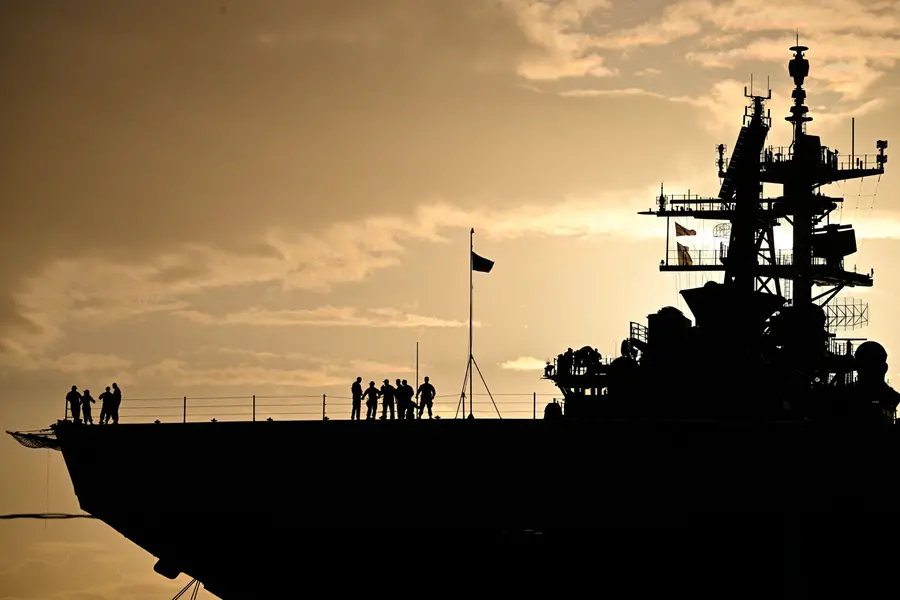
When President Donald Trump ordered US forces to interdict oil tankers near Venezuela this week, it appeared, at first glance, to be another sharp turn in a long and unsettled confrontation with Nicolás Maduro. In reality, it revealed something more telling. The move exposed the contours of an American pressure campaign that is neither peace nor war, but something deliberately positioned in between.
Trump’s approach to Venezuela is not centred on invasion plans, formal declarations, or even a single decisive military strike. Instead, it has unfolded through a steady accumulation of measures: sanctions enforcement at sea, airstrikes on vessels accused of narcotics trafficking, financial seizures, cyber disruption, and increasingly blunt rhetoric about regime survival. Each action is presented as limited. Together, they amount to a sustained campaign of coercion.
Also Read

The administration continues to describe its actions as counter-narcotics enforcement. Venezuela, US officials argue, enables cocaine trafficking networks that threaten American security. Over recent months, US forces have struck dozens of boats alleged to be involved in drug smuggling, with reported fatalities nearing one hundred. The seizure of an oil tanker earlier this month, followed by Trump’s declaration that the United States would retain the cargo, marked a new phase—one that sits uneasily with the drug-war framing.
That tension has not gone unnoticed. Venezuela is not the principal source of narcotics entering the United States; most flows move through Mexico and Central America. Oil seizures, meanwhile, have little direct connection to narcotics interdiction. As the campaign has progressed, the rationale has broadened. Trump and senior aides have increasingly spoken about oil assets “taken” from American companies decades ago, recasting economic nationalisation as historical theft.
This matters because strategy depends not only on pressure, but on coherence. When objectives blur, escalation becomes harder to manage. Publicly, the White House insists the goal is stopping criminal networks. Privately and rhetorically, regime change is no longer concealed. Chief of Staff Susie Wiles has reportedly described the aim as applying pressure until Maduro “cries uncle.” Trump himself has spoken openly about reclaiming oil rights.
The incremental strategy does have a logic. It avoids the domestic and international costs of open war, exploits Venezuela’s economic fragility, and allows Washington to adjust pressure without committing to a single irreversible step. Oil exports, illicit mining, and trafficking revenues remain central to the Maduro government’s survival. Disrupting all three simultaneously is designed to make governance increasingly untenable.
But incrementalism carries its own risks. Every additional step narrows the space for de-escalation. The administration has already signalled that it sees few acceptable off-ramps. Maduro, for his part, has endured similar pressure before. During Trump’s first term, sweeping sanctions and diplomatic isolation failed to dislodge him. His current strategy appears unchanged: absorb damage, project defiance, and wait for Washington’s attention to shift elsewhere.
Legal ambiguity compounds the problem. A full naval blockade is traditionally treated as an act of war, yet US officials insist the current measures fall under sanctions enforcement. Human rights groups and legal scholars have challenged the legality of maritime strikes, particularly where evidence of imminent threat is contested. In Congress, lawmakers have demanded greater transparency over targeting decisions and civilian harm.
Cyber operations add another layer of uncertainty. Venezuela’s state oil company recently reported a cyberattack that disrupted administrative systems, an incident officials blamed on the United States. While attribution remains unclear, the episode illustrates how pressure can now be applied invisibly, without formal acknowledgement, complicating accountability on all sides.
International reaction has been cautious rather than supportive. Venezuela has appealed to the United Nations Security Council. Mexico has warned against escalation. European governments have urged restraint. Even partners sympathetic to pressure on Maduro appear uneasy with a campaign that continues to expand without a clearly stated end state.
Perhaps the most striking absence is a sustained public explanation. Previous US presidents embarking on prolonged overseas operations have typically addressed the nation, laying out objectives, risks, and legal authority. Trump has not done so. As former Council on Foreign Relations president Richard Haass has observed, the justifications now being offered—drugs, migration, energy, regime change—do not neatly align.
Venezuela has thus become more than a regional dispute. It is a test of a distinctly modern form of coercion: pressure without war, escalation without declaration, force applied through accumulation rather than shock. This model may appeal to policymakers seeking leverage without invasion. It also strains the norms that separate law enforcement from warfare.
If pressure alone fails to remove Maduro, Washington will eventually face a choice it has so far deferred: escalate openly, or accept a stalemate. For now, the strategy rests on the belief that incremental pain will eventually break political resistance. History suggests that belief is far from guaranteed.
Published: 19 Dec 2025, 12:04 pm IST
Related Topics
Disclaimer: Kindly avoid objectionable, derogatory, unlawful and lewd comments, while responding to reports. Such comments are punishable under cyber laws. Please keep away from personal attacks. The opinions expressed here are the personal opinions of readers and not that of Mathrubhumi.