
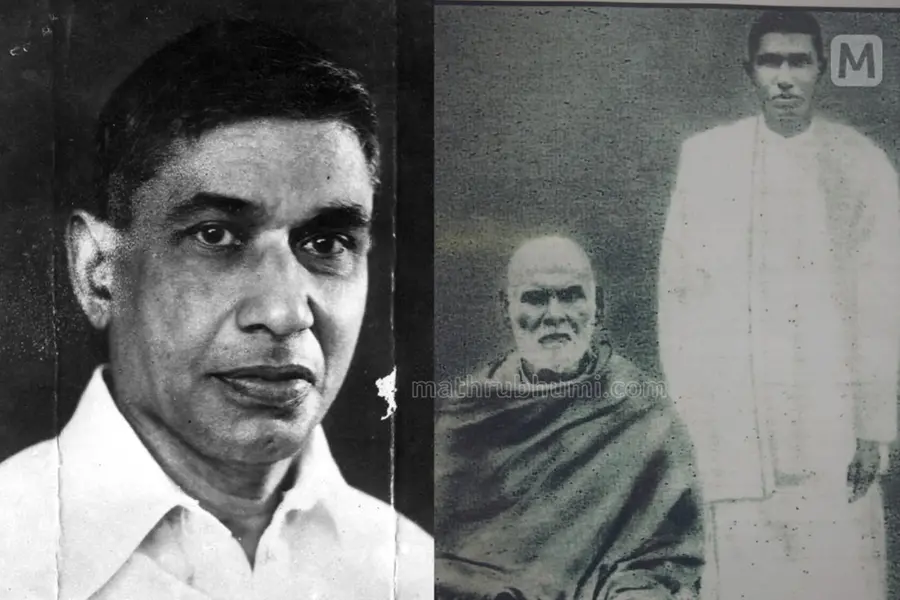
The authorship of the iconic Onam song 'Maveli Naadu Vaanidum Kaalam', which embodies the egalitarian spirit of the festival, is a subject of debate in Kerala's literary and cultural circles. The song's origins have raised questions about whether it was written by social reformer Sahodaran Ayyappan or an anonymous poet. Many argue that the version of the song propagated by the media and popular culture is a modified form of the original. Some contend that the song underwent changes due to a 'Hinduvisation' process, with lines edited out and new ones added. Revisiting Sahodaran Ayyappan's 'Maveli Naadu Vaanidum Kaalam' is particularly apt now, as this Onam arrives amid an ongoing discourse about myth versus science.
Ayyappan's rendition of the song appeared in the January-February 1921 edition (1096, Makaram) of the publication 'Sahodaran' under the title 'Onapattu. 'Sahodaran' acted as the mouthpiece of Sahodara Sangham, an organisation founded by Ayyappan and it advocated causes such as rationalism, socialism, labor movements, intermarriage, temple entry for the underprivileged, and responsible governance. Later, the Sarada Book Depot in 1934 included the same poem in Ayyappan's poetry collection under the section titled 'Buddha Kandam.'
Also Read

Ajay S. Sekher, Assistant Professor of English at the Sree Sankaracharya University of Sanskrit in Kalady (founding coordinator of the Centre for Buddhist Studies) and author of 'Sahodaran Ayyappan: Toward a Democratic Future,' views 'Maveli Naadu Vaanidum Kaalam' as a political song linked to the renaissance period in Kerala. He highlights that the song promoted Buddhist values and was anti-Brahminical in nature.
Ayyappan's portrayal of the Maveli era emphasizes the absence of untouchability and other barbaric practices. The verses in the song also convey:
The evil religion constructed by Brahmins,
Must we drop for our greater good,
Truth and morality are the true religion,
Vamana worship must be put to an end,
We must bring forth the reign of Maveli,
If Onam becomes eternal for us, We will be protected against such plunders
Interestingly, there is yet another Onam song penned by Ayyappan, which can be found in works published by Sarada Book Depot under the section called 'Yukthi Kandam'. It is titled 'Yukthikalam Onapattu'.
"Onapattu criticized Brahminical hegemony and its practices against lowered castes. On the other hand 'Yukthikalam Onapattu' denounced priestly patriarchy, demigods, and capitalism. Ayyappan through verses also advocates for self-reliance, humanity, peace, and the importance of reasoning and questioning," explained Ajay Sekher.
Meanwhile, the verses in that song reflect Ayyappan's pro-technology stance.
As the machines are employed in work, humans are having leisure,
Explorations and education are improving their intellectual caliber.
They realize the fact that spinning the wheel and charka only increases hardship,
And in the name of the poor the elites are seeking their selfish interests, goes the verses.
Historian and author Cherayi Ramadas noted that while many socio-religious fundamentalist groups opposed Ayyappan's anti-caste movement and interventions, "we cannot conclude that he was targeted for his literary works." However, Ramadas said that only a thorough research on Ayyappan could shed light if there were such instances.
The debate over the myth vs science remark continues. One prevailing social media narrative is that if Ayyappan were alive, he would have staunchly challenged the forces advocating for the myth side or religious dogma.
Published: 26 Aug 2023, 08:26 pm IST
ABOUT THE AUTHOR
Related Topics
Disclaimer: Kindly avoid objectionable, derogatory, unlawful and lewd comments, while responding to reports. Such comments are punishable under cyber laws. Please keep away from personal attacks. The opinions expressed here are the personal opinions of readers and not that of Mathrubhumi.