
Russian drones equipped with Nvidia chips are reportedly using onboard AI to identify and select targets without direct human control, raising urgent concerns over autonomous weapons and the future of warfare.
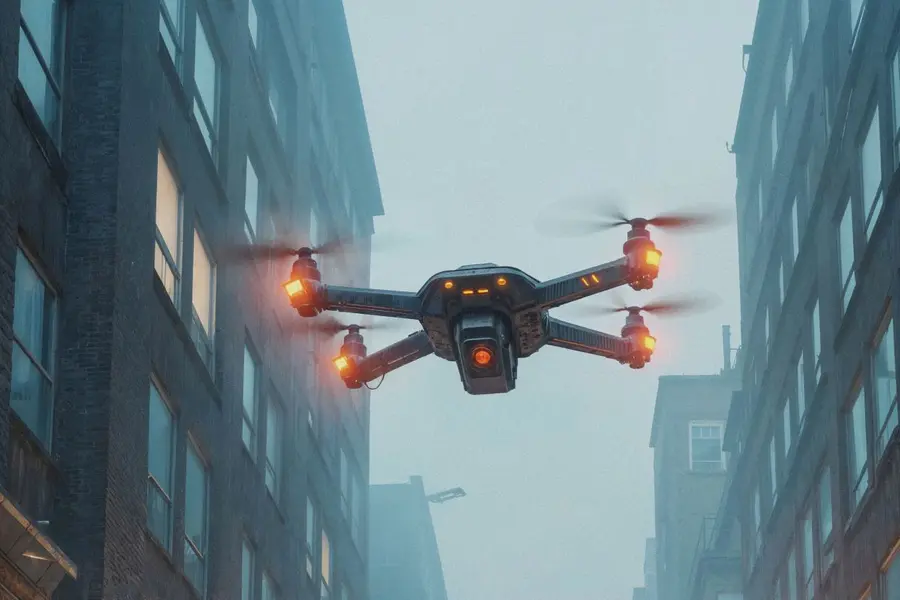
Russia seems to have deployed a new generation of combat drones capable of navigating and selecting targets without a human operator controlling the final attack decision, Ukrainian military officials, drone specialists and forensic investigators who examined wreckage from strikes in Ukraine, told the New York Times.
The discovery has intensified concern over the emergence of lethal autonomous weapons on the battlefield. Investigators identified an Nvidia Jetson Orin computer module inside at least one Russian drone, a commercially available computing device that can run artificial-intelligence software locally.
The reported system does not represent a futuristic robot making every battlefield decision independently. Human operators still appear to program the drone’s broad mission, route and general target area. But once the drone reaches the designated zone, its onboard software can identify objects and select the precise point of impact without waiting for instructions from a pilot or commander.
That distinction is crucial. It moves the drone from being remotely operated to being capable of making a lethal decision at the tactical edge.
How the Russian drone operated
The clearest reported case involved a Russian drone attack on July 6 in Zaporizhzhia, where three Ukrainian civilians were killed near a petrol station. The drone was directed towards the station by human operators, but investigators said it appeared to choose its final target independently.
Experts believe the software may have identified propane tanks or other distinctive objects that matched the visual patterns it had been trained to recognise.
The drone then attempted to manoeuvre towards the selected object, rather than simply following a fixed GPS route or waiting for a human operator to guide the final attack.
The system apparently continued to function despite the absence of a conventional communications link. Investigators examining wreckage reportedly found onboard computing equipment but no radio components necessary for continuous remote control.
That suggests the drone could navigate and execute its terminal attack even in an environment where satellite navigation is disrupted, communications are jammed or the operator is unable to maintain contact.
The Nvidia connection
Ukrainian investigators identified the onboard computer as an Nvidia Jetson Orin module mounted on a Chinese Leetop carrier board. The Jetson Orin is a compact, energy-efficient computing platform designed for robotics, autonomous machines, developers and other civilian applications.
Nvidia said the modules recovered from Russian drones were consumer-grade products sold to students, developers and startups for beneficial applications and were not designed specifically for military use.
The discovery highlights a major challenge for export controls. Sophisticated military autonomy does not necessarily require a purpose-built military processor.
Also Read: Nepal flash floods: The curious case of climate parable
Commercial computing modules, cameras, navigation sensors and open-source software can be combined into a weapon system by engineers operating far from traditional defence laboratories.
The use of Nvidia hardware does not mean the company supplied Russia directly. The modules could have been acquired through resellers, intermediaries or diversion networks, despite sanctions and restrictions on exports to Russia.
From remote-controlled to autonomous
Most drones used in Ukraine still rely on human operators for navigation, target confirmation or final attack decisions. Their pilots may use a live video feed, GPS coordinates or pre-programmed routes, but a person generally remains in the decision loop.
The systems described by Ukrainian investigators are different because they place critical functions onboard the drone. The platform can use computer vision to identify objects, process sensor data and make a decision without communicating with a ground operator.
This makes the drone more resilient to electronic warfare. If the link between the aircraft and its operator is broken, a remotely piloted drone may lose control or fail to complete its mission. An autonomous drone can continue flying, search for a matching target and attack without external communication.
The Center for Strategic and International Studies said analysis of Russian V2U drones indicated the absence of communication components needed for operator control, alongside onboard computing capable of supporting AI-enabled perception and decision-making.
Observed behaviour reportedly included autonomous flight in communications-denied environments, independent target selection and coordinated activity using visual markings for swarm-like cooperation.
Qualitative leap in military capability
The significance of these systems lies less in the sophistication of the individual drone and more in how autonomy changes the kill chain.
A conventional strike drone requires a human operator to interpret video, identify the target and authorise the attack. That process introduces delays and creates a vulnerability: the operator may lose the connection, be overwhelmed by too many targets or be located by enemy forces.
An autonomous drone reduces that dependence. It can search, classify and attack at machine speed. If deployed in large numbers, such systems could overwhelm air defences by forcing defenders to respond to dozens or hundreds of independently navigating platforms at once.
AI-enabled drones can also operate in areas where satellite navigation is unreliable or where communications are deliberately denied. This allows them to penetrate electronic-warfare environments that would previously have disrupted remotely piloted systems.
The battlefield advantage is therefore cumulative. Autonomy can shorten the time between detection and attack, reduce the number of personnel required to operate each aircraft and allow drones to continue missions after jamming or loss of communications.
The battlefield of the future
The conflict in Ukraine has already shown how drones are changing warfare. Small unmanned aircraft are being used for reconnaissance, artillery correction, electronic warfare, logistics and precision strikes. AI adds another layer by allowing machines to process large volumes of visual and sensor information faster than human operators.
Future battlefields are likely to contain a mixture of human-controlled, semi-autonomous and fully autonomous systems. A single human operator could supervise multiple drones rather than directly pilot one aircraft. Software could assign targets, coordinate routes and adjust attacks as battlefield conditions change.
Also Read: Tragic story of Green India Mission: No money, no planning and nowhere near target
Swarm tactics could become more practical. Individual drones may share observations, divide search areas or coordinate their approaches using onboard sensors. Even if some drones are destroyed, the remaining aircraft could continue the mission.
This could overwhelm traditional air-defence systems, which are generally designed to detect and engage individual aircraft or predictable groups of targets. Defenders would need to combine radar, electro-optical sensors, electronic warfare, cyber tools and low-cost interceptors to cope with large numbers of autonomous threats.
The consequences extend beyond military bases. Autonomous drones could be used against fuel depots, ammunition warehouses, command posts, air-defence systems, power infrastructure, transport hubs and crowded civilian areas. Their ability to recognise objects could make them more precise, but it could also make them more dangerous if their training data is incomplete or their visual systems misinterpret the environment.
The civilian threat
The attack in Zaporizhzhia has raised the most immediate concern: a machine may have made the final decision that killed civilians.
An autonomous targeting system cannot understand human context in the way a person can. It may identify a propane tank, vehicle or building based on visual characteristics without knowing whether civilians are nearby, whether the object is being used for military purposes or whether the attack would violate the laws of armed conflict.
Weather, smoke, camouflage, unusual objects and damaged infrastructure can all confuse computer-vision systems. A target-recognition model trained on one set of images may perform poorly in a different environment. Even a small error can have lethal consequences when the machine is authorised to attack on its own.
The absence of a human at the final decision point also creates an accountability problem. If an autonomous drone kills civilians, responsibility could be disputed between the software developer, weapons manufacturer, military commander, remote mission planner and political leadership.
The problem of human control
The central legal and ethical question is whether meaningful human control remains in place.
A system can be described as autonomous even when humans design the mission, select the target zone and approve deployment. But if the machine identifies the final target and initiates the strike, the human role may become too distant to prevent an unlawful attack.
The New York Times described the reported incident as a warning of weaponry untethered from human decision-making. A Ukrainian air-defence commander called it a risk for the entire world, warning that machines were beginning to make decisions to strike.
The development is especially troubling because there is no universally accepted international rule governing autonomous weapons. Governments have discussed restrictions through the United Nations Convention on Certain Conventional Weapons, but negotiations have not produced a comprehensive, legally binding global treaty banning or regulating all lethal autonomous weapons.
Russia's wider AI strategy
According to American think-tank Center for Strategic and International Studies (CSIS), the reported drones appear to be part of a broader Russian effort to build a large, locally adaptable unmanned-systems ecosystem.
CSIS assessed that Russia has made artificial intelligence and unmanned systems strategic priorities across government, industry and military planning.
Rather than attempting to compete with the United States and China in frontier AI research, Russia is focusing on applied systems that can deliver battlefield results quickly. Developers are adapting existing commercial hardware, open-source software and available AI models for narrow military tasks such as navigation, object recognition, target selection and swarm coordination.
The Russian system also appears to benefit from rapid feedback between battlefield users, private developers, drone schools and state-backed production networks. Designs that perform well in combat can be modified, standardised and produced at scale.
This approach lowers the threshold for innovation. A country does not need to build the world’s most advanced general-purpose AI to field dangerous autonomous weapons. It needs affordable processors, cameras, software talent, test data and a production system capable of making thousands of expendable platforms.
Sanctions and supply-chain concerns
The presence of Western and Chinese components in Russian drones underscores the difficulty of controlling dual-use technology. CSIS found that more than half of the AI-enabling components recovered from Russian unmanned systems originated from companies headquartered in the United States.
The components were largely commercial products rather than restricted military equipment. They may have entered Russia through third-country distributors, resellers or informal supply networks.
This means export controls will need to go beyond blocking the direct sale of military hardware. Authorities will also have to track distributors, investigate diversion routes, monitor suspicious procurement patterns and work with manufacturers to identify unusual purchases of high-performance computing modules.
At the same time, restricting civilian technology can have unintended consequences for legitimate research, robotics education and industrial development. The challenge is to prevent military diversion without blocking useful commercial applications.
Can autonomous drones Be defeated?
Autonomy creates new vulnerabilities as well as new capabilities. AI systems can be deceived by camouflage, visual clutter, decoys and adversarial patterns designed to confuse image-recognition algorithms. A drone programmed to identify a particular object may be diverted towards a replica or a strategically harmless decoy.
Electronic warfare remains important, even when a drone has no active pilot link. Jamming navigation signals, disrupting onboard sensors, attacking software or interfering with the drone’s computing system could degrade its performance. However, fully autonomous platforms are harder to defeat through traditional communications jamming because they may continue their mission without an external signal.
Defenders may also use low-cost drones, directed-energy weapons, interceptor drones and automated air-defence systems to counter autonomous attackers. This could produce an arms race in which both sides deploy machine-speed systems against each other.
Why this matters beyond Ukraine
The battlefield use of autonomous Russian drones is significant because Ukraine provides a real-world environment in which AI systems are being tested under intense electronic warfare, air-defence pressure and constant adaptation.
Lessons learned there will not remain confined to the conflict. They could influence military programmes in Europe, the United States, China, India and other countries. Designs, tactics and countermeasures developed in Ukraine may shape future procurement and doctrine worldwide.
The technology also lowers the cost of launching precision attacks. A relatively inexpensive drone equipped with commercial computing hardware can threaten targets worth millions of dollars, including radar systems, vehicles, fuel facilities and command posts.
In large-scale conflict, the advantage may go to the side that can produce, train, update and deploy autonomous systems faster. The future contest will involve not only aircraft and missiles, but also algorithms, training data, processors, software updates and industrial capacity.
A new and unsettling threshold
The reported Russian drones do not prove that fully independent machines have replaced human commanders across the battlefield. Human personnel still appear to design missions, define target areas and deploy the weapons. The evidence also comes largely from Ukrainian officials, technical investigators and external analysts, and some operational details remain difficult to verify independently.
But the reported use of onboard AI to select a final target represents a meaningful threshold. It shows that lethal autonomy is moving from laboratory demonstrations and military experiments into an active war zone.
The most important question is no longer whether autonomous weapons are technically possible. It is whether governments can establish clear rules before such systems become widespread, cheap and difficult to control.
The battlefield of the future may be more precise in some circumstances, but it may also be faster, more opaque and less accountable. Once machines begin deciding what to strike, the distance between software error and human death can shrink to seconds.
Published: 29 Aug 2026, 10:05 am IST
Related Topics
Disclaimer: Kindly avoid objectionable, derogatory, unlawful and lewd comments, while responding to reports. Such comments are punishable under cyber laws. Please keep away from personal attacks. The opinions expressed here are the personal opinions of readers and not that of Mathrubhumi.
