
Kerala has entered a historic phase in its spiritual landscape by hosting its first Kumbh Mela-style gathering, the Mahamagha Mahotsavam
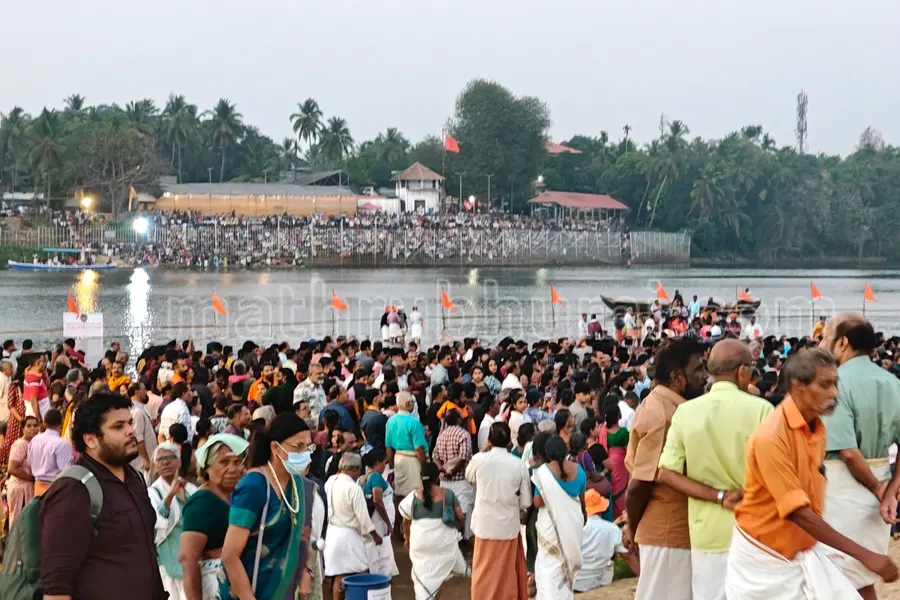
Kerala, long celebrated as a land of festivals, has entered a new chapter in its cultural and spiritual journey. For the first time, the state is hosting its own Kumbh Mela, known officially as the Mahamagha Mahotsavam.
Held on the banks of the Bharathapuzha River at Thirunavaya in Malappuram district, this historic congregation is being hailed as a revival of ancient traditions and a bold reimagining of collective faith in the twenty-first century. The event is not only significant for its scale but also for the fact that it marks Kerala’s debut in joining the ranks of India’s great river-centered spiritual gatherings.
Also Read

Thirunavaya is no ordinary site. Steeped in history, it was once the venue of the legendary Mamangam festival, a grand assembly of rulers, traders, and warriors under the patronage of the Zamorin of Calicut. The Mamangam was remembered not merely as a religious event but as a political and cultural spectacle, shaping Kerala’s medieval history with its fierce battles and alliances. By choosing Thirunavaya as the venue for the Mahamagha Mahotsavam, Kerala has consciously connected its present to its past, transforming the same riverbanks into a stage for devotion, ritual, and identity. Anchoring the festival is the Navamukunda Temple, an ancient Vaishnavite shrine whose sanctity lends weight to the rituals performed there.
The centerpiece of the Mahamagha Mahotsavam is the sacred bath in the Bharathapuzha, locally known as the Nila. Pilgrims believe that immersing themselves in its waters during the auspicious period cleanses sins and grants blessings, echoing the beliefs that animate the northern Kumbh Mela. The sight of thousands of devotees stepping into the river at dawn, conch shells sounding, priests chanting mantras, and lamps flickering along the ghats is one of profound beauty. In those moments, the river becomes more than a natural resource; it becomes a living symbol of continuity, faith, and renewal.
What sets Kerala’s Kumbh Mela apart is its emphasis on inclusivity and sustainability. Women participate freely, marginalised communities are given space to perform their rituals, and environmental consciousness is woven into the organisation. Biodegradable materials are encouraged, waste management systems are put in place, and awareness campaigns remind pilgrims that protecting the river is part of honoring it. This eco-consciousness reflects Kerala’s broader social identity, where reform movements and education have long challenged traditional hierarchies and promoted progressive values.
The Mahamagha Mahotsavam has been revived after nearly 250 years, making its return all the more momentous. According to official information, the festival began on January 19 and will continue until February 3, with sacred bathing rituals available daily from 6 a.m. to 6 p.m.. No booking or registration is required, allowing devotees to participate freely. Alongside the bathing, the Nila Aarati is performed every evening, adding a luminous dimension to the riverbanks as lamps are lit and hymns are chanted. The festival commenced with the Dharma Dhwajarohana, the ceremonial hoisting of the sacred flag, symbolizing the beginning of the rituals.
The scale of participation has been remarkable. Reports suggest that around 1,00,000+ devotees visit the sacred site each day, making it one of the largest spiritual congregations in the region. The atmosphere is charged with devotion, as diverse Hindu sects come together to perform ancestral rites, Vedic observances, and prayers. The presence of spiritual leaders, including revered figures such as Mata Amritanandamayi, who serves as chief patron, lends further sanctity to the proceedings.
For Kerala, the Mahamagha Mahotsavam is more than a festival; it is a declaration of identity. By hosting its first Kumbh Mela, the state asserts that its rivers, temples, and traditions can stand alongside the great spiritual gatherings of India. The event has also become a driver of cultural tourism. Hotels and homestays in Malappuram and neighboring districts report full occupancy, local businesses thrive, and artisans find new markets for their crafts. The government and tourism enthusiasts alike see this as an opportunity to diversify Kerala’s tourism portfolio, highlighting its spiritual and cultural heritage beyond the familiar backwaters and beaches. Promotional campaigns, documentaries, and collaborations with travel agencies aim to put Kerala’s Kumbh Mela on the world map.
Also read: OTT releases this week: Dhurandhar, Sarvam Maya, Tere Ishq Mein and more
Challenges remain, of course. Managing crowds, ensuring safety, and balancing tradition with modernity are constant concerns. Critics worry that commercialization may dilute the spiritual essence, turning the mela into a spectacle rather than a sacred gathering. Environmentalists caution against the strain on rivers and ecosystems. Organizers respond by emphasizing regulation, sustainability, and community participation. They argue that the mela is not just about ritual but about celebrating Kerala’s identity, and that careful management can preserve its sanctity. The debate reflects broader tensions in Indian society, where tradition and modernity often collide. Yet the Kerala Kumbh Mela continues to grow, suggesting that it has struck a chord with both devotees and observers.
As the sun sets over the Bharathapuzha, the sight is unforgettable. Lamps are lit, their flickering flames reflected in the water. Devotees chant hymns, their voices rising in unison. Children watch wide-eyed, elders bow their heads, and ascetics meditate in silence. The air is filled with a sense of timelessness, as if the boundaries between past and present have dissolved. In that moment, Kerala’s Kumbh Mela feels not like an imitation but like a continuation of a tradition that transcends geography. It is a reminder that faith is universal, that rivers everywhere can become sacred, and that communities can create their own rituals of belonging.
For Kerala, the Mahamagha Mahotsavam is a milestone. It is a revival of history, a celebration of heritage, and a vision of spirituality that is both rooted and evolving. As it grows in scale and recognition, it may well become one of the defining cultural events of southern India, a counterpart to the northern Kumbh Mela, yet distinct in its soul. And for those who gather on its banks, it is a chance to touch the eternal, to feel part of something larger than themselves, and to carry home the memory of a river that flows not just through the land but through the heart.
Published: 26 Jan 2026, 11:37 am IST
Related Topics
Disclaimer: Kindly avoid objectionable, derogatory, unlawful and lewd comments, while responding to reports. Such comments are punishable under cyber laws. Please keep away from personal attacks. The opinions expressed here are the personal opinions of readers and not that of Mathrubhumi.