
Governor of Kerala, Rajendra Arlekar, will perform the Dharma Dhwajarohanam, marking the official commencement of the festival’s public observances.
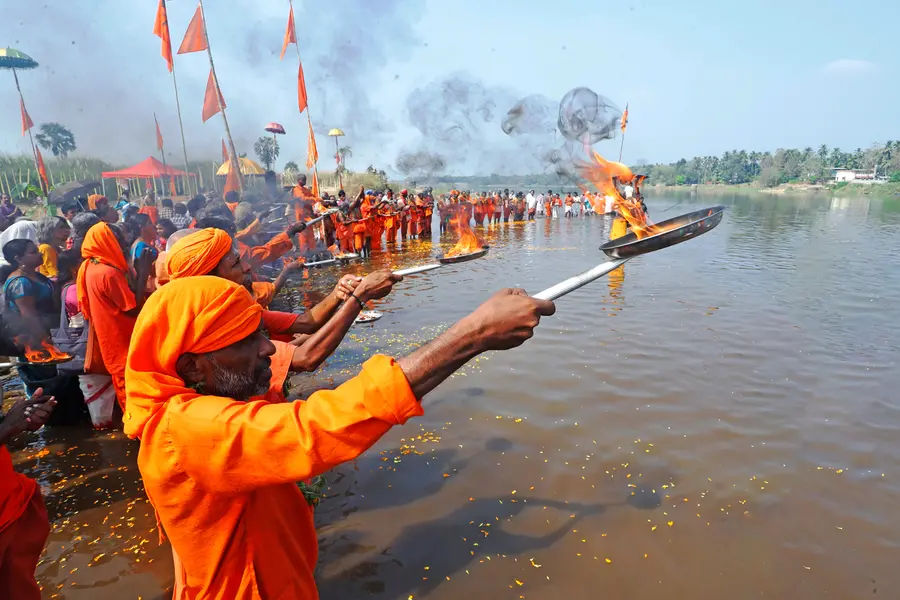
Malappuram, Kerala: Rituals linked to the Mahamagha Mahotsavam — popularly described as Kerala’s version of the Kumbh Mela — began on Friday (January 16) at Thirunavaya in Malappuram district.
Special poojas were held at the venue on the banks of the Bharathapuzha river, formally marking the start of the festival proceedings after the district administration permitted preparatory works to resume.
Also Read

The rituals were conducted in the presence of Mahamagha Sabhapati Mahamandaleshwar Swami Anandavanam Bharati and Sreesakthi Saanthananda Maharshi, Managing Trustee of the Swami Sathyananda Saraswathy Foundation and National General Secretary of the Sree Rama Dasa Mission Universal Society. Priesthood and spiritual guidance were provided by Swami Abhinava Balananda Bhairava.
Devotees from across Kerala took part in deity worship and ancestral rites, following different customs associated with their respective traditions.
Festival schedule and key events
The next major ritual, the Vedic Shraddha, will be held on Saturday, January 17, from 6.00 am, under the acharyaship of Cherumukku Vaidikan Vallabhan Akkithirippad.
The formal inauguration of the festival will take place on January 19, coinciding with the opening day of Magha Gupta Navratri. At 11.00 am, the Governor of Kerala, Rajendra Vishwanath Arlekar, will perform the Dharma Dhwajarohanam, marking the official commencement of the festival’s public observances.
Another major event, the Mahameru Ratha Yatra, will also begin on January 19. The chariot procession will travel from Tamil Nadu to the Trimurti Sangamam at Thirunavaya and will see participation from several Adheenams in Tamil Nadu. The yatra is being led by Yatheeshanandanathan Dr. Sreenath Karayatt, Acharya of the Bharatiya Dharma Prachara Sabha.
Earlier halt and administrative clearance
Preparations for the festival had been temporarily halted after revenue authorities issued a stop memo citing alleged violations of the Kerala River Protection Act, 2001. Officials raised objections over alleged encroachment into the riverbed and the use of heavy machinery for preparatory works, warning of possible legal action.
Organisers disputed the allegations, stating that permissions had been sought in advance and that temporary arrangements on the riverbed were necessary to manage large crowds. The halt led to protests by Hindu organisations.
Following consultations, the district administration allowed preparatory works to resume under strict conditions related to public safety and river conservation, clearing the way for the rituals to begin.
Published: 16 Jan 2026, 06:13 pm IST
Related Topics
Disclaimer: Kindly avoid objectionable, derogatory, unlawful and lewd comments, while responding to reports. Such comments are punishable under cyber laws. Please keep away from personal attacks. The opinions expressed here are the personal opinions of readers and not that of Mathrubhumi.