
Bollywood actresses acting in southern films are not new in the South Indian Entertainment industry as there are several southern actors too who constantly keep appearing in Hindi films
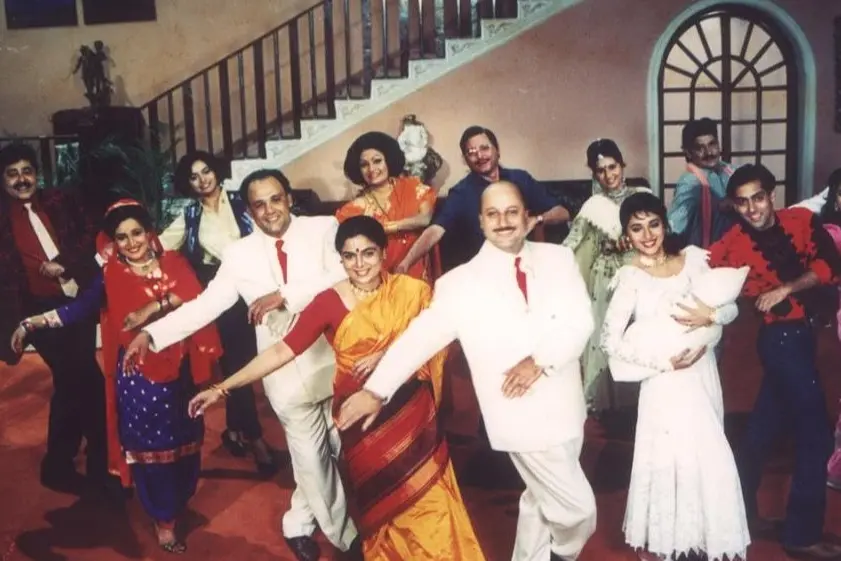
The term Bollywood is popularly used for the Hindi language film industry based in Mumbai, Maharashtra, India. Bollywood is the largest film producer in India and one of the largest centres of film-making in the world. The movies are made in Hindi, a language that is widely spoken and understood by Indians across the globe making it popular not only among the Indian diasporic community but also with other audiences. Bollywood’s global circulations have been especially multifaceted and surprising in reaching beyond South Asian diasporas to connect with audiences throughout the world.
Of late, we are witnessing a fusion of stars, directors, cinematographers, editors and music directors including big time producers, jumping across the language bandwidth of Hindi as the lingua franca to embrace films in other Indian languages, mainly Tamil, Telugu and Malayalam, getting them dubbed in Hindi from the original or vice versa. The OTT channels have helped widen the audience canvas of regional films offering thousands of subscribers access to some wonderful regional films, mainly from the South which was not the case before.
Also Read

As one of the world’s major economies with a large and widespread expatriate community and a globally successful film industry, the Indian case would appear to be a highly suitable terrain for exploring some of these claims concerning the interplay of media and diasporic audiences; not least, because it is the Indian example that anecdotally informed Arjun Appadurai’s influential theorisation in the first place”.
A recent Bengali daily published the news of Hrithik Roshan joining NTR Junior in the soon-to-be-released mega film War 2. The film is being produced by the Bollywood banner Yash Raj Films. The teaser of the film released last week promises some hi-dramatic action scenes between
NTR and Roshan. If NTR Junior is jumping off a bridge on to the top of a train in one scene, another shows Roshan walking along with a wolf. Roshan has reportedly said about the film, “Double the fire, double the fury” referring to this film. The other attraction comes in the shape of Kiara Advani cinematographed in an almost transparent bikini or swimsuit. Some fans have compared her look with Deepika Padukone’s “Besharam Rang” number in Pathan. Guess who is directing the film? None other than Ayan Mukherjee. The film is scheduled to premiere right across India on Independence Day this year with dubbed versions in Telugu and Tamil in addition to Hindi.
Bollywood actresses acting in southern films are not new in the South Indian Entertainment industry as there are several southern actors too who constantly keep appearing in Hindi films. But, there were a few A-listers who had never shown interest in starring in South films and are now showing much enthusiasm to act in southern films mainly because (a) it widens their audience to reach beyond Bollywood, (b) they earn much more from a Southern film than they do from a Bollywood film and (c) they take it as a learning experience never mind their track record in Bollywood.
Salman Khan who remakes several Telugu films in Hindi has greeted the Telugu audience with Chiranjeevi's Telugu remake of the Malayalam film 'Godfather'.He played an important role in the film, directed by Mohan K. Raja in Telugu besides dancing with Chiranjeevi in a song titled 'Taar Maar Takkar Maar' in the film.
The concept of “Indian”-ness of Indian cinema has been dogging it from the time when Nargis, as member of the upper house of the Indian Parliament, made that explosive statement about Satyajit Ray ‘selling’ a wrong image of India abroad by highlighting the poverty of the Indian masses with films like Pather Panchali. By then, Ray had risen to heights unbelievable for an average Indian. So, the statement drew more
brickbats than bouquets. Decades later, when Shekhar Kapoor made The Bandit Queen with part-funding from BBC’s Channel Four, the echoes of the loud cheer and the clapping all around can still be heard. His agenda was more or less the same as that of Ray. Poverty was still the high point of Indian-ness in either film. But no Indian was complaining about a wrong image of India being projected abroad.
The massive popularity of films like Karan Johar’s Kuch Kuch Hota Hai, Sooraj Kumar Barjatiya’s Hum Aapke Hain Kaun or Aditya Chopra’s Mohabbatein with the international audience neatly undercuts the ideology and the image presented by many off-mainstream films like like Vidheyan, Neem Annapoorna and Ankur that portray the brutal face of poverty that is as close to India as is the lush affluence reflected in films by our young, postmodern filmmakers like Chopra and Johar distanced from the India most of us are familiar with.
But over the years, specially over the last decade and now, Bollywood is steadily and willingly losing its “Pan-Indian” identity because everyone connected with a film beginning from the producers down to the tea-boy waits for a film to cross the Rs.1000 crore mark at the box office within the first week of its release. The focus is on grandeur, glamour, high decibel sound, music and songs, glitzy locations, magnanimous sets and bigger-than-biggest stars. The richness of the storyline, the drama in the film, the entire film is made from the perspective of profit at the box office and the language, the cultural specificity, the costumes, the lifestyle of the characters do not really matter anymore.
Jana Nayagan marks a landmark moment in Thalapathy Vijay’s illustrious cinematic journey. As audiences across the globe eagerly await his final outing on the big screen, the film promises to be a fitting tribute
to a career that has left an indelible mark on Indian cinema. Directed by H. Vinoth and produced by KVN Productions, Jana Nayagan brings together a stellar creative team to deliver a grand cinematic experience for audiences worldwide.
Producer Venkat K. Narayana said: “There are very few moments in cinema that feel truly historic, and Jana Nayagan is one such moment. As Thalapathy Vijay prepares for his final outing on the big screen, we are honoured to be a part of this journey and to bring this special film to his fans across the world. It has been remarkable to witness a journey that began with cinema and went on to inspire millions, ultimately leading him to become the Chief Minister of Tamil Nadu — a testament to the extraordinary connection he shares with the people. We are confident that Jana Nayagan will be a memorable theatrical experience and a fitting tribute to a phenomenal career.”
In the 1990s, Mani Ratnam’s Tamil-language films “Roja” (1992) and “Bombay” (1995) were pan-India hits in their Hindi dubbed versions and the filmmaker made a few films in Hindi before returning to his native Tamil. The notion of a pan-India hit, i.e. films made in one of the South Indian languages becoming a hit across India and Indian Diaspora markets in Hindi and other language dubbed versions, roared back to life with S.S. Rajamouli’s “Baahubali” films (2015 and 2017), made in Telugu and Tamil, which together grossed $379 million worldwide, with Hindi dubs accounting for a significant chunk. (Naman Ramachandran in Variety dated November 3 2022).
In recent years, the cinema of South India, comprising the Telugu, Tamil, Kannada and Malayalam language industries, has stolen a march over its hitherto more glamorous Bollywood counterpart in both content and box office.
The ‘dubbed film’ ball probably began to roll with Bahubali followed by KGF, KGF 2 and its successors like Pushpa which expanded the field of dubbing converting dubbing as a fine art which broadened the world of regional cinema to a large extent and opened avenues of earning among voice-over or dubbing artists. But what about the regional peculiarity of a story? What about the “Indianness” of a Bollywood film?
Indianness is an internal and abstract value. It goes deeper than clothes, language or eating habits. It is that mental unity where differences melt. It is in the filmmaker’s blood and mind. It is a matter of inner compulsion. It is something that can neither be crushed nor suppressed by an Indian filmmaker even if he wishes to crush or suppress it. It is a birthright into which an Indian filmmaker is born. It is the nativeness that marks him as different from others. It is a connecting link between generations.
Published: 02 Aug 2026, 10:57 am IST
Related Topics
Disclaimer: Kindly avoid objectionable, derogatory, unlawful and lewd comments, while responding to reports. Such comments are punishable under cyber laws. Please keep away from personal attacks. The opinions expressed here are the personal opinions of readers and not that of Mathrubhumi.