
The freeze, originating from the 1979 hostage crisis and intensified by nuclear sanctions, has crippled Iran’s economy, leading to record-breaking inflation and infrastructure decay.
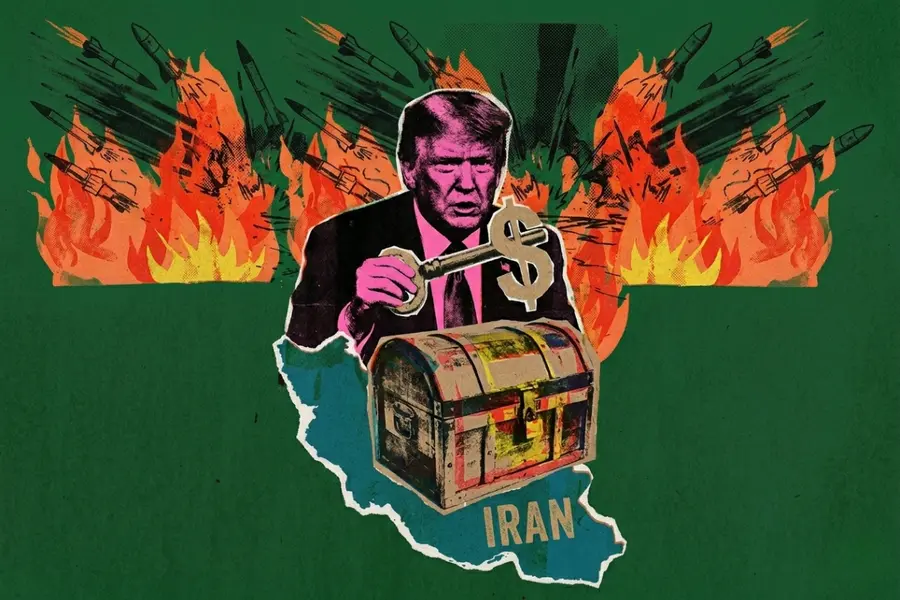
Imagine someone locking your entire life savings in a bank locker and throwing away the key for over 40 years. You cannot touch it, spend it, or even look at it. That is exactly what has happened to Iran. And now, to even sit down for peace talks, Iran is saying, first, give us back our money.
The United States and Iran are slowly moving towards a second round of peace talks, with Pakistan trying hard to bring both sides to the table. But before any deal can happen, Iran has one major demand — release its frozen assets abroad. We are talking about a staggering $100 billion, which is roughly ₹9.3 lakh crore. Just to understand the scale, this is almost one-fourth of Iran's entire GDP — meaning one-fourth of everything the country produces and earns in a full year.
So how did this money get frozen in the first place?
It all started in 1979. Iranian students stormed the American embassy in Tehran and held 66 American citizens as hostages for over 400 days. This single event destroyed any chance of a normal relationship between the US and Iran. Then, US President Jimmy Carter, furious and alarmed, declared Iran a major threat to American national security. He immediately blocked around $12 billion — that is, ₹1.12 lakh crore — of Iran's money, gold, and assets that were sitting in American banks and their overseas branches.
Now, countries keep money in foreign banks for the same reason you keep some cash ready at home. Iran used to store its earnings from oil sales, in dollars and euros, in international banks. This money helped keep Iran's own currency, the rial, stable. When the US froze these reserves, it was like pulling the foundation out from under Iran's economy.
In 1981, a deal called the Algiers Accords, brokered by Algeria, helped end the hostage crisis. Iran freed the American hostages, and the US unlocked some of Iran's blocked money. But the relationship never truly healed. Sanctions kept coming back, like waves hitting a wall.
Over the decades, Iran was hit with more sanctions because of its nuclear programme and its development of ballistic missiles — long-range rockets capable of carrying heavy warheads. In 2015, there was a moment of hope. Iran signed the JCPOA — the Joint Comprehensive Plan of Action — with six major world powers. Iran agreed to slow down its nuclear activities, and in return, it was allowed to access most of its frozen money abroad. It felt like the ice was finally melting.
But in 2018, Donald Trump walked away from this deal in his first term and brought back the sanctions, freezing everything all over again.
Today, Iran's frozen money is sitting scattered across several countries. China holds the largest share — about $20 billion, that is ₹1,86,000 crore. India holds around $7 billion, which is ₹65,100 crore. Iraq holds about $6 billion — ₹55,800 crore. Japan holds approximately $1.5 billion — ₹13,950 crore. The US itself holds around $2 billion — ₹18,600 crore — and European countries like Luxembourg hold close to $1.6 billion — ₹14,880 crore.
Why does Iran so desperately want this money unlocked right now? Because the country is in serious pain. Even before this war started, inflation in Iran had already jumped to 68.1% in February — the highest since World War II. That means everyday things — food, medicine, electricity — became nearly 70% more expensive in just one year. In December 2025, massive protests had broken out in Iran because of this very inflation and the collapse in the value of the rial.
Roxane Farmanfarmaian, an expert in international politics from the University of Cambridge, explained it clearly. She said that unlocking this money would allow Iran to bring its oil earnings back into the economy, stabilise the currency, and prevent the kind of sudden currency crashes that push ordinary people into poverty. She also pointed out that Iran's oil fields, water supply systems, and electricity networks are becoming weak and outdated. This money would allow the country to repair these systems and work with foreign companies to rebuild its industry.
And once the war ends, Iran will need to rebuild even faster. Having access to its own frozen money would make that process far quicker.
Right now, Iran is reportedly asking the US to release at least $6 billion — ₹55,800 crore — as a first trust-building step before any formal deal is signed.
Whether America agrees to even this first step will decide whether the two countries can actually move towards peace — or keep fighting.
The money was always Iran's. The question is simply — will it ever come back?
(Girish Linganna is an award-winning science communicator and a Defence, Aerospace & Geopolitical Analyst. He is the Managing Director of ADD Engineering Components India Pvt. Ltd., a subsidiary of ADD Engineering GmbH, Germany.)
Published: 17 Apr 2026, 02:41 pm IST
Disclaimer: Kindly avoid objectionable, derogatory, unlawful and lewd comments, while responding to reports. Such comments are punishable under cyber laws. Please keep away from personal attacks. The opinions expressed here are the personal opinions of readers and not that of Mathrubhumi.
