
Jet fuel shortages loom over global summer travel as Hormuz tensions spike oil costs, forcing airlines worldwide—including IndiGo and Air India—to slash routes, ground planes, and rethink fleets amid India's ATF crunch.
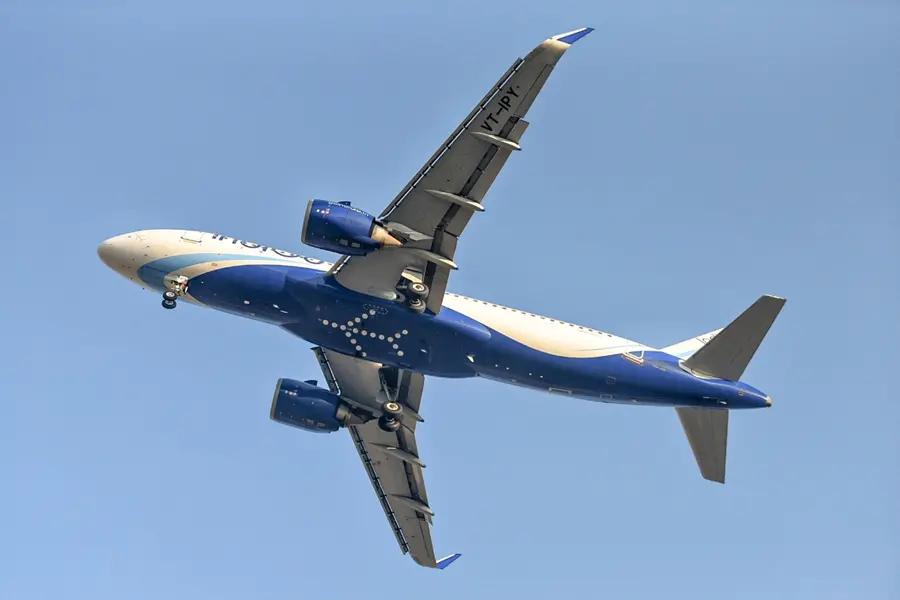
The global aviation industry is entering the peak summer travel season under an unusual cloud of fuel uncertainty. Warnings from the International Energy Agency and the International Air Transport Association suggest that jet fuel shortages are no longer hypothetical.
IATA Director General Willie Walsh has cautioned that by the end of May, Europe could begin seeing flight cancellations due to lack of jet fuel, with similar disruptions already visible in parts of Asia.
The root cause lies in the ongoing geopolitical tensions affecting the Strait of Hormuz, a critical artery through which nearly 20% of global oil flows. Any prolonged disruption here directly translates into supply shortages and price volatility across global aviation markets.
Early signs of groundings, cuts and cost pressures
The ripple effects are already visible. European carriers are adjusting schedules, retiring aircraft early, or even grounding fleets due to unsustainable fuel economics.
Also Read: When oil prices surge, who gets the money? | EXPLAINER
Airlines are being forced into tough choices, mostly to cut capacity, absorb losses, or pass costs onto passengers.
In some cases, cargo operations have been temporarily halted, and marginal routes are being dropped altogether.
This is not yet a full-scale global grounding, but the signs are visible, fuel availability and pricing are once again dictating airline strategy, much like during past oil shocks.
India's position is buffered, but not immune
India, while not yet facing physical fuel shortages, is far from insulated. Aviation Turbine Fuel (ATF) prices in India are closely linked to global crude trends, and any sustained increase puts immediate pressure on airline cost structures.
Also Read: US-Iran meet in Islamabad: Vance moves, but motives mute
ATF already accounts for nearly 35–45% of an Indian airline's operating costs that is significantly higher than the global average due to taxes and pricing mechanisms.
For Indian carriers like IndiGo and Air India, the challenge is twofold, one of managing rising fuel costs while sustaining aggressive capacity expansion plans.
IndiGo, with its strong domestic dominance and relatively fuel-efficient fleet, is better positioned to absorb short-term shocks. Air India, in the middle of a large-scale transformation and fleet induction plan, faces a more complex balancing act between cost control and growth ambitions.
The fare dilemma
One of the biggest questions is whether airlines can pass on rising ATF costs to passengers. The answer is, only partially. India remains an extremely price-sensitive market, and any sharp increase in fares risks dampening demand, especially in the domestic segment.
This creates a squeeze with the airlines absorbing higher costs, but cannot fully recover them through ticket pricing.
Also Read: Trump's absurd Strait stunt
This is where the "price war" dynamic intensifies. Airlines compete aggressively to maintain market share, often keeping fares artificially low even when input costs rise. The result is thinning margins across the board, something the Indian aviation sector has historically struggled with.
Fleet strategy buckled pressure
Globally, rising fuel costs are already influencing fleet decisions, and this trend could extend to India. Airlines may begin prioritising newer, fuel-efficient aircraft while accelerating the retirement of older, less efficient models.
This has a direct knock-on effect on the maintenance ecosystem, shifting demand patterns from heavy maintenance of ageing aircraft to more technologically advanced, predictive maintenance for new-generation fleets.
If fuel prices remain elevated, Indian airlines may also reconsider route economics, temporarily reducing frequencies on less profitable sectors while focusing on high-yield routes.
While widespread grounding is unlikely in India at this stage, selective capacity adjustments cannot be ruled out.
Long-term answer to this crisis -- SAF
Interestingly, this fuel crisis is unfolding alongside the industry’s push toward sustainability. India's Sustainable Aviation Fuel (SAF) roadmap, aligned with the International Civil Aviation Organization net-zero goals targets blending levels of 1% by 2027, 2% by 2028 and 5% by 2030 for international flights.
However, SAF is currently three to five times more expensive than conventional jet fuel, making it an unlikely short-term solution to cost pressures.
Moreover, feedstock allocation remains a key challenge. According to IATA, India holds nearly 10% of global bio-feedstock potential, yet only a fraction is currently utilised.
The critical issue is prioritisation, aviation requires biofuels more urgently than road transport, which has alternatives like electrification. Without clear policy direction, there is a risk of misallocation, where ethanol is diverted away from aviation, undermining long-term SAF production.
Globally, aviation bodies are calling for coordinated responses from fuel rationing frameworks to slot relief mechanisms in case of disruptions. In India, while the situation is not yet critical, the current scenario highlights the need for proactive policy measures.
Rationalising ATF taxes, improving fuel supply chain resilience, and accelerating SAF incentives could help buffer the industry against future shocks.
There is a lesson from Europe’s fuel-crisis, waiting until shortages materialise is too late. Preparedness must precede disruption.
Tighter margins going ahead
As the summer travel season approaches, Indian aviation finds itself walking a tightrope. Demand remains strong, fleet expansion is underway, and the market outlook is fundamentally positive.
Yet, rising ATF prices and global supply uncertainties introduce a layer of unpredictability that cannot be ignored.
For airlines, survival will depend on disciplined capacity management, cost optimisation, and strategic pricing. For the broader ecosystem like MRO, leasing, and fuel suppliers, the coming months will test resilience and adaptability.
The global fuel crunch may not ground Indian fleets outright, but it is already reshaping the economics of flying. And in a market as competitive as India, even a marginal shift in cost dynamics can have far-reaching consequences.
Published: 21 Apr 2026, 03:21 pm IST
Related Topics
Disclaimer: Kindly avoid objectionable, derogatory, unlawful and lewd comments, while responding to reports. Such comments are punishable under cyber laws. Please keep away from personal attacks. The opinions expressed here are the personal opinions of readers and not that of Mathrubhumi.
