
The absence of escalation reduces immediate risk, but does not imply progress. A single material concession, on the other hand, would shift the picture far more decisively than a dozen speculative links, says Harikrishnan S
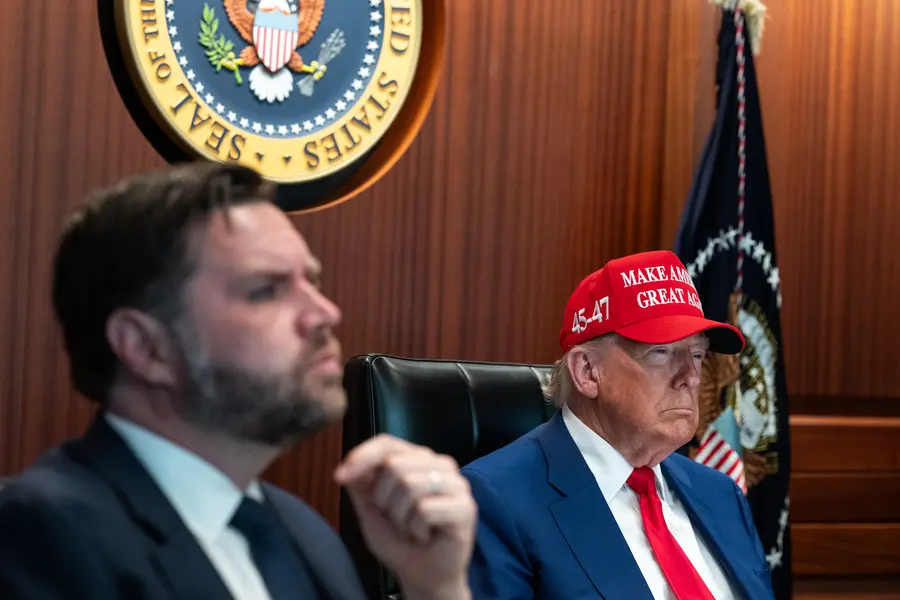
There is a particular kind of analysis that thrives in moments like this. An analysis that stitches together travel schedules, silences, half-statements, and the absence of retaliation, and from that fabric begins to see the outline of a deal. That temptation is understandable. When a senior American figure like Vice President JD Vance travels to Islamabad amid heightened tensions with Iran, it is difficult not to read intent into the trip. Diplomacy, after all, rarely announces itself in advance.
But intent is not the same as convergence. And, at the moment, what we are witnessing looks far more like careful testing than coordinated compromise.
Start with the most visible layer. The crisis around the Strait of Hormuz is not a peripheral irritant, but the core pressure point. Any disruption there carries immediate consequences for global energy flows and insurance markets. That alone raises the stakes beyond the usual theatre of controlled hostility between Washington and Tehran.
Also Read: Trump's absurd Strait stunt
If Iran has even partially tightened the valve, it is not a gesture. It is leverage. And leverage of that kind is not surrendered lightly or pre-emptively. That is where the first misreading creeps in.
The absence of immediate Iranian retaliation after a reported American seizure of a vessel is taken as evidence that talks must be underway. It might be, but restraint has long been part of Iran's strategic vocabulary. It calibrates responses, often delaying them, sometimes displacing them geographically. Not every pause is a prelude to negotiation. Sometimes, it is simply a refusal to escalate on the other side's terms.
On the American side, the incentives are just as layered. The political orbit shaped by Donald Trump has always placed a premium on visible leverage. Sanctions are not merely economic instruments. They are signals of control. To ease them or to release a seized asset is not a technical adjustment but a political act that demands a return. Without that return being reasonably assured, the cost of appearing to yield is often judged too high.
Also Read: A ceasefire built for headlines, not peace
That is why the idea of an imminent exchange, a ship released here, a shipping lane reopened there, requires more than circumstantial alignment. It requires evidence of sequencing. Who moves first, and why, and, at present, that sequencing is not visible. None of this means that diplomacy is absent. On the contrary, it is almost certainly active.
Islamabad has, in the past, served as a discreet channel when direct engagement becomes politically inconvenient. A visit by Vance can easily carry messages that neither side wishes to transmit openly. But backchannels are not breakthroughs. They are probes; they test whether the other side is even prepared to discuss terms, let alone agree to them.
Also Read: How Donald Trump turns war into spectacle
The easing of tensions in Lebanon, particularly involving actors like Hezbollah, adds another layer to the analysis. It removes one variable from an already crowded equation; yet it would be a mistake to treat it as decisive. The history of US-Iran engagement shows that the nuclear question, sanctions architecture and maritime security carry far greater weight than any single proxy theatre.
Lebanon matters, but it does not determine the outcome. What, then, would a realistic path forward look like if both sides were indeed inclined to step back from the brink? Not a grand bargain. Those belong to speeches, not situations like this. The more plausible route is incremental and reversible.
First, a quiet reduction in friction. Fewer incidents at sea, fewer public threats, and a noticeable reduction in operational tempo without any formal announcement. This is the stage where both sides signal seriousness without committing themselves. Next would come something tangible but limited. A gesture that can be framed domestically as tactical rather than concessional.
The release of a vessel, perhaps, or a narrowly defined waiver that allows a trickle of economic activity. In return, a visible assurance that commercial traffic through Hormuz will not be impeded. These are not solutions, but tests of credibility. Only after that would the contours of a more structured understanding begin to appear. Caps, inspections, partial relief. Even then, the arrangement would likely stop short of anything resembling the scale of the Joint Comprehensive Plan of Action. The political space for such an agreement does not currently exist on either side.
Also Read: Paying the price for looking away during crisis
Seen in this light, the present moment sits firmly in the pre-negotiation phase. There are signals, but they are exploratory. There is restraint, but it is cautious rather than cooperative. The system has not yet produced the kind of hard evidence that would suggest alignment. This is where analytical discipline matters.
It is easy to assign meaning to movement and coherence to coincidence. A visit becomes a mission. A pause becomes a promise. Before long, the narrative outruns the facts. A more grounded approach would treat each development as a data point rather than a conclusion.
Diplomatic travel adds weight to the possibility of engagement, but does not confirm it. The absence of escalation reduces immediate risk, but does not imply progress. A single material concession, on the other hand, would shift the picture far more decisively than a dozen speculative links.
If there is one indicator that deserves close attention in the coming days, it is behaviour in and around Hormuz. Not statements, but actions. A sustained easing of maritime friction would suggest that both sides see value in stabilisation. Conversely, even a minor incident could quickly unravel the fragile balance that currently holds.
For now, the most accurate description of the situation is not that a deal is imminent, nor that conflict is inevitable. It is that both remain possible, and neither has yet gained the upper hand. That may not be as satisfying as a clear prediction, but it is closer to the truth.
The author is a National Award winner for Best Narration and an independent political analyst. Views expressed are personal.
Published: 21 Apr 2026, 12:45 pm IST
Related Topics
Disclaimer: Kindly avoid objectionable, derogatory, unlawful and lewd comments, while responding to reports. Such comments are punishable under cyber laws. Please keep away from personal attacks. The opinions expressed here are the personal opinions of readers and not that of Mathrubhumi.
