
No seatback screens, a narrower cabin and less room to move around what should passengers expect when IndiGo replaces a Boeing Dreamliner with a smaller Airbus on its Mumbai–Amsterdam route?
Imagine boarding a flight from Mumbai to Amsterdam. You settle into your seat, stow your cabin bag and prepare for a journey that will last around 11 hours. Then you look around. There is just one aisle, the cabin feels narrower, and there is no screen in front of you to watch a film.
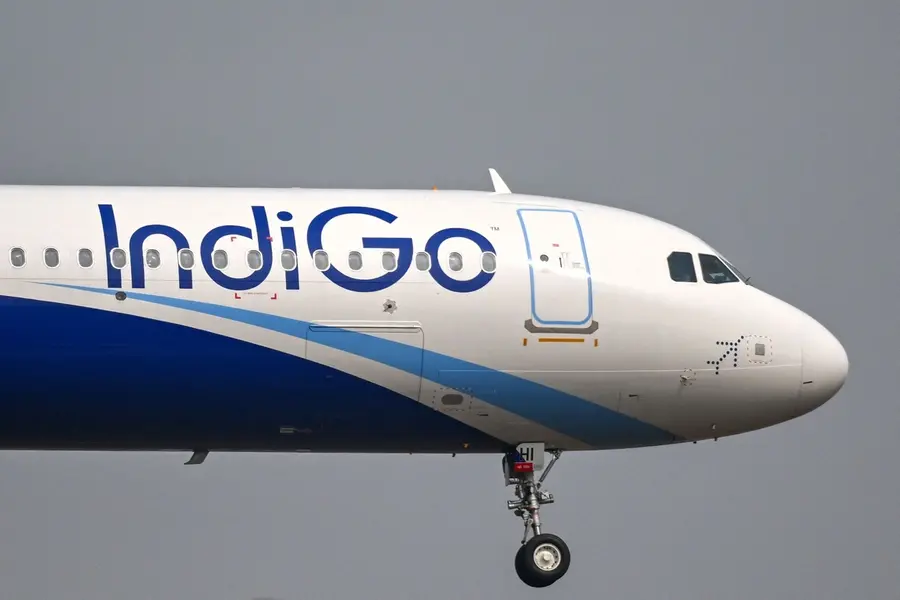
This is the new reality for passengers flying IndiGo’s Mumbai–Amsterdam route, where the airline has replaced the larger Boeing 787-9 Dreamliner with the Airbus A321XLR, a much smaller, single-aisle aircraft designed to fly longer distances.
Also Read

The change raises a question that matters to anyone booking a long flight, how comfortable is an 11-hour journey on a narrowbody aircraft, and what are passengers giving up?
A bigger aircraft versus a smaller cabin
The difference between the two aircraft is immediately noticeable on paper. The Boeing 787-9 used on the route previously had approximately 338 seats in its Norse Atlantic configuration. IndiGo’s A321XLR has 195 seats, including 12 IndiGo Stretch seats and 183 economy seats.
But the difference is not just about the number of passengers. The 787 is a widebody aircraft with two aisles and a broader cabin. The A321XLR has one aisle and a narrower fuselage.
For a passenger, that can influence the feel of the journey. Moving around the cabin, allowing others to pass and getting up during a long flight may feel more constrained in a single-aisle aircraft. The experience will also depend on the seat layout, legroom and how full the cabin is.
A narrowbody does not automatically mean an uncomfortable flight. However, on a journey lasting nearly half a day, the cabin environment becomes an important part of the travel experience.
Eleven hours without a seatback screen
Entertainment is another noticeable difference. IndiGo’s A321XLR does not have seatback entertainment screens. Passengers can stream content to their own devices, while hot meals are available on board.
That may be perfectly manageable for travellers who carry a tablet or smartphone, download films in advance and bring their own headphones. But it also means remembering to charge devices, carry suitable accessories and have entertainment ready before boarding.
For families travelling with children, older passengers or people who prefer the simplicity of a built-in entertainment system, this could require more planning.
The absence of seatback screens does not determine the quality of an entire flight. Still, when passengers are spending around 11 hours in the air, even small conveniences can make a difference.
Will the journey feel longer?
An 11-hour flight is demanding regardless of the aircraft. Passengers need opportunities to stretch, move around, sleep and get comfortable in their seats.
On a single-aisle aircraft, movement can feel less convenient, particularly when passengers in window seats need to get past others or when the aisle is occupied by people waiting to use the lavatory. The cabin may also feel busier at certain times, such as meal service.
That does not mean passengers will necessarily be uncomfortable throughout the journey. Seat pitch, cushioning, cabin temperature, lighting, crew service and the ability to rest all contribute to how people experience a long flight. The actual difference will depend on the cabin configuration and individual needs.
For anyone considering this service, checking the seat map before booking and choosing a seat suited to their preferences may help. Travellers who rely on personal devices for entertainment should also plan ahead.
Does a smaller aircraft mean a cheaper ticket?
Not necessarily. A smaller aircraft has fewer seats, but ticket prices depend on demand, competition, operating costs and how many seats an airline makes available for sale.
Reports indicate that IndiGo is limiting the number of seats sold on the westbound Mumbai–Amsterdam flight to manage the aircraft’s payload on the longer routing. That means the 195-seat cabin does not necessarily translate into 195 seats being available to book on every departure.
For passengers, the practical question is whether the service offers a competitive fare and a convenient nonstop journey. A smaller cabin may be an acceptable trade-off if the price and schedule work. But if fares are high and the onboard experience feels basic, travellers may reasonably ask whether the overall value matches their expectations.
Is it safe to fly for 11 hours on a narrowbody?
The aircraft’s smaller size does not, by itself, make the journey unsafe. The A321XLR was developed for long-range operations and received European Union Aviation Safety Agency type certification in 2024.
Safety depends on the aircraft operating within its approved limits, with appropriate fuel reserves, route planning and operational procedures. The reported limits on passenger numbers reflect payload considerations; they are not, on their own, evidence of a safety problem.
For passengers, the more immediate concern is likely to be comfort rather than the number of aisles. A narrowbody aircraft can operate long-haul flights, but that does not mean every passenger will find its cabin as comfortable as a widebody’s.
What should passengers make of the change?
IndiGo’s A321XLR offers a nonstop connection between Mumbai and Amsterdam on a smaller aircraft, with a different cabin experience from the Boeing Dreamliner that previously operated the route.
Some travellers may barely notice the difference, particularly if they prioritise the schedule, fare and convenience of flying nonstop. Others may miss the wider cabin, the additional space to move around and the familiarity of seatback entertainment.
Ultimately, the question is not whether a narrowbody can fly for 11 hours. It can. The question is whether the onboard experience meets passengers’ expectations for a journey of that length. For travellers, a flight is not simply a way to get from one city to another. It is 11 hours of sitting, eating, resting and trying to pass the time comfortably.
If the journey is almost half a day long, should passengers have to compromise on comfort simply because the aircraft can make the distance?
Published: 28 Oct 2026, 07:39 pm IST
ABOUT THE AUTHOR
Related Topics
Disclaimer: Kindly avoid objectionable, derogatory, unlawful and lewd comments, while responding to reports. Such comments are punishable under cyber laws. Please keep away from personal attacks. The opinions expressed here are the personal opinions of readers and not that of Mathrubhumi.