
India is ready to order another 1,000 aircraft to meet rising passenger demand as airlines face an acute shortage of planes, Commerce Minister Piyush Goyal said during his visit to Egypt.
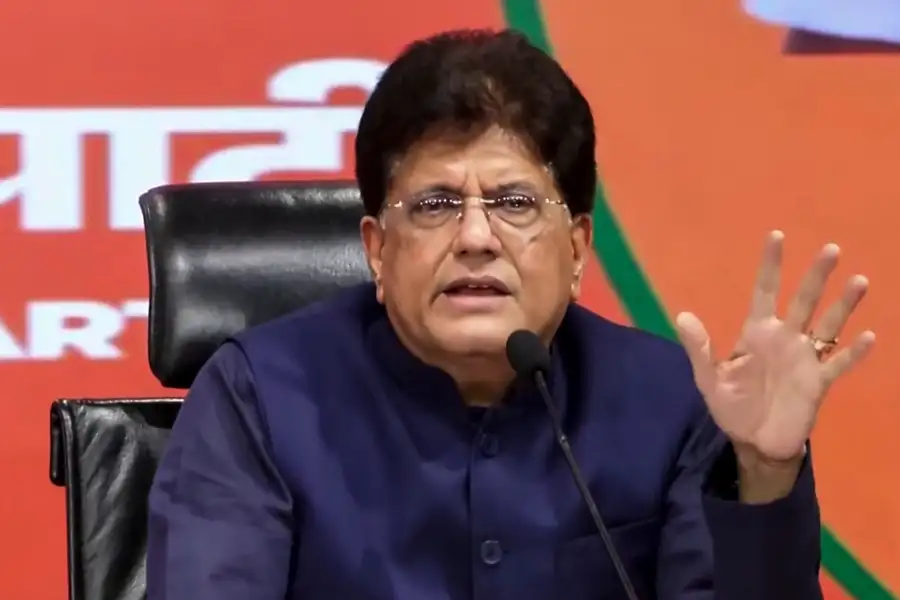
New Delhi: India is ready to order another 1,000 civilian aircraft as the country's aviation sector struggles to keep pace with growing passenger demand, Union Commerce and Industry Minister Piyush Goyal said on Monday, November 16.
Speaking to reporters during his two-day visit to Egypt, Goyal said Indian airlines had already placed orders for more than 1,200 aircraft but would require over 2,000 planes to meet future demand. He added that the government was pursuing established aircraft manufacturers to speed up deliveries.
"We have ordered more than 1,200 planes, and we are ready to order another 1,000 planes, we need more than 2,000 planes for our requirements. So we are pursuing the established manufacturers of aircraft for faster supplies," Goyal said.
The minister said additional aircraft would also help improve international connectivity, including flights between India and Egypt.
"We need to see more (air) connectivity... as we get more aircraft, we are sure we will be able to have more flights to Egypt," he said.
Currently, EgyptAir operates direct flights between India and Egypt.
Why does India need 1,000 more aircraft?
India is among the world's fastest-growing civil aviation markets, with passenger demand rising as more people travel for business, tourism and other purposes.
Airlines such as IndiGo and Air India have placed large aircraft orders with global manufacturers Airbus and Boeing to expand their fleets and meet anticipated demand.
However, aircraft delivery schedules remain a challenge. Even after placing substantial orders, airlines need to wait for manufacturers to supply the planes. Faster deliveries are therefore important for expanding flight operations and improving connectivity.
Goyal's remarks indicate that India is considering further orders beyond the aircraft already booked by domestic carriers.
Airbus, Boeing and India's aircraft manufacturing ambitions
India's aviation expansion is closely linked to its relationships with major global aircraft manufacturers.
Airbus has two final assembly lines in India, one for military transport aircraft and another for helicopters. Boeing and Airbus together procure components and services worth around $2 billion annually from India.
Brazilian aircraft manufacturer Embraer has also entered into a strategic collaboration with the Adani Group to explore the possibility of establishing regional aircraft manufacturing facilities in the country.
Several international aerospace companies have established operations in India as the country looks to strengthen its aircraft manufacturing ecosystem and increase domestic participation in the global aviation supply chain.
India and Egypt aim to begin trade agreement talks within 90 days
Goyal's visit to Egypt also resulted in an agreement to examine the possibility of a Preferential Trade Agreement (PTA) or a Free Trade Agreement (FTA) between the two countries.
Both sides have decided to establish teams to examine the proposed arrangements and finalise the Terms of Reference. Goyal said the countries hoped to begin negotiations within the next 90 days.
The proposed agreement is expected to expand bilateral trade and investment and strengthen economic cooperation across several sectors.
Rupee and Egyptian pound linked for trade settlements
Another development highlighted by Goyal was the connection between the Indian rupee and the Egyptian pound through their respective central banks to facilitate trade settlements in local currencies.
He said the arrangement could reduce exchange-related risks and costs by limiting the need to convert payments into international currencies.
It could also help importers and exporters transfer payments more quickly.
Sectors identified for India-Egypt cooperation
Discussions during the visit covered several areas where both countries could explore investment and business partnerships. These included:
- Pharmaceuticals and medical devices
- Hospitality and engineering
- Automobiles and electric mobility
- Fertilisers and renewable energy
- Artificial intelligence and data centres
- Seaports and shipbuilding
- Locomotives and railway manufacturing
- Logistics, warehousing and supply chains
- Fintech and digital payments
Goyal also met Egyptian officials to discuss cooperation in transportation, including seaport development, shipbuilding and the domestic manufacture of locomotives and railway equipment.
He invited Egyptian businesses and ministers to participate in the Vibrant Gujarat summit scheduled for January 2027.
India and Egypt target $12 billion in bilateral trade
The proposed trade agreement and sectoral partnerships are expected to support the two countries' target of increasing bilateral trade to $12 billion.
Goyal said both countries had agreed to send sector-specific business delegations over the next 12 months to identify opportunities and build partnerships.
During the visit, he also met Egyptian Prime Minister Mostafa Madbouly and Mohamed Ismail Mansour, Chairman of Infinity Energy, to discuss investment opportunities across manufacturing, electric vehicles, renewable energy and logistics.
Can more aircraft orders solve India's aviation capacity problem?
India's willingness to order another 1,000 aircraft reflects the scale of its long-term aviation ambitions. However, placing orders alone will not immediately resolve the shortage.
Aircraft manufacturing involves complex global supply chains, and deliveries depend on production capacity, components, engines and other manufacturing requirements. Even after airlines place orders, they may have to wait years before receiving the aircraft.
For passengers, the impact of additional orders will depend on when the planes are delivered and how quickly airlines put them into service. A larger fleet could help airlines introduce more routes, increase flight frequency and improve connectivity to smaller cities and international destinations.
The development also highlights India's broader ambitions in aerospace manufacturing. Partnerships involving Airbus, Boeing, Embraer and Indian companies could help strengthen domestic supply chains and create opportunities for manufacturing and skilled employment.
Meanwhile, the proposed India-Egypt trade agreement signals an effort to expand economic ties beyond traditional trade. Cooperation in aviation, transport, manufacturing, renewable energy and digital services could create additional opportunities for businesses in both countries.
However, the proposed PTA or FTA is still at the exploratory stage. Its eventual impact will depend on the terms negotiated, the sectors covered and the extent to which businesses can benefit from improved market access.
Published: 17 Nov 2026, 08:36 am IST


ABOUT THE AUTHOR

Disclaimer: Kindly avoid objectionable, derogatory, unlawful and lewd comments, while responding to reports. Such comments are punishable under cyber laws. Please keep away from personal attacks. The opinions expressed here are the personal opinions of readers and not that of Mathrubhumi.