
A nuanced assessment of Hindustan Aeronautics Limited's role in building India's aerospace capabilities
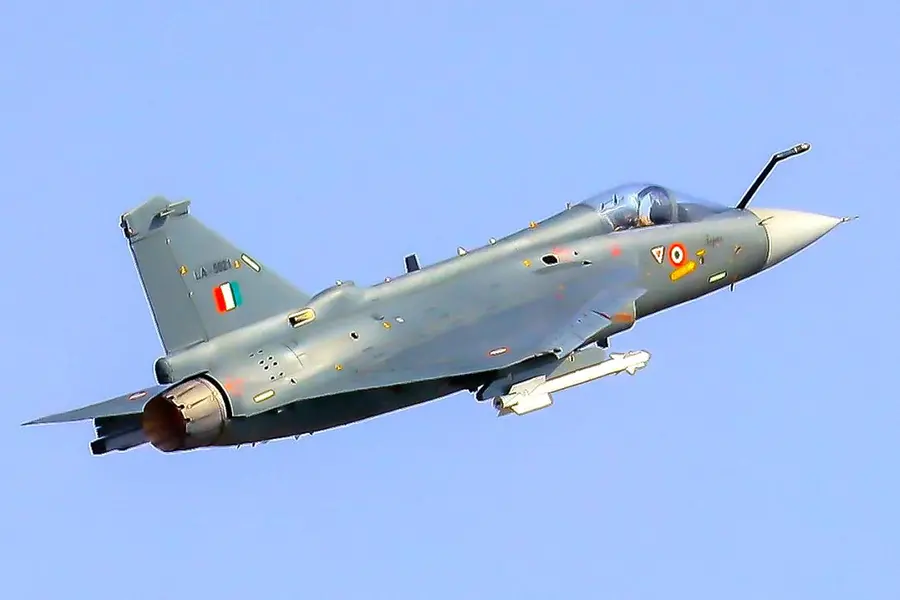
Hindustan Aeronautics Limited (HAL) occupies a unique position in India's defense landscape—simultaneously celebrated for breakthrough achievements and criticized for persistent challenges. As India pursues greater defense self-reliance, HAL's performance offers both compelling successes and sobering lessons about the complexities of indigenous aerospace manufacturing.
The Tejas Success Story: Real Progress with Realistic Expectations
Also Read

HAL's flagship achievement, the Tejas Light Combat Aircraft, represents genuine progress in India's aerospace capabilities. The current Tejas Mk1A variant has achieved approximately 60-65% indigenous content—a significant milestone that places India among a select group of nations with advanced fighter aircraft manufacturing capabilities. This achievement becomes more impressive when considering the global aerospace industry's complexity, where even established manufacturers rely heavily on international supply chains.
The indigenous flight control systems and digital fly-by-wire technology demonstrate HAL's growing technical sophistication. Unlike many international collaborations where critical systems remain foreign-controlled, the Tejas program has developed core technologies domestically, ensuring India's strategic autonomy in aircraft upgrades and modifications.
However, recent challenges underscore the program's vulnerabilities. In September 2024, Denmark's prohibition on exporting engine charge amplifiers caused delivery delays, highlighting how even seemingly minor components can disrupt production. HAL has responded by tasking domestic companies to develop these components indigenously—a necessary but time-consuming solution that reflects the ongoing journey toward complete self-reliance.
The upcoming Tejas Mk-2, planned to achieve 70% indigenous content with potential for 80% over time, represents the next evolutionary step. Yet HAL has acknowledged that reaching even the 65% target for the Mk1A has proven challenging, tempering expectations about rapid indigenization timelines.
Su-30MKI: A Manufacturing Success with Strategic Value
HAL's licensed production of over 270 Su-30MKI aircraft stands as one of India's most successful defense manufacturing programs. The recent ₹26,000 crore contract for 240 AL-31FP engines, delivered just weeks after signing, demonstrates HAL's mature manufacturing capabilities and operational readiness.
This achievement gains significance when compared to global aerospace industry standards. Even established manufacturers like Boeing and Lockheed Martin regularly encounter supply chain disruptions and delivery delays. HAL's ability to maintain production schedules while building complex twin-engine fighters reflects genuine industrial competence.
The Su-30MKI program has also fostered a robust supply chain ecosystem, engaging hundreds of Indian suppliers and creating thousands of jobs. This multiplier effect extends beyond HAL's facilities, contributing to India's broader aerospace industrial base.
The Dhruv Dilemma: Learning from Setbacks
The Advanced Light Helicopter Dhruv program illustrates both HAL's capabilities and the harsh realities of aerospace development. While the helicopter has been successfully exported to countries including Mauritius, Nepal, and the Maldives, the Ecuador experience provides sobering lessons about quality control and after-sales support.
Ecuador's termination of the Dhruv contract after four crashes between 2009-2015 damaged HAL's export ambitions and highlighted systemic issues. The helicopter's domestic safety record—23 major crashes in 23 years of service, resulting in 17 pilot fatalities—raises legitimate concerns about design, manufacturing quality, and maintenance protocols.
HAL has responded to these challenges with design improvements, enhanced quality control measures, and revised maintenance protocols. Recent groundings for safety reviews, while operationally disruptive, demonstrate a commitment to addressing identified issues. The helicopter continues to serve multiple branches of India's armed forces, suggesting that problems are being managed, if not entirely eliminated.
Navigating Structural Challenges
HAL operates within India's unique procurement environment, where the L1 (lowest bidder) policy can sometimes prioritize cost over quality or reliability. This constraint, combined with limited defense budgets (approximately 1.9% of GDP), creates operational challenges that private sector competitors in other countries don't face.
Supply chain vulnerabilities remain a persistent issue. The Tejas program's dependence on GE's F404 engines and various imported Line Replaceable Units (LRUs) demonstrates how achieving genuine self-reliance requires time, investment, and sustained commitment. HAL's efforts to indigenize these components represent necessary long-term investments, even when they cause short-term delays.
Global Context and Future Prospects
International interest in HAL's products reflects growing recognition of India's aerospace capabilities. While Malaysia ultimately chose other options, their serious evaluation of the Tejas demonstrates the aircraft's competitive potential. Argentina's continued interest in the Dhruv, despite the Ecuador experience, suggests that early export challenges haven't permanently damaged HAL's reputation.
The global aerospace industry's inherent complexity provides important context for evaluating HAL's performance. China's J-20 program has faced engine reliability issues despite massive investments, while the F-22 Raptor encountered years of delays and cost overruns. Even Boeing's 787 Dreamliner experienced significant early problems before achieving commercial success.
Leadership Concerns and Institutional Accountability
The gravity of HAL's challenges became starkly apparent in February 2025 when IAF Chief Marshal A.P. Singh made unprecedented public criticism of the organization during the Aero India show in Bengaluru. In a candid moment captured on video, Singh expressed his frustration to HAL officials, stating "At this point, I have no confidence in HAL, which is not a good situation" and criticized the company for not working in "mission mode".
The IAF Chief's concerns were rooted in concrete delays: despite the first Tejas flying in 2001 and induction beginning in 2016, even the initial batch of 40 aircraft ordered in 2009-2010 remained incomplete. However, the criticism must be viewed within the context of external supply chain disruptions beyond HAL's direct control. The Tejas Mk1A program has faced significant delays due to General Electric's issues with F404-IN20 engine deliveries, with GE even closing its production line at Lynn, Massachusetts without prospects of further Indian orders. These engine supply problems, combined with other foreign component restrictions like Denmark's prohibition on engine charge amplifiers, highlight how HAL's delivery schedules remain vulnerable to international supplier decisions—ironically underscoring the very need for indigenous manufacturing that the Tejas program aims to address.
This institutional tension highlights the complex dynamics between operational urgency and supply chain realities. While Singh's criticism reflects legitimate frustration with HAL's production capabilities, it also illustrates the broader challenge facing India's defense manufacturing: achieving self-reliance while remaining dependent on foreign suppliers for critical components. The IAF Chief's emphasis that "technology delayed is technology denied" takes on added significance when delays stem from external dependencies rather than purely domestic inefficiencies—a reality that both validates HAL's indigenisation efforts and underscores the urgent need to accelerate them.
A Balanced Assessment
HAL's journey reflects the broader challenges facing emerging aerospace nations, but recent leadership criticism suggests these challenges have reached a critical juncture. The organization has achieved genuine technological breakthroughs while navigating budget constraints, regulatory complexities, and global supply chain dependencies. However, the IAF Chief's comments immediately impacted investor confidence, with HAL's stock price declining as markets reacted to concerns about operational execution.
The path forward requires acknowledging both achievements and shortcomings. HAL's success in Su-30MKI production and Tejas development deserves recognition, while safety concerns and delivery delays demand urgent attention. The organization's growing indigenous content percentages represent real progress, even when falling short of ambitious targets, but the pace of improvement must accelerate to meet national security requirements.
Rather than viewing HAL through polarized lenses of either uncritical celebration or dismissive criticism, the current situation demands honest assessment and rapid improvement. The IAF Chief's public criticism, while unusual, reflects the military leadership's frustration with persistent delays during a period of heightened regional tensions. As India's defense modernization accelerates, HAL's ability to respond to this criticism with concrete performance improvements will likely determine whether the country achieves its self-reliance objectives or faces continued capability gaps.
The ultimate measure of HAL's success will not be perfect execution—an unrealistic standard in the complex aerospace industry—but rather its ability to learn from this institutional wake-up call, implement systemic improvements, and demonstrate the reliability that India's defense forces require. The organization's response to current criticism will be crucial in determining whether it can fulfill its role as the backbone of India's aerospace defense capabilities or requires fundamental restructuring to meet national security demands.
(Girish Linganna is an award-winning science communicator and a Defence, Aerospace & Geo.political Analyst. He is the Managing Director of ADD Engineering Components India Pvt. Ltd., a subsidiary of ADD Engineering GmbH, Germany. Contact: girishlinganna@gmail.com)
Published: 19 Jul 2025, 01:56 pm IST
Related Topics
Disclaimer: Kindly avoid objectionable, derogatory, unlawful and lewd comments, while responding to reports. Such comments are punishable under cyber laws. Please keep away from personal attacks. The opinions expressed here are the personal opinions of readers and not that of Mathrubhumi.