
The MH-60R helicopters come with advanced equipment like Hellfire missiles, torpedoes, and high-tech radars.
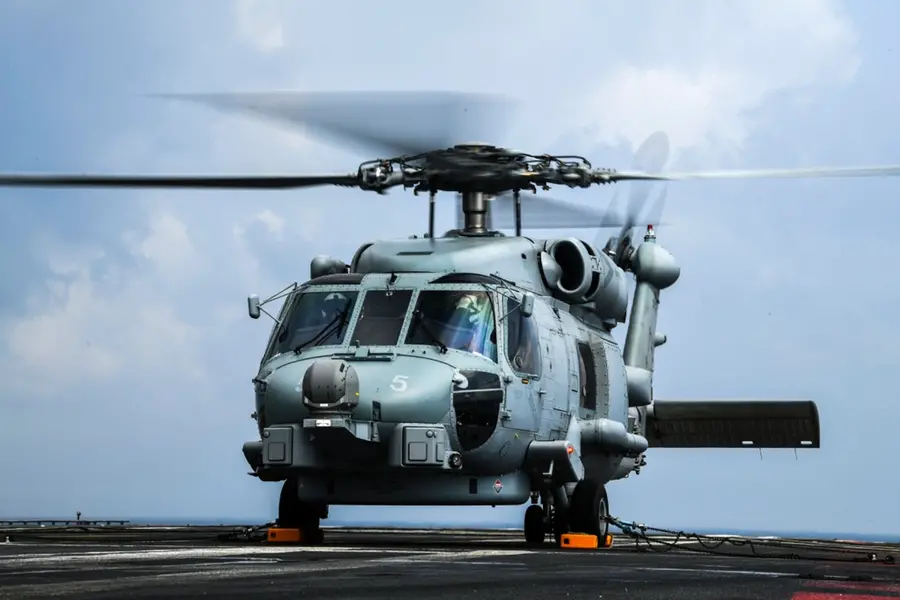
India had signed a $2.6 billion deal with the US-based Lockheed Martin in February 2020 to buy 24 MH-60R Seahawk helicopters for the Navy.
These helicopters were expected to modernise India’s sea operations, replacing the older Sea King helicopters. They can be used for hunting submarines, attacking enemy ships, and rescuing people at sea.
But by June 2025, only 19 helicopters had reached India, and the 20th was expected soon. This delay is similar to the one seen with Apache helicopters ordered by the Indian Army.
It raises important questions—how ready is India’s defence system? And why hasn’t the Navy raised its voice? Also, why are foreign companies like Lockheed Martin not questioned the way Indian companies like HAL are when delays happen?
The delay: Unpacking the causes
The MH-60R, also called the “Romeo,” plays an important role in protecting India’s maritime interests, especially in the Indo-Pacific, where threats from China and piracy are increasing.
According to the original plan, deliveries were to start in 2021 and finish by 2024. Now the full delivery is expected only by late 2025 or even later. There are a few reasons behind this delay.
Firstly, the COVID-19 pandemic affected the global supply of defence materials.
Lockheed Martin had trouble getting parts and equipment. This also affected Apache helicopter deliveries for the Indian Army. Strict safety checks and tests also slowed things down—something seen across many US defense projects.
Secondly, some believe that global politics might be involved. There have been posts on social media suggesting that the US is unhappy with India’s neutral stand on the Russia-Ukraine war.
India’s decision to buy the Russian S-400 system despite US sanctions also added to tensions. Though not confirmed officially, these factors may have affected the pace of deliveries.
Thirdly, both countries have their own bureaucratic hurdles. The US Foreign Military Sales (FMS) process takes a lot of time due to approvals and legal checks. India, too, often delays contracts and payments.
For example, India’s Apache deal was delayed by more than 18 months. The same kind of delay may have affected the MH-60R deliveries too.
The Indian Navy’s silence: Strategy or oversight?
It is surprising that the Indian Navy hasn’t said anything publicly about the MH-60R delay, given how important these helicopters are.
There could be several reasons for staying quiet. One, the Navy may want to protect its growing defence ties with the US. This deal was a major moment in India-US relations, especially with the Quad group and joint military drills like Malabar.
If India openly criticises the US, it could harm these relationships. Recent talks between Defence Minister Rajnath Singh and US Defense Secretary Pete Hegseth suggest India is quietly pushing for faster deliveries.
Two, the Navy may not want to publicly admit the delay, as that could expose its own weakness. With only 19 MH-60Rs in hand, it still depends on the outdated Sea King fleet. If it talks openly about the delay, it might signal a gap in capability to countries like China and Pakistan, especially after Operation Sindoor. The Navy may instead be focusing on training crews and using the helicopters already delivered.
Three, the silence could be part of India’s usual way of handling such matters. Indian defense forces rarely criticize foreign companies in public. This might be to avoid hurting international relations. India has always tried to balance its global ties—this may be part of that policy.
Double standards: HAL vs. foreign suppliers
There seems to be a clear difference in how India treats its own companies versus foreign ones. For example, HAL has been harshly criticised for delays in the Tejas Mk-1A fighter jet project. These delays were mostly due to engine supply problems, many of which were not HAL’s fault.
But when foreign firms like Lockheed Martin and Boeing delay delivery of the MH-60R and Apache helicopters, there’s hardly any public criticism.
Neither the Navy nor the Army appears to question them. Indian companies often get blamed for project delays and inefficiencies. But foreign companies seem to get a free pass, possibly because India doesn’t want to upset its diplomatic relationships.
The Indian Air Force and Navy may also hesitate to pressure US companies due to the complexities of the FMS process. Still, if India doesn’t question these foreign delays, it may continue to rely on imports, which goes against the spirit of “Aatmanirbhar Bharat” or self-reliance in defence production.
Implications for India’s defence strategy
The delay in MH-60R delivery is just one example of larger issues in India’s defence upgrade plans. Apache helicopters meant for the Indian Army have also been delayed by over 18 months, leaving gaps in squadron strength.
Similarly, the Indian Air Force’s plan to get Tejas Mk-1A fighters has been slowed due to late delivery of GE F404 engines. Such issues show how dependent India is on foreign suppliers—a problem that becomes serious when regional tensions are rising.
The MH-60R helicopters come with advanced equipment like Hellfire missiles, torpedoes, and high-tech radars. These are essential for keeping an eye on enemy submarines, especially from China and Pakistan.
Every delay in receiving these helicopters reduces India’s strength in the Indo-Pacific. By staying silent, the Navy may be avoiding diplomatic trouble, but it could also be creating a dangerous habit—accepting delays as normal. That’s risky in times of conflict and rising threats.
A call for accountability and self-reliance
The Navy cannot remain quiet forever. It should give honest updates about the MH-60R delays to show that it is serious about maritime safety. At the same time, India must treat foreign companies the same way it treats local ones—demanding answers when things don’t go as planned. This is important if India wants to build a defense system that stands on its own.
The United States also needs to fulfil its promises. India plays a key role in keeping the Indo-Pacific safe, and timely support from the US is crucial. Though talks between Singh and Hegseth are a good sign, what really matters is quick and clear delivery.
In summary, delays in the MH-60R helicopters are caused by supply chain problems, global politics, and red tape. The Navy’s silence might help with diplomacy and security secrecy, but it should not come at the cost of public trust or national readiness.
Foreign and domestic suppliers must be held to the same standards. Only then can India truly build a strong and self-reliant defence system. With tensions rising in the Indo-Pacific, the time to act is now.
( Girish Linganna is an award-winning science communicator and a Defence, Aerospace & Geopolitical Analyst. He is the Managing Director of ADD Engineering Components India Pvt. Ltd., a subsidiary of ADD Engineering GmbH, Germany. Contact: girishlinganna@gmail.com )
Published: 07 Jul 2025, 05:34 pm IST
Related Topics
Disclaimer: Kindly avoid objectionable, derogatory, unlawful and lewd comments, while responding to reports. Such comments are punishable under cyber laws. Please keep away from personal attacks. The opinions expressed here are the personal opinions of readers and not that of Mathrubhumi.
