
The legacy of HAL is not just about aircraft and technology; it is about the spirit of self-reliance, the courage to dream big, and the commitment to building a stronger India
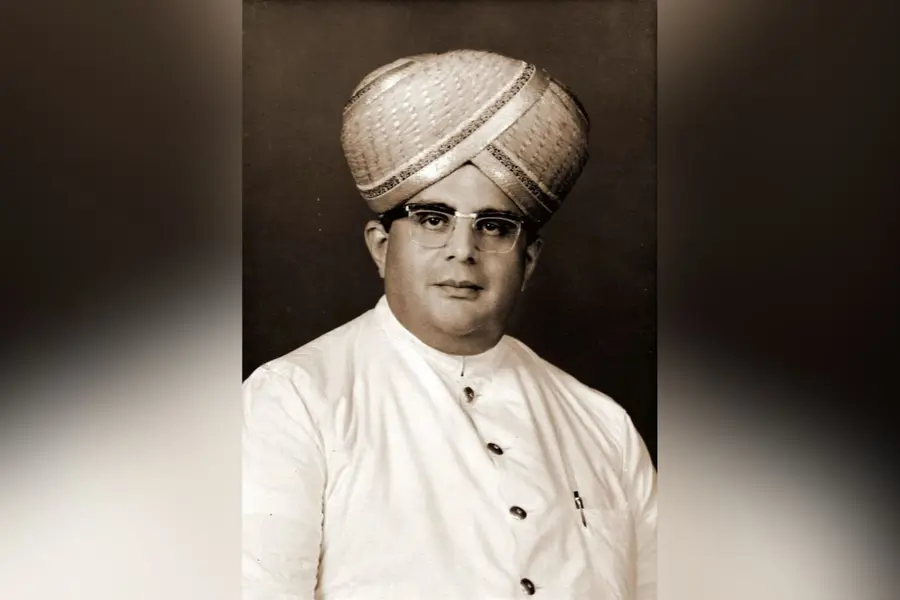
A Young Maharaja's Bold Vision That Gave India Wings
December 23, 2024, marks a special milestone as Hindustan Aeronautics Limited (HAL) celebrates its 86th Foundation Day. This year's celebration is even more significant as it is the second Foundation Day after HAL achieved the prestigious Maharatna status in October 2024. The chief guest for this momentous occasion will be H.H. Yaduveer Krishnadatta Chamaraja Wadiyar, Custodian of the Royal House of Mysore, a fitting choice given his family's historic role in establishing India's aerospace industry.
Why HAL Celebrates Foundation Day
HAL observes its Foundation Day on December 23 every year to honor the company's establishment in 1940 and to pay tribute to its founders, visionary industrialist Shri Walchand Hirachand and the far-sighted Maharaja Jayachamarajendra Wadiyar. The day is not just a celebration of the past but also an opportunity to reflect on HAL's journey, acknowledge the contributions of its employees, and chart the path forward for India's aerospace future. Foundation Day celebrations bring together former chairpersons, managing directors, employees, and stakeholders to share experiences, discuss challenges, and renew their commitment to building India's defense ecosystem.
Last year's 85th Foundation Day celebration featured the release of a commemorative book titled "Flights of Inspiration: HAL's Maharatna Story," which documented the company's remarkable transformation into one of India's most valuable public sector enterprises.
The Untold Story: A 21-Year-Old Maharaja's Aviation Vision
Behind HAL's success lies an extraordinary story of aviation vision that began during World War II. In September 1940, when the world was engulfed in war, a young prince named Jayachamarajendra Wadiyar ascended the throne of Mysore at just 21 years of age. Within months, this young Maharaja would make a bold decision that would launch India's aerospace journey.
American businessman William Douglas Pawley, who had been building aircraft in China through his Central Aircraft Manufacturing Company (CAMCO), was forced to seek a new base due to Japanese attacks. Meanwhile, Indian industrialist Walchand Hirachand saw an opportunity to establish India's first major aircraft manufacturing facility. However, when Walchand approached princely states including Baroda, Gwalior, and Bhavnagar, they all refused to take the risk.
When Walchand and Pawley reached Bangalore in October 1940 and presented their proposal to the young Maharaja, something remarkable happened. Unlike others who had turned them down, Jayachamarajendra Wadiyar immediately recognized that aviation would be crucial for India's future. His response was swift and decisive.
Within just 72 hours, the Mysore government promised 700 acres of land free of cost, invested Rs 25 lakh in shares, and offered complete support. On December 23, 1940, Hindustan Aircraft Company was officially registered. Work started the very next day, and by mid-January 1941, the first building and runway were ready. On August 29, 1941—less than a year after starting—the company handed over its first aircraft, a Harlow Trainer, to the government. India's aviation journey had truly begun.
Maharaja's Aviation Contributions: Beyond HAL
The Maharaja's commitment to aviation extended far beyond just establishing HAL. During World War II, when the British Indian Government needed support, the Mysore state donated £100,000 to form the Royal Air Force's No. 129 Squadron, known as the "Mysore Squadron." Flying Supermarine Spitfires, this squadron fought bravely in the Battle of Britain and other crucial missions. Its badge carried Mysore's mythical two-headed bird, the Gandabherunda, with the motto "I will defend the right." The Maharaja personally sent each pilot a Gandabherunda badge as a symbol of Mysore's support.
After World War II ended in 1945, many war surplus Dakota DC-3 aircraft became available. These were known as the "Work Horse of the Air," and Douglas Aircraft Company had authorized Hindustan Aircraft Company to service and overhaul them. In 1946, Maharaja Jayachamarajendra Wadiyar acquired one of these Dakota aircraft, designated as Mysore Dakota VT-AXX. This was converted into a 21-seater passenger plane and became the Maharaja's private aircraft.
The Gift That United India: Mysore Dakota for Sardar Patel
What many Indians don't know is that this private aircraft played a crucial role in India's unification. The Maharaja generously allowed India's Deputy Prime Minister Sardar Vallabhbhai Patel to use his personal Dakota aircraft extensively during the critical period of India's integration. Sardar Patel, who was tasked with the monumental responsibility of unifying over 560 princely states into one nation, traveled across the length and breadth of India using the Mysore Dakota.
Captain Sundaram, the Maharaja's personal pilot, flew Sardar Patel on numerous occasions and became so closely associated with the Deputy Prime Minister that he was increasingly known as Sardar Patel's personal pilot. The Maharaja's willingness to share his aircraft for this national cause demonstrated his commitment to India's unity above personal convenience.
Prime Minister Jawaharlal Nehru also flew on the Mysore Dakota when he came to inaugurate India's first Flying School at Jakkur on December 28, 1948. The land for this flying school was gifted by Maharaja Jayachamarajendra Wadiyar specifically for aviation training. After inaugurating the school, Nehru flew to Mysore and received an Honorary Degree of Doctor of Science from the University of Mysore.
This generous gesture of providing his aircraft to India's leaders during the crucial period of nation-building earned the Maharaja immense respect. It inspired other princely states to cooperate with the integration process, making India's unification smoother and more peaceful.
HAL's Critical Role in World War II
During World War II, Hindustan Aircraft Company became vital to Allied operations in Asia. When Japan bombed CAMCO's factory in China, all its machinery was relocated to Mysore. The factory was transformed into the 84th Air Depot by the US Army Air Forces in 1943, becoming one of Asia's largest aircraft repair hubs.
The company repaired aircraft like PBY Catalinas and many others used in the India-Burma theatre. Aircraft serviced and repaired at the Mysore facility played a crucial role in pushing back Japanese forces in Manipur and Nagaland. The facility's strategic importance was so great that the British Indian Government became a shareholder in 1941, matching Mysore's investment of Rs 25 lakh.
Building India's Aviation Infrastructure
The Maharaja's vision for aviation went beyond manufacturing aircraft. In 1948, he established India's first Flying School at Jakkur, Bangalore, on land specifically donated for aviation training. Captain Sundaram, who had been the Maharaja's pilot, was elevated as the Director of Civil Aviation, Mysore, when this pioneering flying school was started.
This flying school, inaugurated by Prime Minister Nehru, trained generations of Indian pilots and laid the foundation for India's civil aviation sector. The Maharaja understood that for India to become self-reliant in aviation, it needed not just aircraft manufacturing facilities but also institutions to train skilled pilots and aviation professionals.
The True Patriot King
Perhaps the most remarkable aspect of Maharaja Jayachamarajendra Wadiyar's character was demonstrated in 1947. When India gained independence, he became the first ruler to voluntarily merge his kingdom with the newly formed Indian Union. The Kingdom of Mysore was one of the most prosperous states in Asia, yet the Maharaja chose to give it up for the greater good of India.
His Kannada teacher Kuvempu, who later became Vice-Chancellor of Mysore University, beautifully captured this spirit when he said: "Whereas kings have become so upon assuming thrones, he became a great king by renouncing one." This willingness to sacrifice personal power for national unity reflects the same patriotic spirit that had motivated him to support HAL's establishment and share his personal aircraft for India's unification.
HAL's Journey: From Vision to Reality
Today, HAL stands as one of Asia's leading aerospace and defense manufacturers with an annual turnover of over $3 billion. The company operates 11 research and development centers and 21 manufacturing divisions across India. From its humble beginnings in 1940, HAL has evolved into a company capable of designing and manufacturing indigenous aircraft like the Tejas Light Combat Aircraft, helicopters like Dhruv and Prachand, and contributing to India's space program through ISRO collaborations.
The journey from that first Harlow Trainer delivered in August 1941 to today's advanced Tejas fighter jets represents 85 years of continuous innovation and growth. Every aircraft that takes off from an Indian runway, every helicopter that serves our armed forces, and every achievement of HAL carries forward the vision that a 21-year-old ruler had in 1940.
Looking to the Future
As HAL celebrates its 86th Foundation Day with H.H. Yaduveer Krishnadatta Chamaraja Wadiyar, Custodian of the Royal House of Mysore, as the chief guest, it represents a beautiful circle of history. The great-nephew of Maharaja Jayachamarajendra Wadiyar will honor the institution that his ancestor helped create, reminding us that true leadership is about creating legacies that benefit generations to come.
Dr. D.K. Sunil, CMD of HAL, has outlined ambitious plans to transform HAL into a global aerospace leader through technology-driven programs, operational excellence, and a strong focus on exports. With its new Maharatna status, HAL has greater autonomy and financial powers to pursue these goals.
As we celebrate HAL Foundation Day, we must remember and honor Maharaja Jayachamarajendra Wadiyar—the young patriot who gave India its wings when others hesitated, who shared his personal aircraft to help unite India, who established flying schools to train Indian pilots, and whose vision continues to soar through our skies even today.
The legacy of HAL is not just about aircraft and technology; it is about the spirit of self-reliance, the courage to dream big, and the commitment to building a stronger India. These values, planted by a young Maharaja 85 years ago, continue to inspire and guide Indian aerospace industry today.
(Girish Linganna is an award-winning science communicator and a Defence, Aerospace & Geopolitical Analyst. He is the Managing Director of ADD Engineering Components India Pvt. Ltd., a subsidiary of ADD Engineering GmbH, Germany
Published: 23 Dec 2025, 08:00 am IST
Related Topics
Disclaimer: Kindly avoid objectionable, derogatory, unlawful and lewd comments, while responding to reports. Such comments are punishable under cyber laws. Please keep away from personal attacks. The opinions expressed here are the personal opinions of readers and not that of Mathrubhumi.
