
Canva`s acquisition of Affinity brings free, professional-grade design software to everyone. Explore powerful, customizable tools for creators and designers.
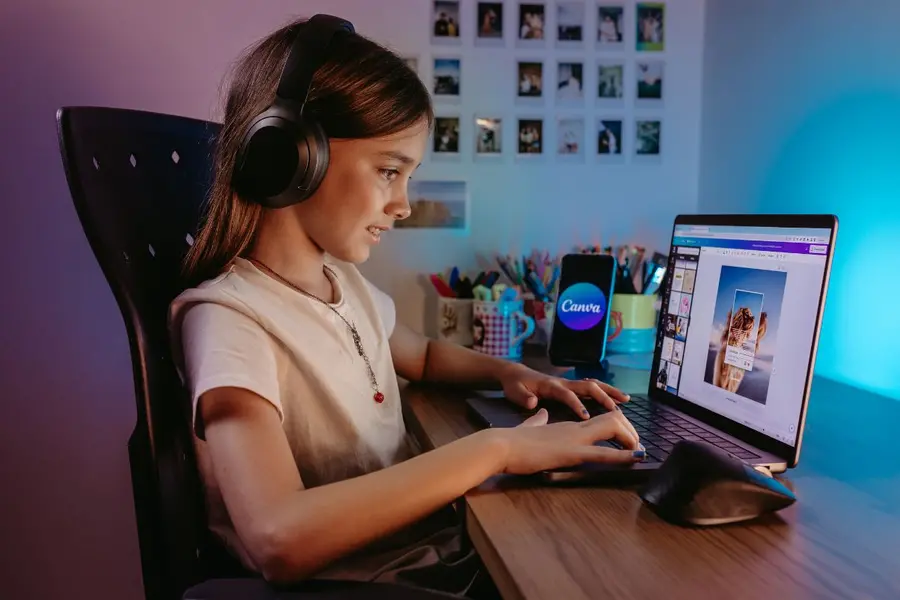
When Canva announced its acquisition of Affinity, the design world felt a seismic shift. It wasn't just another corporate takeover; it was the collision of two creative philosophies, each powerful in its own right. On one side stood Canva, the platform that made design accessible to millions of non-designers worldwide. On the other stood Affinity, the professional-grade suite that became the go-to for artists and designers who demanded power, precision, and affordability outside the Adobe ecosystem. Together, they've reimagined what design software can be: free, flexible, and fiercely user-centric.
Launching the all-new Affinity, now officially part of the Canva family, marks the dawn of a new era in creative technology. It's not just an update of software; it's a statement: "Creative freedom-that's actually free," says the campaign, positioning Affinity not just as a tool but as a movement challenging how the world thinks about creative ownership and accessibility.
Canva Meets Affinity: The Perfect Pairing
Since its inception almost a decade ago, Canva has built its brand on making design easy and accessible. Launched back in 2013 in Australia, the site grew to become the very meaning of democratising design; it became possible for anyone to make professional-quality graphics, social media posts, presentations, and videos, without needing formal training. The drag-and-drop interface and huge template library turned millions of everyday users into confident creators.
Meanwhile, Affinity had taken a different route. Developed by the UK-based Serif, it had gained a sort of cult status among professionals, thanks to its powerful design, photo editing, and publishing tools. Its three core applications—Affinity Designer, Affinity Photo, and Affinity Publisher—offered serious creative firepower at a one-time purchase price, challenging Adobe’s subscription-heavy Creative Cloud dominance.
A strategic move, yes, but also a poetic one. Canva brought with it a world of collaborative, cloud-based simplicity, while Affinity brought technical depth and a reputation for craftsmanship. Together, they've created a bridge between two worlds that have long been separate: the everyday creator and the design professional.
The New Affinity: All-in-One, and All for You
The first thing that stands out in the new Affinity is its unified platform. Gone are the days of switching between different software for vector graphics, photo editing, and layout design. Now, all three disciplines—Vector, Pixel, and Layout studios—are joined up in a seamless ecosystem.
But it's the level of customisation that makes the new Affinity revolutionary: whereas most design apps work within strict workflows, Affinity operates under the idea that "the app adapts to you, not the other way around." Users can move panels around freely, mix and match tools, and even create their own 'custom studios' for specific projects or just personal preference.
Imagine a photographer adjusting images in a workspace comprising only colour correction and retouching tools, then switching in an instant to a layout optimised for typography and print design. Or a motion designer sharing their custom interface with a collaborator on the other side of the world. Thanks to Affinity, users can save, switch, and share multiple setups with one click.
In essence, the new Affinity is not one application; it is many applications in one body, each capable of becoming what exactly its user needs.
Free, as in Freedom
But the biggest headline isn't just the redesign. It's the price tag—or rather, the lack of one.
Affinity is now completely free for everyone.
That's a pretty bold move, considering professional software usually comes with hefty subscriptions. For years, Adobe's Creative Cloud has been the industry standard and simultaneously a financial hurdle for freelancers, small studios, and students. Even Affinity, which once offered modest one-time pricing, recently went fully free under Canva's ownership.
This isn't charity-it's strategy. Canva's mission has always been about "empowering the world to design." Making professional-grade tools free aligns perfectly with that vision, while also expanding Canva's reach into the professional market. It is a long game that could redefine the economics of creative software, forcing competitors to rethink not just pricing but philosophy.
"Creative freedom that's actually free" is not a tag line but a call to action-a direct challenge to the gatekeeping structures that have long defined the creative industry. It tells designers everywhere: tools shouldn't be a barrier to your imagination.
Craft Meets Community
Affinity's new ethos also reflects a deep respect for craft. "For people obsessed with craft, by people who respect it," says the company. This is not a nod to nostalgia; this is a commitment to those who see design both as art and as science. Whether you're someone who geeks out on mesh gradients or obsesses over pixel-perfect icons, Affinity is built to meet you where your passion lies.
What's different is that community-driven customisation sits at the very heart of this update. The ability to share your custom studios and download others' setups turns Affinity into a living, breathing ecosystem of shared creativity. It's no longer just software; it's a creative network.
This sense of community has always been Canva's strength. With the addition of Affinity, Canva extends its collaborative DNA to professionals, allowing designers to learn from, exchange with, and evolve with one another. For instance, a layout designer in Mumbai can share a print setup with a digital illustrator in London. A UX designer in Tokyo can download a pixel-based colour grading workspace created by a photographer in New York. It's creative cross-pollination, powered by software that embraces openness.
A Bold New Identity
But the new Affinity has also changed visually. The bold new brand identity shows the influence of Canva: cleaner, more expressive, more inclusive. Sleek yet dynamic, the new logo and interface aesthetics mirror the flexibility and accessibility that define the product itself.
While the legacy users of Affinity might have worried that Canva's designs, which are usually casual, would dilute this professional tone, the rebrand has managed to balance it. The rebranding retains the legacy of craftsmanship from Affinity while adding warmth and optimism from Canva. It's a new visual language that speaks to precision and play.
The Bigger Picture: A Shift in the Creative Landscape
More than a simple acquisition, the Canva-Affinity union is a philosophical shift in how we think about design. For decades, creative software has been polarised between professional tools that are powerful but complex and expensive and consumer tools that are simple but limited.
Canva and Affinity are dismantling that divide. Together, they're building a platform that offers the best of both worlds: professional power with everyday usability, creative complexity with human simplicity.
This could have a ripple effect through the entire industry. Take, for instance, Adobe's monopoly, which has faced its most serious challenger yet. Sure, Adobe still predominates in enterprise and legacy workflows, but the ease of use of Canva and the professional precision of Affinity form a compelling alternative for a generation of creators who value flexibility and collaboration over software loyalty.
Moreover, because of Canva's cloud-based infrastructure, it may be able to integrate Affinity's power into a browser-based environment, granting professionals access to full-fledged creative capability without having to download gigantic software suites. This sets a vision for a future in which design happens anywhere, at any time, on any device, and seamlessly.
Empowering the Next Generation of Creators
This effectively means a lot to students, freelancers, and small businesses. Affinity removes the cost barrier, opening its gates to the thousands of aspiring designers who just cannot afford premium design software tools. It levels the playing field, especially in regions where subscription-based software remains well out of reach.
In markets such as India, Southeast Asia, and Africa, where Canva is a massive hit, the free availability of Affinity might just trigger a new wave of professional creative talent. For design education, digital media startups, and independent creators, access to tools that the global professionals use would not be a financial burden anymore.
It's also a boost for educators, too: design schools can integrate Affinity into their curriculum without fear of licensing cost, giving students real-world tools to learn and experiment freely.
Designed for the Way Creatives Think
At the heart of Affinity's redesign is an understanding of how creative minds really work. Creativity isn't linear-it's exploratory, iterative, and deeply personal. One designer may start with a photo edit, move into vector adjustments, then jump to a layout prototype-all in one sitting. The new Affinity makes that fluidity effortless.
By allowing cross-studio operations, in which Vector, Pixel, and Layout tools coexist in one canvas, Affinity negates the need to juggle multiple apps. It's a real time-saver, but more importantly, it's a mindset shift: it treats creativity not as a series of steps, but as a continuum.
And those who love to customise every inch of their workspace, the possibilities are endless: want a minimalist interface with only essential tools visible, or a really complex setup with any number of toolbars and panels? Done. The app doesn't force conformity; it celebrates individuality.
The Future of Canva and Affinity
Canva's move to acquire and reimagine Affinity is a strategic leap in building the world's most complete design ecosystem. While Canva has long been the go-to for fast, collaborative, and social-friendly design, Affinity gives it credibility among professionals who need control, detail, and offline precision.
Integrating Affinity's technology into Canva's ecosystem can enable hybrid workflows-think designing a magazine spread in Affinity Publisher and publishing/sharing it in an instant via Canva's cloud, or editing a high-resolution image in Affinity Photo and directly syncing it with a Canva brand kit.
Interoperability like that would make Canva more than a design tool; it would be a creative operating system, unified in its hubbing for all types of visual work, from social media campaigns down to complex publication layouts.
A Message Beyond Design
At its heart, the Canva–Affinity story isn’t about technology or branding. It’s about redefining who gets to create.
For decades, creativity has been coupled with access: expensive software, high-end hardware, and often, formal education. Canva and Affinity each break that mould, offering professional-grade creation tools to anyone with an idea and an internet connection.
This democratisation mirrors broader shifts in the creative economy. From the rise of independent creators to the facilitation of remote collaboration and AI-assisted workflows, creativity is moving toward a decentralised world. Canva's acquisition of Affinity accelerates that trajectory by ensuring freedom and professionalism no longer exist at opposite ends of the spectrum.
A Revolution, Not a Merger. But one thing is for sure: as the all-new Affinity rolls out, Canva isn't just expanding her empire-she's reimagining the creative universe. With customizable studios, cross-discipline integration, and zero-cost access, this is way more than this is a movement. For professionals, this is a powerful toolkit that respects the craft. For beginners, this is an open invitation to explore. For the industry, it's a wake-up call. In a world where innovations too often come with a price tag, Canva and Affinity prove that freedom, flexibility, and creativity do not have to be luxuries but can be the norm. That's perhaps the most fitting summary of what this takeover represents. Canva hasn't just acquired Affinity-it has embraced a philosophy that creativity should belong to everyone. And in so doing, it may have just rewritten the future of design.
Published: 03 Nov 2025, 05:56 pm IST
Related Topics
Disclaimer: Kindly avoid objectionable, derogatory, unlawful and lewd comments, while responding to reports. Such comments are punishable under cyber laws. Please keep away from personal attacks. The opinions expressed here are the personal opinions of readers and not that of Mathrubhumi.
