
On May 8, India's DRDO conducted a secretive long-range missile test from Odisha's Chandipur range. A massive 3,500 km restricted zone over the Bay of Bengal signaled strategic intent. Timed with the first anniversary of Operation Sindoor, the trial underscores India's advancing Agni-6 capabilities and nuclear deterrence against Pakistan and China.
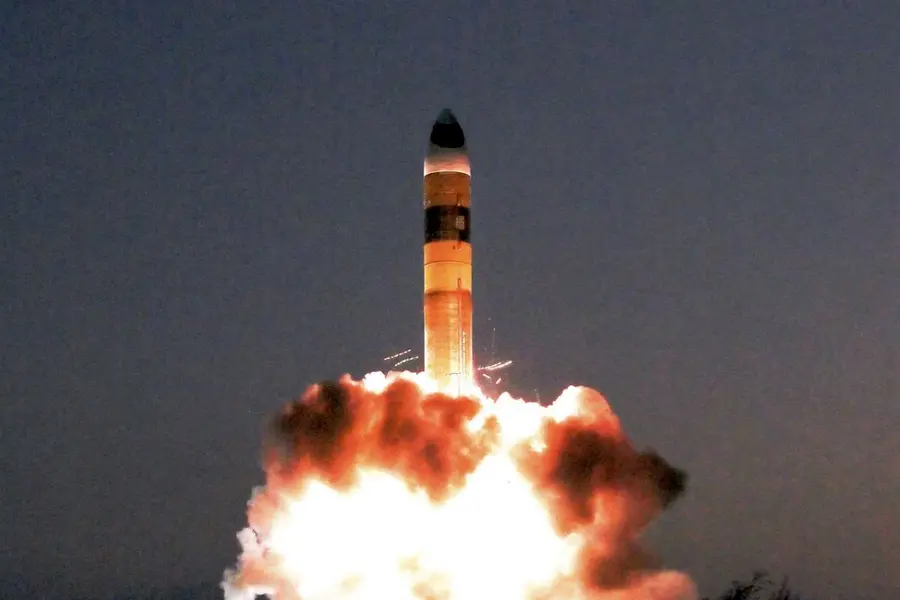
On May 8, India quietly carried out a powerful long-range missile test over the Bay of Bengal, and within hours, defence experts across the world started talking about it. The launch took place from the Integrated Test Range near Chandipur and Abdul Kalam Island on the Odisha coast. What made this test special was not just the missile, but the huge secrecy around it and the unusually large 3,500 km-plus restricted zone declared in the sea, which clearly showed that this was not a normal short-range weapon trial but a major strategic missile test.
Interestingly, neither India's DRDO nor the Ministry of Defence gave any official statement, which only increased global curiosity. The timing was also very meaningful because the launch happened on the sidelines of the first anniversary of Operation Sindoor -- the joint military operation India carried out on May 7, 2025, against terror camps inside Pakistan and Pakistan-occupied Kashmir after the deadly Pahalgam terror attack.
By testing such a powerful missile during this period, India sent a strong message to both Pakistan and China that its precision strike capability is fully backed by long-range strategic power.
Videos shared on social media showed a bright glowing trail moving across the evening sky over eastern India and parts of Bangladesh. People in Odisha, West Bengal, Sitakunda, and Cox's Bazar reported long white smoke lines, called contrails, at very high altitudes. These trails are usually seen during the launch of strong long-range missiles.
Some videos even appeared to show the missile slightly changing direction while flying at extreme speeds. This glowing effect is usually linked to hypersonic or advanced ballistic missiles re-entering the atmosphere at speeds above Mach 5, meaning more than five times the speed of sound.
In simple words, hypersonic missiles travel so fast that enemy radar systems and defence shields find it nearly impossible to track or stop them in time. Many experts now believe that India may have tested technologies connected to its future hypersonic glide vehicles, which can change direction during flight. Such maneuverable warheads are extremely difficult to detect and destroy, making them a game-changing weapon for future warfare.
Also Read: Sea-skimming salvo: NASM-SR is India's own deadly naval spear
Defence analysts strongly believe the missile could be an upgraded version of the Agni-5 or even an early technology test linked to the much-awaited Agni-6 programme. The Agni-5 already allows India to strike deep inside China from safe launch points within Indian territory.
The future Agni-6 is expected to be far more powerful, with a possible range of 8,000 to 10,000 km and MIRV technology, which means one single missile can carry multiple nuclear warheads and hit several targets at once. This kind of capability gives India a reliable second-strike option, meaning even if attacked first, India can still respond with full force.
The very large NOTAM (Notice to Airmen) warning zone over the Bay of Bengal made experts even more confident that this was a strategic nuclear deterrence test, not a battlefield weapon trial. The zone was far bigger than the one used during India's recent Long-Range Anti-Ship Hypersonic Missile tests, which had a range of around 1,500 to 1,680 km. This clearly indicated that the May 8 missile travelled a much greater distance and belonged to a higher strategic category.
By keeping the missile's exact range, payload, and features secret, India has cleverly created strategic uncertainty. Rival countries like China and Pakistan are now forced to prepare for the worst possible scenario while planning their own defence strategies. This uncertainty itself becomes a powerful weapon in modern warfare.
The bigger picture is the changing Indo-Pacific power game. China is rapidly expanding its nuclear arsenal, building hypersonic weapons, and increasing its naval presence in the Indian Ocean. Pakistan, with Chinese help, is also upgrading its missile systems. India's defence leadership has repeatedly warned about a possible two-front threat. In such conditions, long-range, maneuverable, and survivable missiles become India's strongest shield and sword.
Also Read: HAL's hidden crisis: Hard truths that chief Kota Ravi must confront
Globally, countries like the United States, Russia, and China are racing to build hypersonic weapons because these systems reduce decision-making time and weaken traditional missile defences. India is now clearly stepping into this elite group. The May 8 launch was not just another test; it was a loud, calculated, and confident message that India is ready to protect its skies, defend its borders, and stand strong in the fast-changing Indo-Pacific battlefield.
The author is a Defence, Aerospace & Geopolitical Analyst
Published: 11 May 2026, 10:25 am IST
Disclaimer: Kindly avoid objectionable, derogatory, unlawful and lewd comments, while responding to reports. Such comments are punishable under cyber laws. Please keep away from personal attacks. The opinions expressed here are the personal opinions of readers and not that of Mathrubhumi.
