
Kiss is different. It amazes with the several agendas Grover manages to fill the film with almost with magical effect. It arrives on MUBI a full three years after its festival run first began
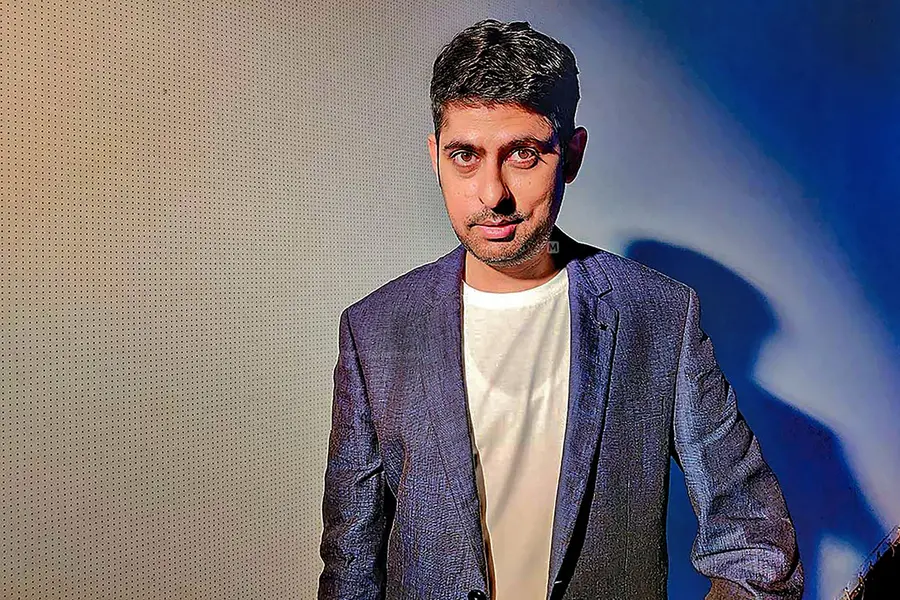
Varun Grover is a multi-talented young man, a lyricist, writer and comedian though he keeps a slightly low profile in a world of merciless cut-throat competition and media-hungry young men and women eager to voice their opinions the minute a mike or a video camera is thrust into their faces.
Yet, his OTT directorial debut with a less-than-17-minute intriguingly named Kiss, is creating waves among all of us who have watched it not once, but more often, more than once, on MUBI where it was premiered and is still running with appreciation being showered from all corners, specially the young. The film covers the feudal mindset of the CBFC, the general bias of producers, financiers, etc against alternate sexuality, how years of film screening has magically internalized magic in an ancient, 35 mm theatre, and how time travel makes the protagonist not only glimpse scenes from his boyhood but also travels through time to meet his own adult self. It is not short of a miracle that this young director has been able to span so many agendas without tripping on the one or the other within around 15 minutes of screening time.
His directorial debut with the feature film All India Rank was a scathing attack on parental pressure on children to take competitive exams. Kiss is different. It amazes with the several agendas Grover manages to fill the film with almost with magical effect. It arrives on MUBI a full three years after its festival run first began.
At a preview theatre, a young filmmaker waits in the hope of getting his new sci-fi drama certified with 'no cuts' by the conservative men of the Indian Censor Board. The board finds a particular kissing scene in the film, between two males, beyond the duration stipulated by official, orthodox rules. As the filmmaker and board members argue over the length of the kiss, the laws of physics disintegrate around them.
But let us hear everything from Grover himself.
What inspired you with the idea of KISS?
I saw a news piece about CBFC ordering a James Bond film to trim the kissing scene. I found it funny and bizarre and that triggered this film’s idea. So, I used this argument about the time-span of the kissing scene as the stepping board to set my story in. Besides, it is a kiss happening between two males. The three different men who sit together to time the kissing scene bring across three different time-results which is surreal and bizarre but true.
Why did you limit it to less than 17 minutes?
I wanted to make my first film really short and crisp. The ambition was to tell a story with brevity and the impact it brings.
If you are asked to name the genre the film subscribes to, which will you choose? Science fiction? Scathing attack on Censorship so, a political film? Time-travel? Magic realism? Self-reflexive (Cinema within Cinema?) Alternative sexuality? Guilt?
I believe film is a medium that can easily switch between multiple genres. I wanted to make a story primarily about two things - who are the people who feel the compelling need to censor things. And what’s our relationship with cinema as an art form. Why do we feel so moved by these obviously fake stories performed by actors on screen. Fusing these two things together made the film look like a multi-genre piece - science fiction, satire, drama, and meta-fiction.
What was the major trigger that drove you to make the film?
The news piece about trimming the kissing scene was the initial trigger. Then during Covid as I was sick and in isolation with nothing to do, I thought let’s try writing this idea. I don’t want to die without making any film. So I wrote it during Covid first wave and shot it during the second wave.
The theatre screening the pieces of the film also seems special the last theatre to screen 35mm films. Is this for real? Or did you have it constructed out of your imagination?
I just added to make it more intriguing. We shot it in Liberty Cinema, which is still the last of tte few standing single screen theatres in Mumbai.
The end also suggests that it is autobiographical for Sam, the protagonist. Is it?
Yes very much. The time-travel the young director in the film experiences differing from the other two, with open eyes, with blindfolded eyes, just keeping an eye on the strange clock and some time-travel thrown in, ends with the young Sam embracing the boy Sam bridging the time gap at one go. I am happy about viewers finding it magical.
How did you choose your acting cast and why?
I love Adarsh Gourav’s range and his nerdiness towards his craft. Luckily he agreed readily for the role. He plays the young protagonist Sam. Swanand Kirkire is an old friend and a fantastic actor so it was an easy choice.
How long did it take from concept to the censor certificate?
The censor certificate is still to be acquired. We haven’t submitted the film to censors yet but hoping to do it this year. I wrote the film in 2020, filmed it in 2021, it did the rounds of the festivals in 2022 and is now finally out on world cinema platform MUBI for an OTT release.
How do you direct? Script-reading sessions? Rehearsals, workshops, spontaneous allowing improvisations, or a combination of all these?
I love doing a lot of rehearsals and workshops. I believe in full prep before we land on the shoot.
What pulled you to one of the riskiest professions in the world - cinema?
I always loved reading as a kid and that sowed a seed of becoming a writer someday. Also my father is a huge movie buff so we used to see a lot of films in theatres in the 90s. I know it’s risky but jeena yahaan marna yahaan, iske siva jaana kahaan.
Name 5 films you will never forget and why?

Jaane Bhi Do Yaaro - the satire, the goofiness, the coming together of that stellar cast, and how that film remains relevant even today.
Katha by Sai Paranjpye - The subtle nuances, the departure from how Mumbai is shown in cinema, the subversive humour, and the mad experimental vibe. Truly a representative film for middle class morality in India.
Red by Kieslowski - The dreaminess and eeriness coming together, the abstract take at existential dilemmas, the beauty of it all.
There Will Be Blood by PT Anderson - the huge canvas, the study of madness and greed and love and religion - all fused into each other, and then the control over the craft of cinema.
What is your directorial statement on the film?
Shame and pride, two uniquely human inventions, have been instrumental in shaping modern civilizations. The rise of right wing authority across the world has made these emotions the showstoppers of every parade last decade. With Kiss I wanted to explore the origin of these concepts in an unusual setting and genre.
Sci-fi and psychological drama gave me just the right tools to tell this bizarre tale of desire, shame, and wishful fantasy. At its core, the film attempts to find out why only circus animals wear clothes.
Published: 21 Jun 2025, 10:22 am IST
Related Topics
Disclaimer: Kindly avoid objectionable, derogatory, unlawful and lewd comments, while responding to reports. Such comments are punishable under cyber laws. Please keep away from personal attacks. The opinions expressed here are the personal opinions of readers and not that of Mathrubhumi.