

From war zones to fiction, Rahul Pandita explores belonging, alienation and the limits of reportage at MBIFL 2026.
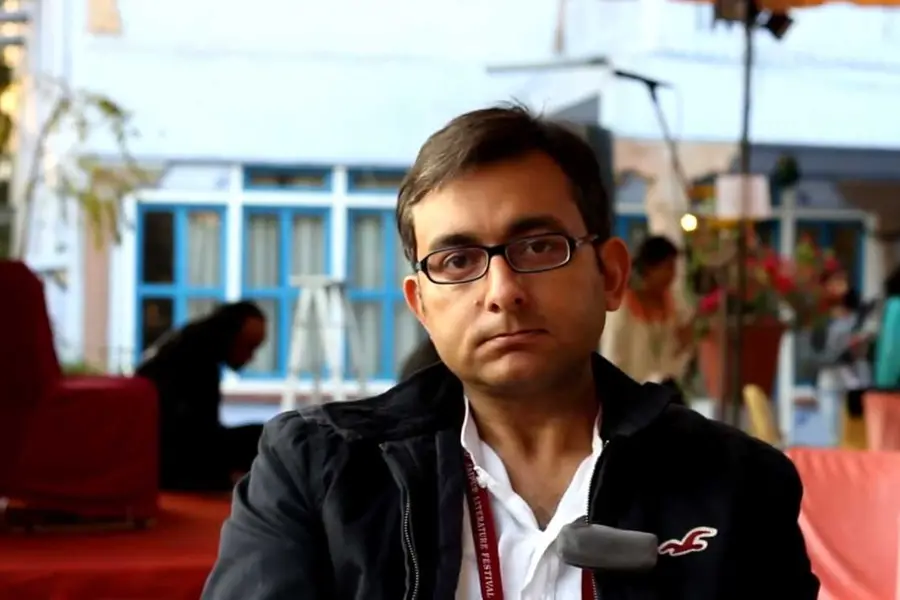
Thiruvananthapuram: Award-winning journalist and author Rahul Pandita, known for his frontline reporting from conflict zones, brought a deeply reflective and literary lens to Mathrubhumi International Festival of Letters MBIFL 2026 with a discussion titled 'Exploring the Idea of Home and Conflict Through Fiction'.
Pandita, whose body of work includes 'Hello Bastar: The Untold Story of India's Maoist Movement', 'Our Moon Has Blood Clots', 'The Lover Boy of Bahawalpur'' and The Absent State', as well as his latest novel 'Our Friends in Good Houses', spoke about why fiction became a necessary extension of his journalism.
“When you report from war fronts, no matter how hard you try, there are experiences and intensities that journalism cannot fully capture. Fiction allows for one extra layer of meaning that reportage cannot address,” Pandita said.
A recipient of the International Red Cross Award for conflict reporting (2010), a Yale World Fellow and a New India Foundation Fellow, Pandita said his novel draws heavily from his lived experiences, including his Kashmiri background and years spent reporting from troubled regions. “There are moments when you need to stop, stay in the middle of what you are witnessing, and make sense of it — not just for yourself, but for your readers,” he said.
Central to the discussion was the theme of home — its presence, absence and emotional weight in a world shaped by conflict and displacement. “The idea of homelessness today is not just physical. There is an existential alienation — a vague but persistent sense of not belonging — that afflicts modern civilisation,” Pandita observed.
He said the pressure to comment on Kashmir, Article 370 and political developments often follows him because of his origins.“There is almost a compulsion to write about Kashmir because of where I come from. But home, for me, is not just geography. It is memory, love and loss,” he said.
Pandita argued that modern society reduces complex human realities into binaries, which he described as “an insult to conscious thinking”. “A house is a sharp, physical idea. But a home is aesthetic, emotional and layered. It cannot be expressed through physical objects alone,” he said.
Drawing on philosophical themes, he added: “The only permanent thing in the universe is impermanence.” Reflecting on attention, love and belonging, Pandita said modern life is shaped by distraction.
“We are attention-deficit as a civilisation. But attention is the highest form of love, and love is the greatest form of attention,” he said. He also noted that the phrase “good houses” carries different meanings for different people.
“It can be a metaphor for privilege, power, safety — or even ignorance. Sometimes, it is a commentary on the state of the nation, where at one point you realise you have no idea what is really happening outside those walls,” he said.
Published: 29 Jan 2026, 06:31 pm IST
ABOUT THE AUTHOR
Related Topics
Disclaimer: Kindly avoid objectionable, derogatory, unlawful and lewd comments, while responding to reports. Such comments are punishable under cyber laws. Please keep away from personal attacks. The opinions expressed here are the personal opinions of readers and not that of Mathrubhumi.