

Their relationship, he says, began far away from cameras and curated narratives
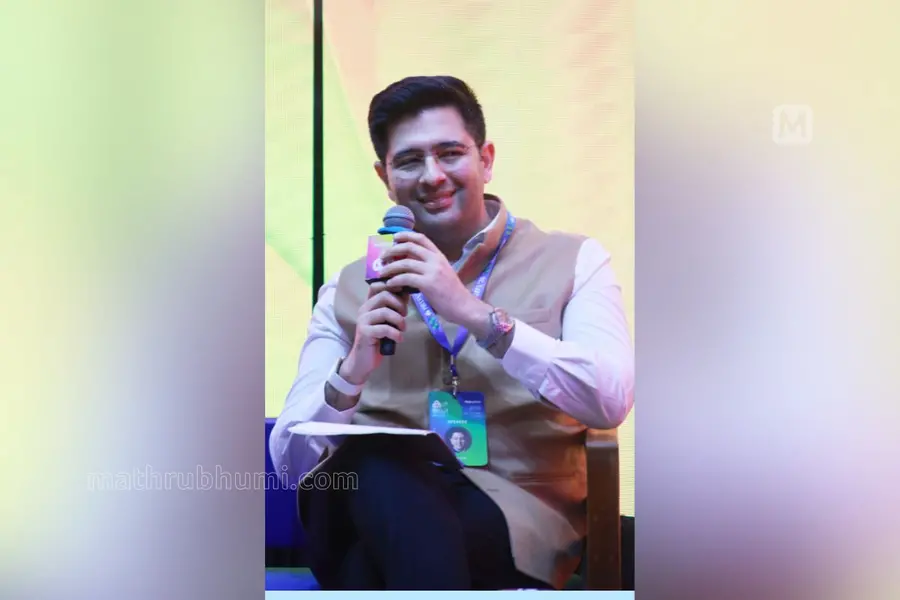
For a politician who speaks often about restraint, facts and staying grounded, Raghav Chadha’s most unfiltered moment came not in Parliament, but while speaking at the Mathrubhumi International Festival of Letters (MBIFL) 2026.
“Parineeti is my only love,” he says. No dramatic pause. No political flourish.
Chadha is quick to clarify—politics, despite its centrality in his life, is neither his first nor second love. “It’s my passion,” he explains. Love, he insists, belongs elsewhere.
Their relationship, he says, began far away from cameras and curated narratives. When Parineeti Chopra first met him, she didn’t know who he was. “She didn’t know what I did. Or what I stood for politically,” he recalls. That anonymity, he suggests, mattered. It allowed the relationship to grow without the weight of public identity.
In a profession defined by constant scrutiny, Chadha consciously keeps his personal life unremarkable. There is no attempt to convert companionship into political capital, no need to project perfection. Love, like credibility, works best when it is not performative.
Politics, he believes, already demands too much public ownership. “Visibility should never be the goal,” he says—advice he extends beyond governance to life itself. The desire to contribute meaningfully, he argues, must always outweigh the desire to be seen.
Chadha often speaks about integrity as a daily practice—something that must be protected not just in public decisions, but in private choices. In that sense, keeping love ordinary is also a political act.
At a time when public figures are expected to brand every aspect of their lives, Chadha chooses restraint. Between policy debates and parliamentary interventions, there remains space—intentionally—for something untouched by ideology or ambition.
“Politics is not my love,” he repeats. “It’s my responsibility.”
Love, meanwhile, is personal. Singular. And firmly off the campaign trail.
Published: 30 Jan 2026, 06:56 pm IST
ABOUT THE AUTHOR
Related Topics
Disclaimer: Kindly avoid objectionable, derogatory, unlawful and lewd comments, while responding to reports. Such comments are punishable under cyber laws. Please keep away from personal attacks. The opinions expressed here are the personal opinions of readers and not that of Mathrubhumi.